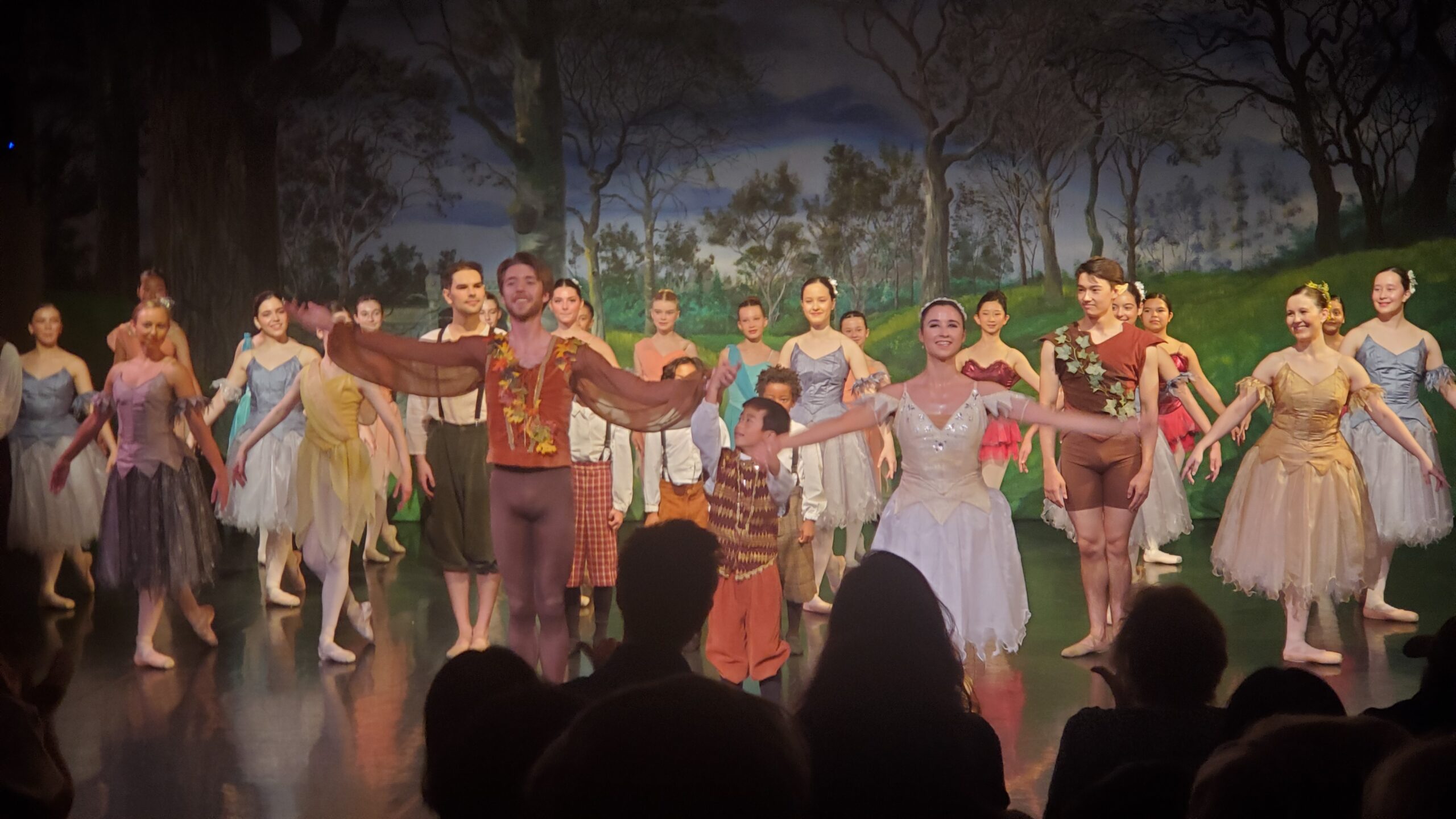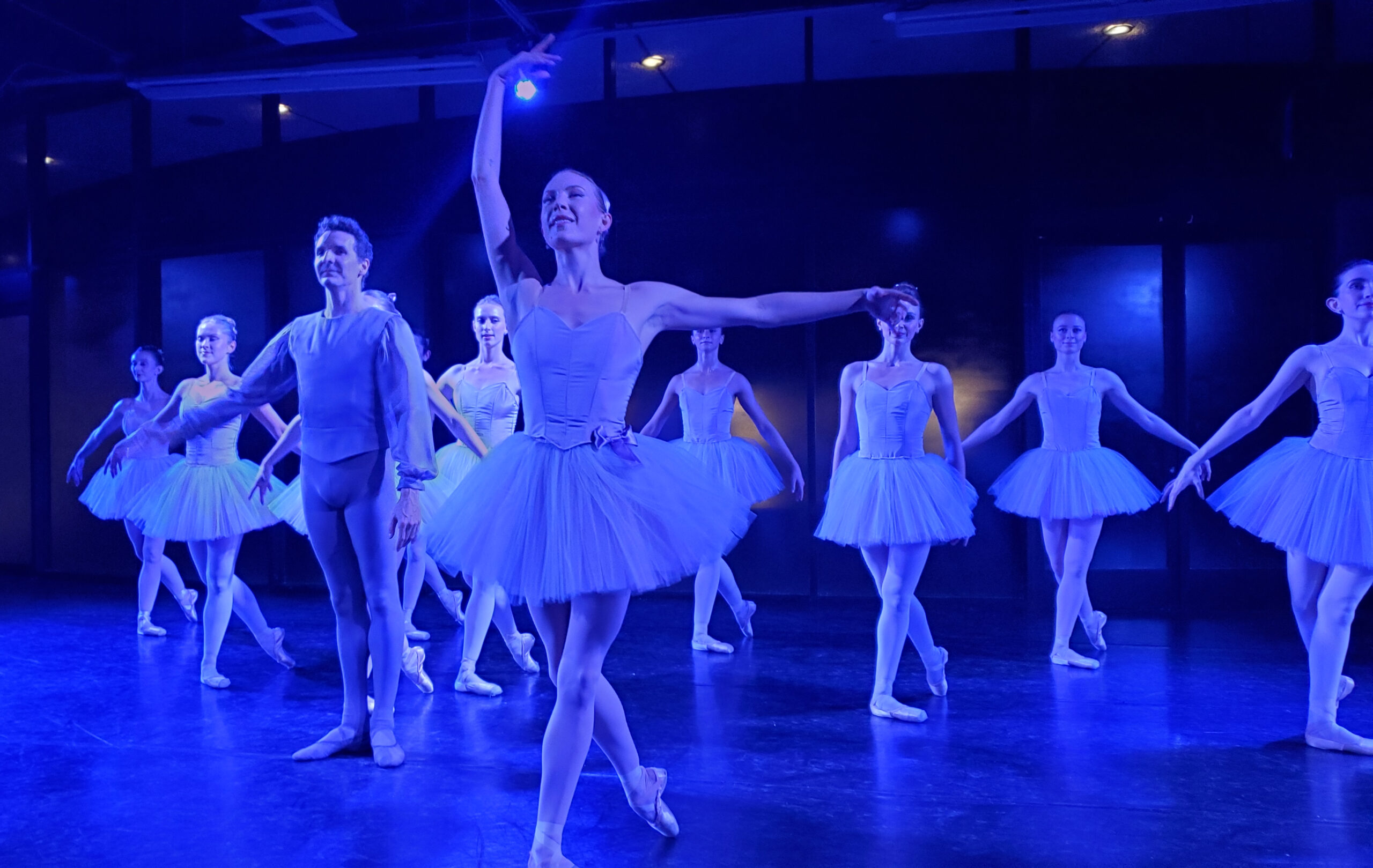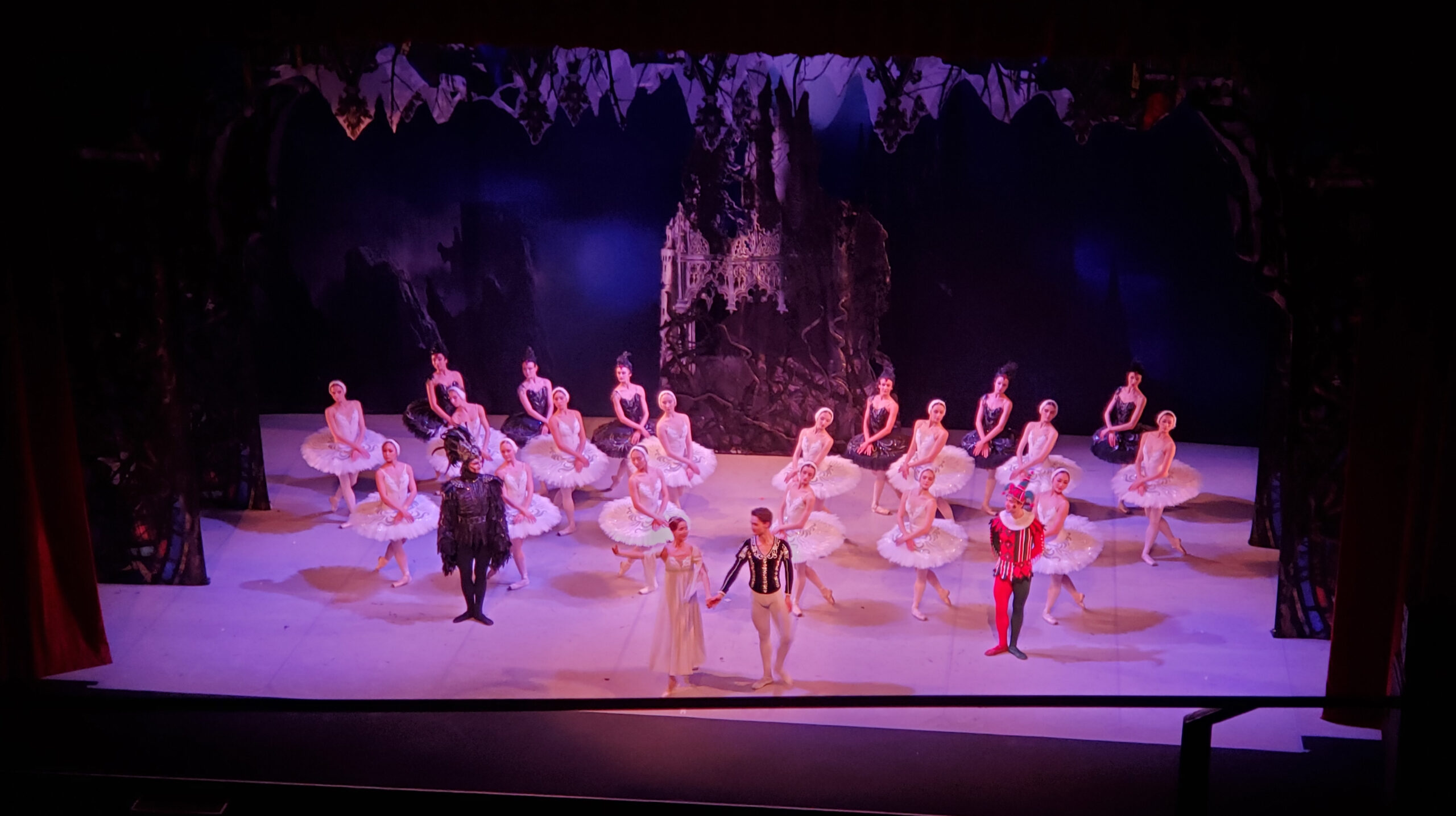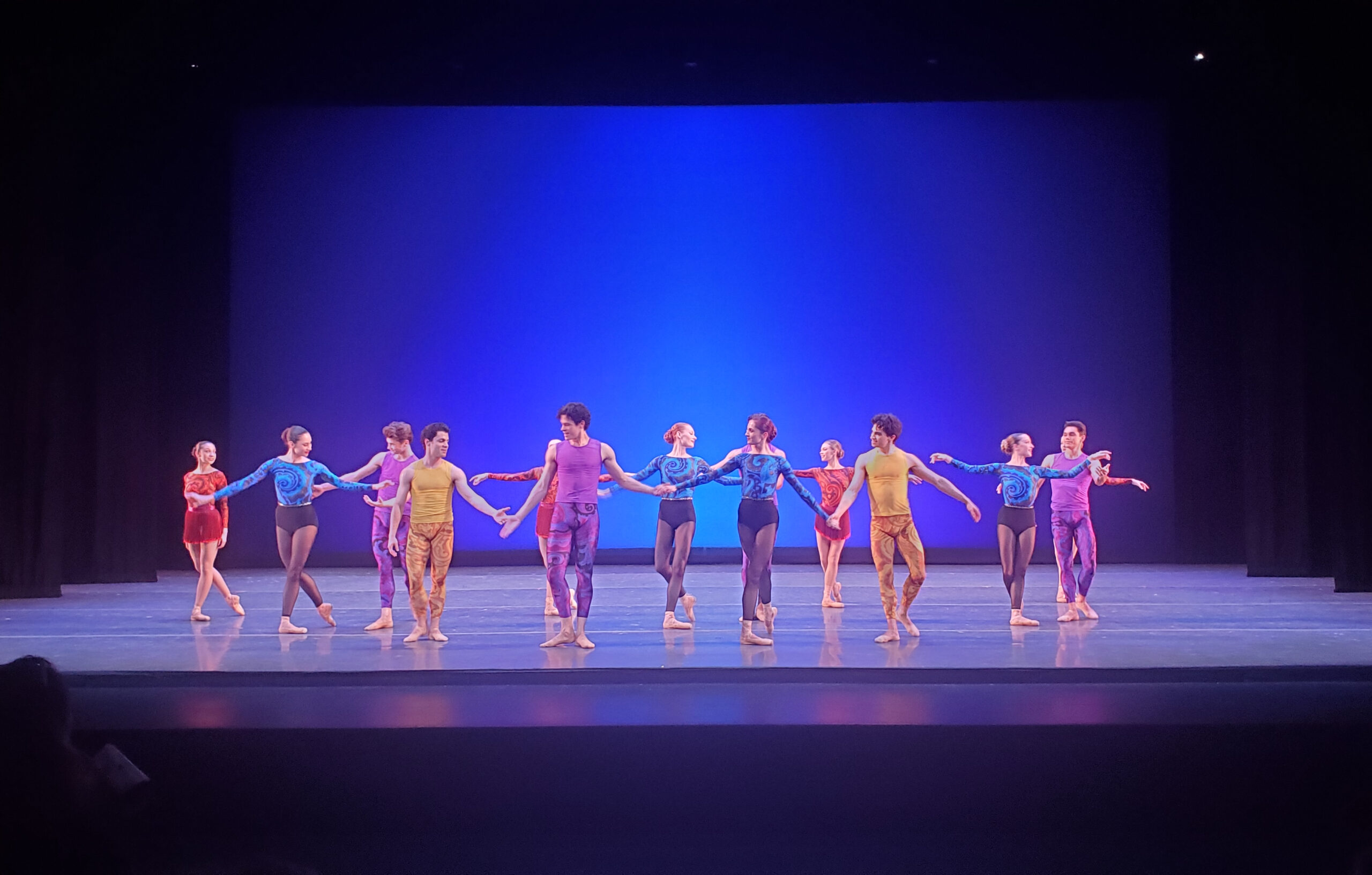
I love a good ballet, but the Ballet of Lights version of Sleeping Beauty wasn’t quite what I expected. But that doesn’t mean I had a bad time.
This Ballet of Lights was coordinated by Fever Events, which is a popular app for live entertainment of all kinds. It was shown at the Nocturne Theatre in Glendale, a great space–they have their own seasons of amazing plays and musicals, but host Fever events on off-nights. I imagine it’s a great way to keep the theater in the black.
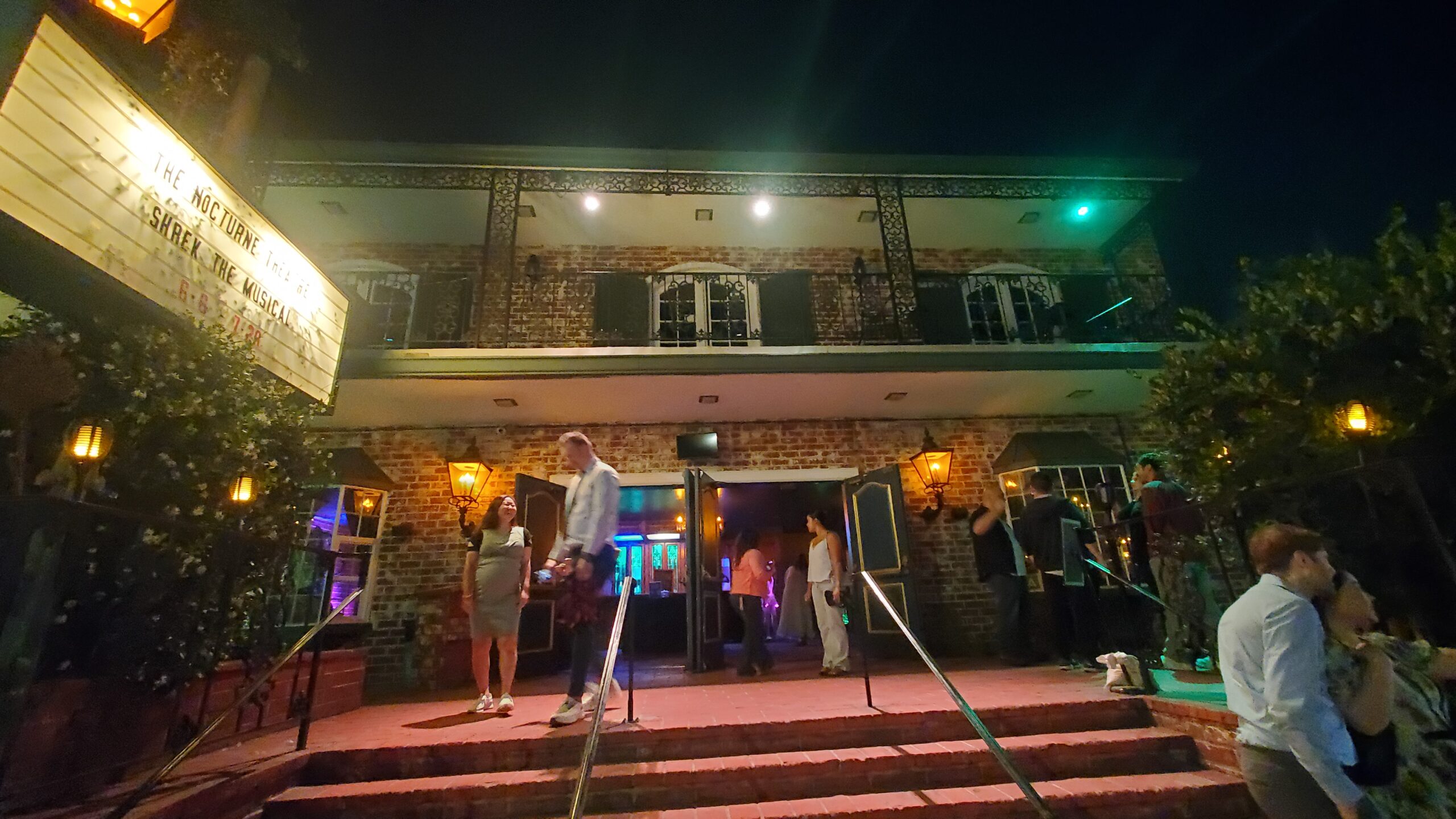
Exterior of the Nocturne Theatre – note the sign showing their actual current main showing, Shrek: The Musical.
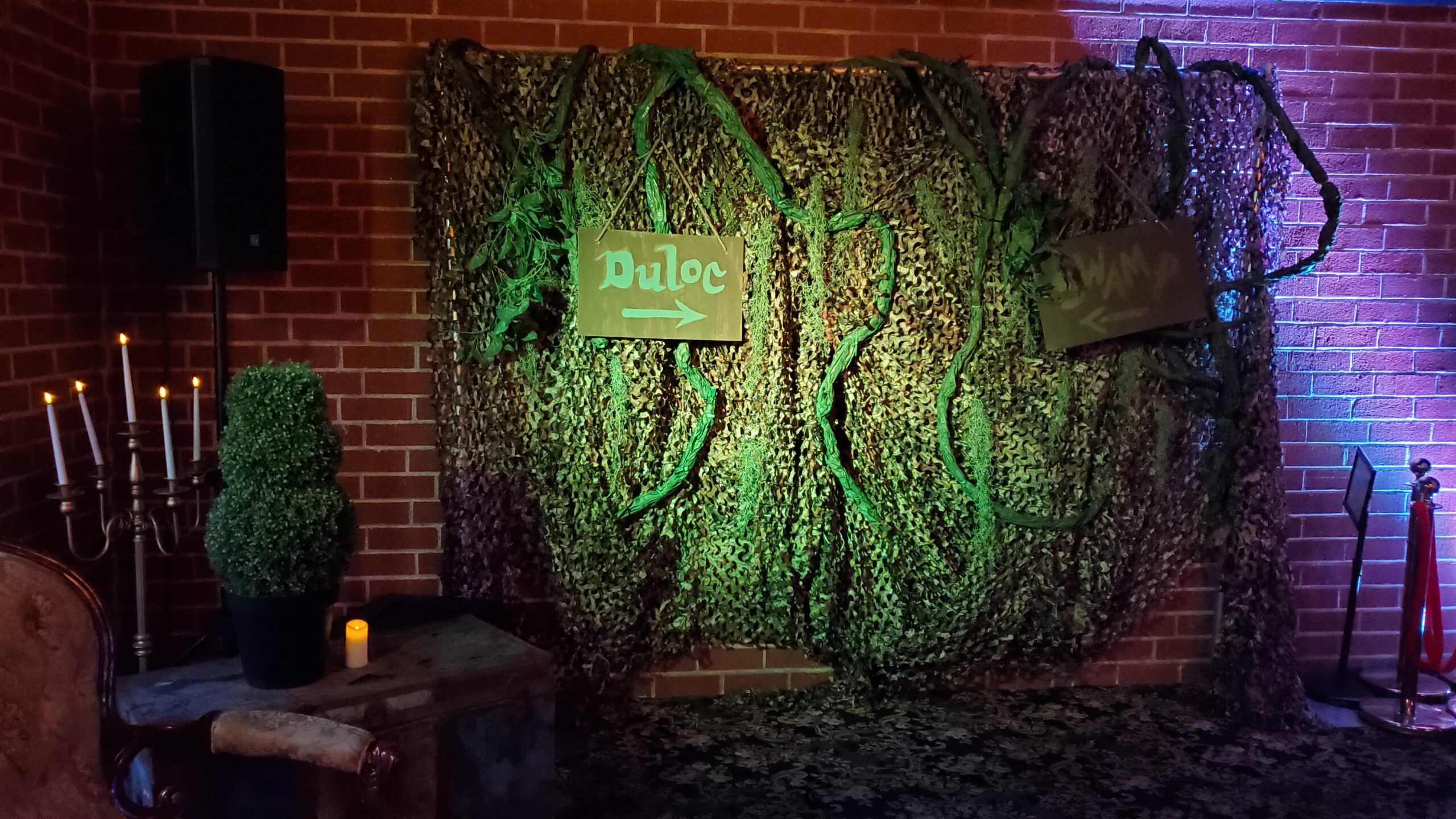
Inside, a photo backdrop for Shrek: The Musical. Well, at least it’s another fairy tale, right?
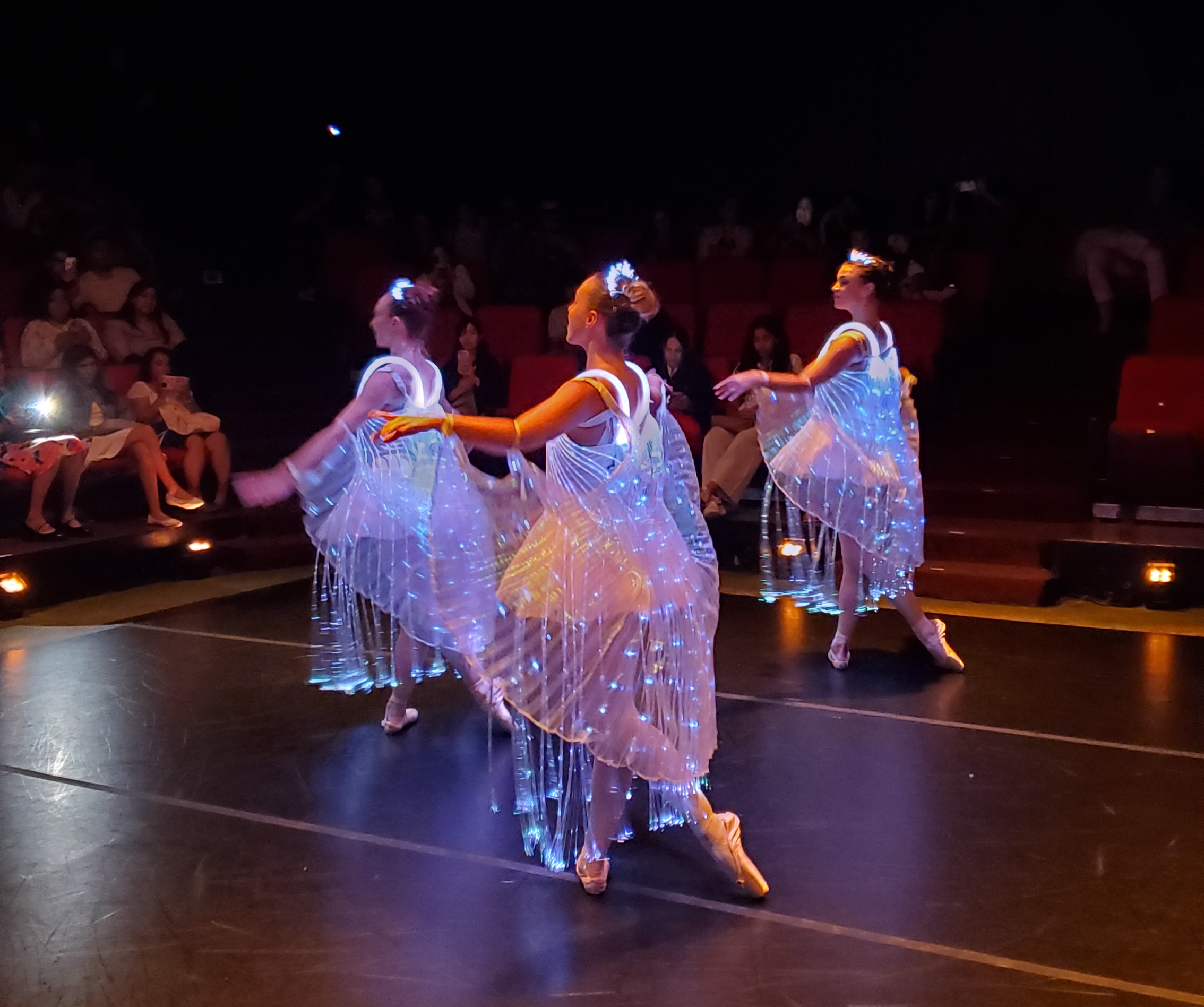
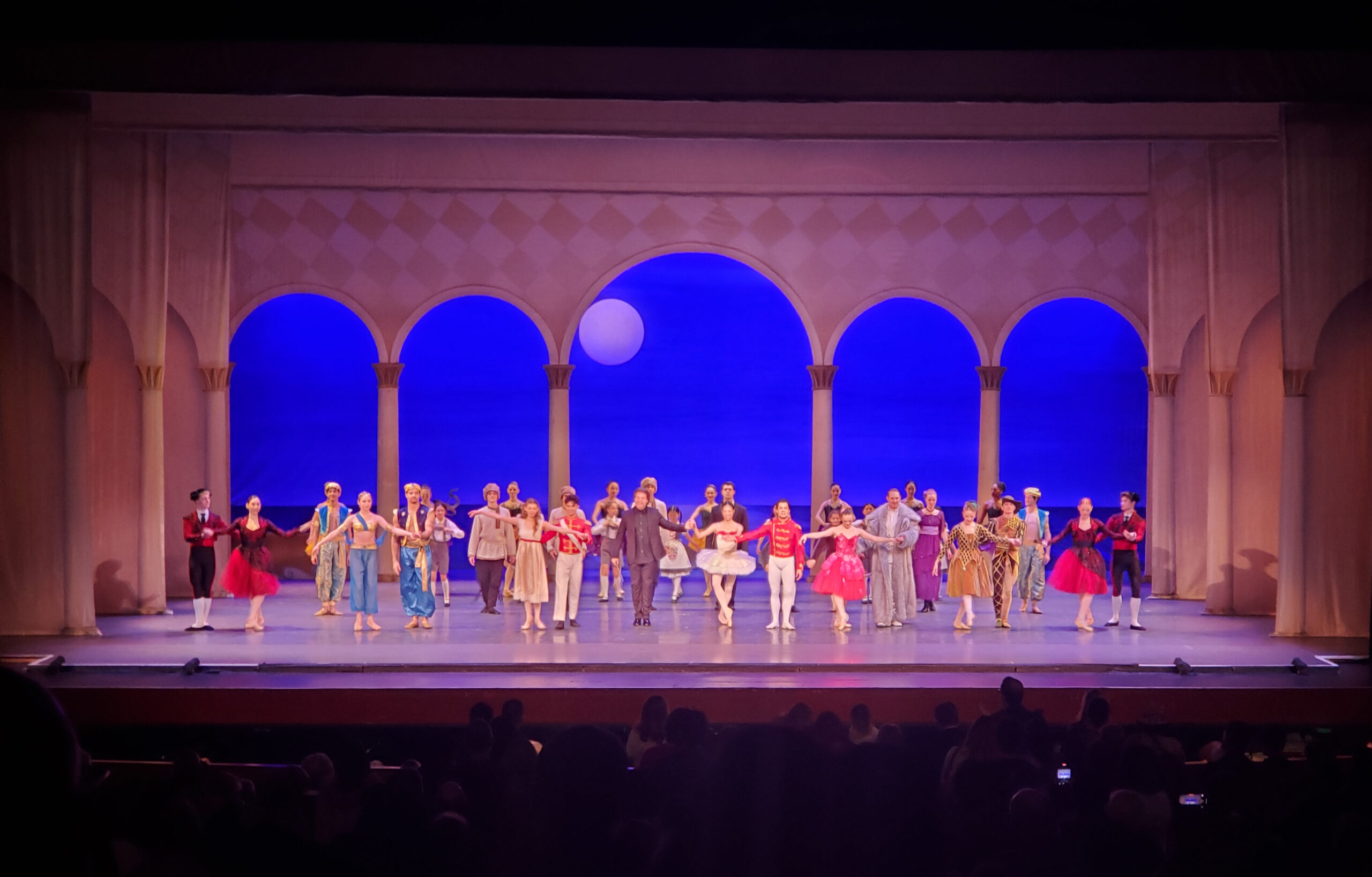
The Sleeping Beauty Ballet of Lights production. (Note the person in the front row with her camera flash on – we’ll get to that in a bit.)
So let’s get into it–my long list of complaints that have nothing to do with the performers, followed by how much I loved the performance itself.
The Seating
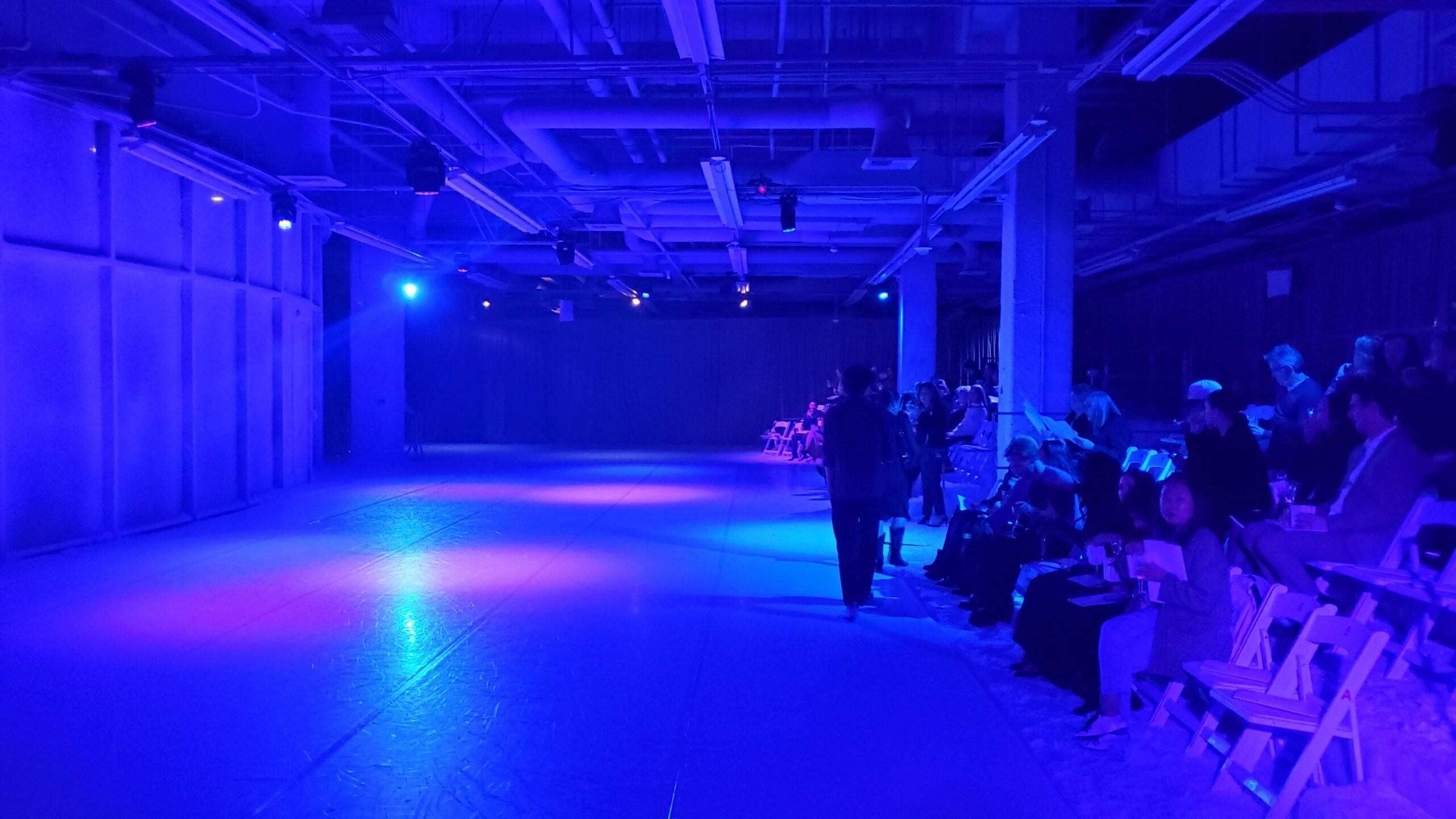
The Nocturne is a theater-in-the-round style venue, and this event had open seating on 3 of the 4 sides. Instead of buying a specific seat, you buy into a seating section – A, closest to the stage on all 3 sides, through C, furthest back on all 3 sides.
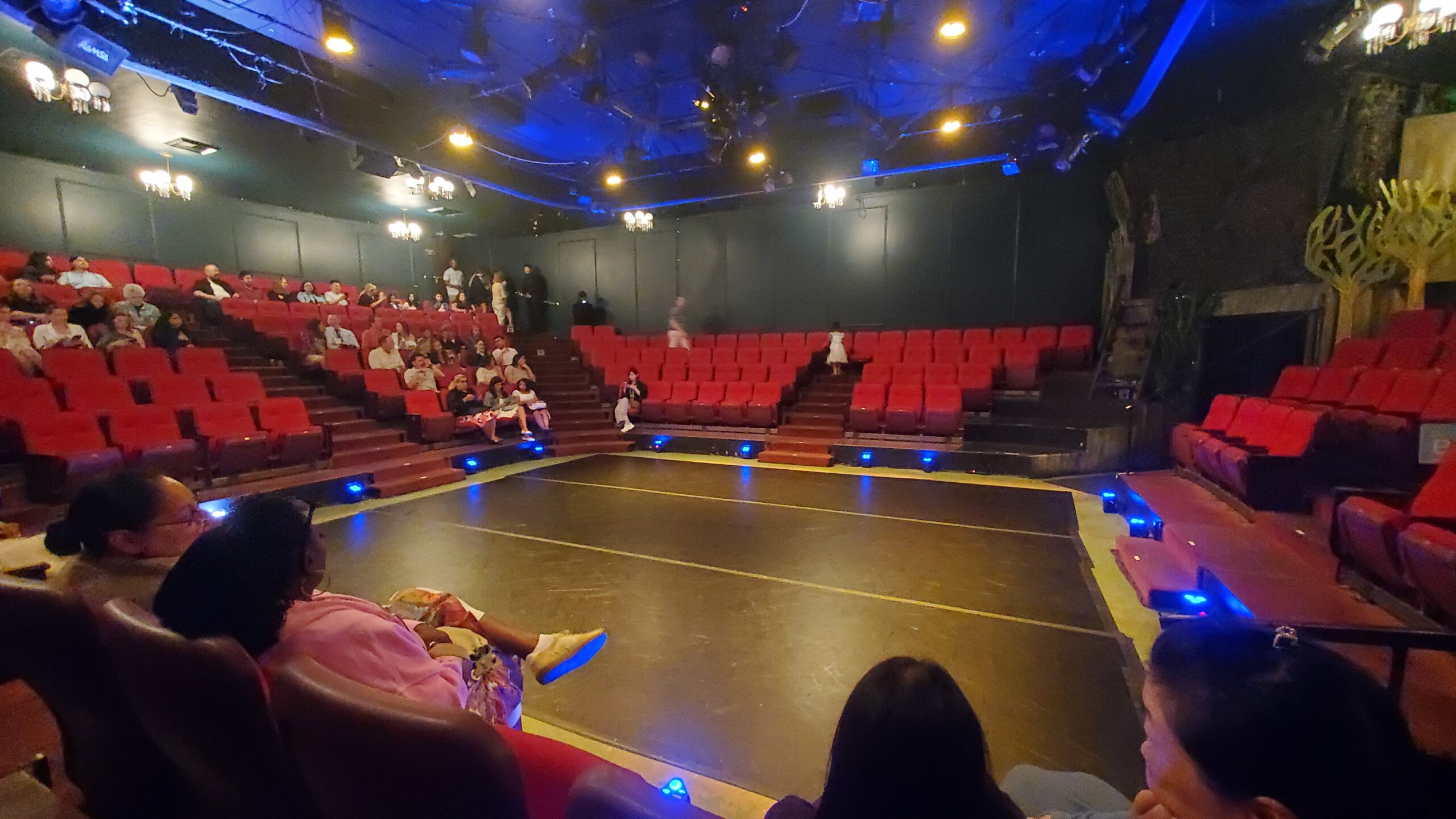
The Nocturne Theatre interior, from my seat on the far end of the right side.
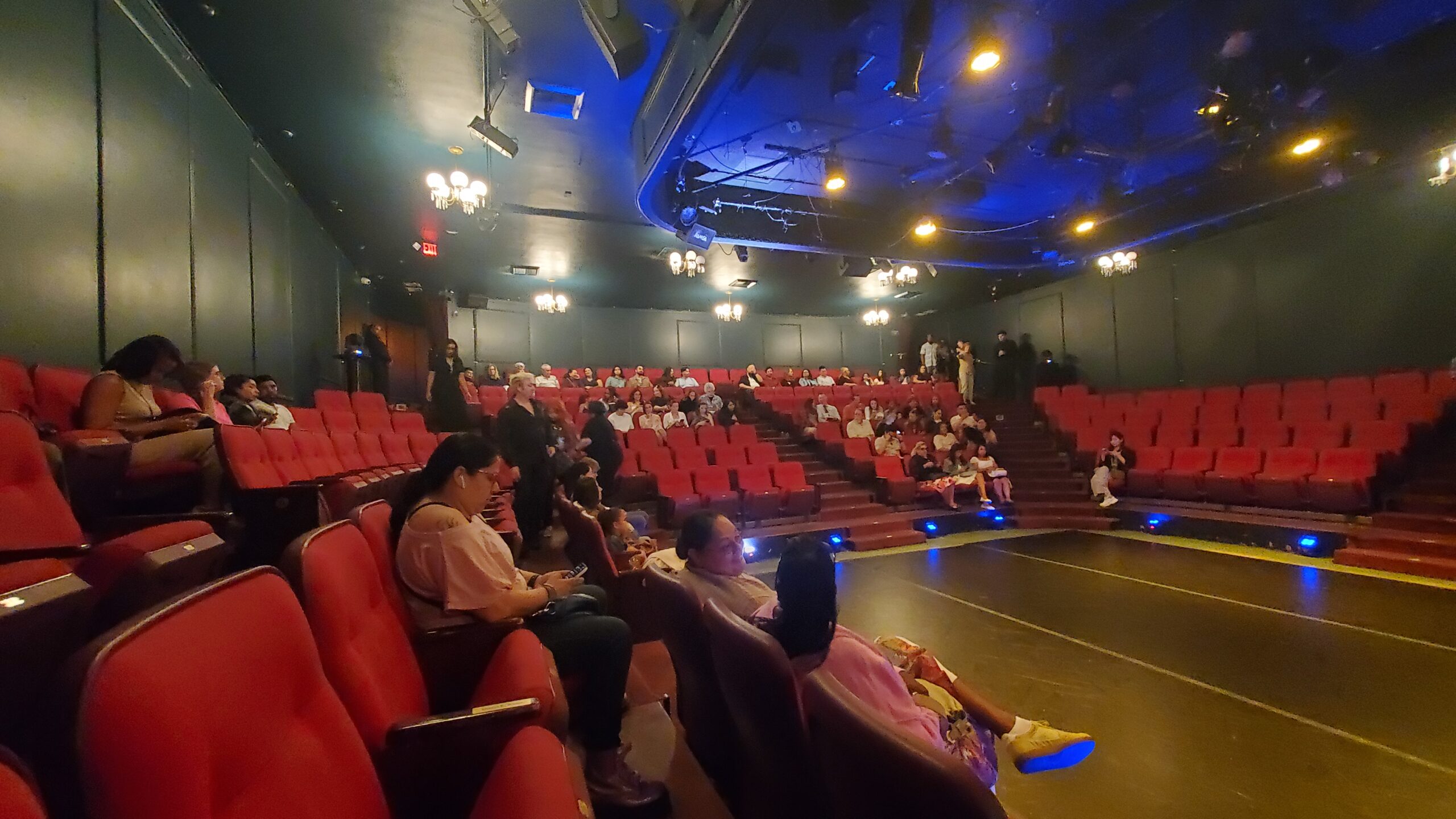
Looking left, towards the front doors and front seating section – where the actual good seats were, at any height.
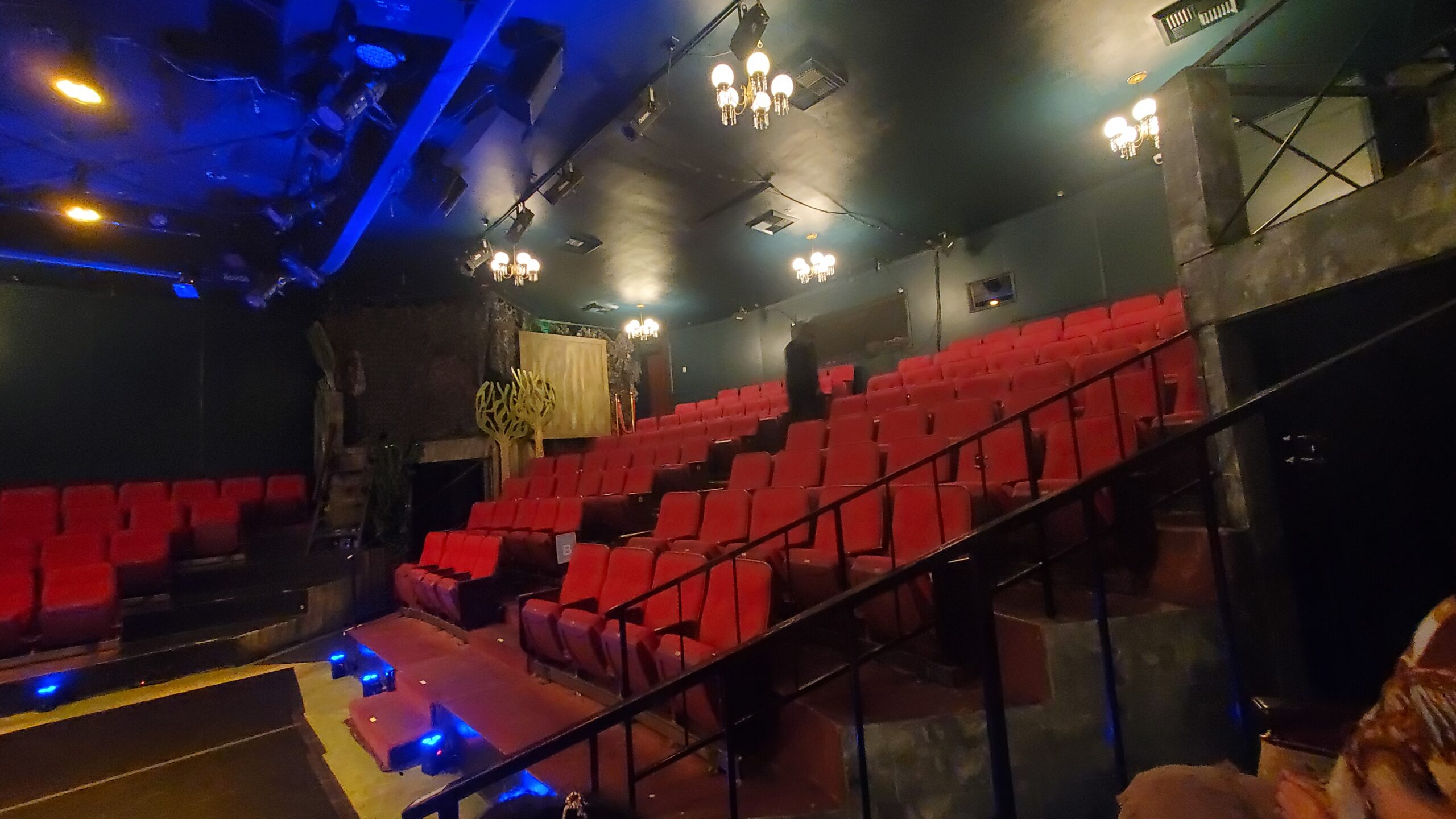
Looking right, at the “back” of the theater, the section no one was seated in. Note what I assume is Shrek’s house up there.
This was pretty unfortunate for me, because even though I paid for the ostensibly “best” seating section, A, that still included all the way to the end of one side. I should’ve done a C ticket and hoped for a middle view – that would’ve been leagues better. But no, they really just shouldn’t have sold seats this far to the side, on either side. No fault of the ballerinas, but the performance was almost totally front-focused. So my view was not very good.
The Lights & Costumes
I was a little surprised by the outfits. The advertisements for the Ballet of Lights had made it seem a bit more high-budget and magical, while the actual costumes – well, they weren’t bad, but in my opinion they didn’t match the level set by the ads. They were fine once I got used to them, but even then, some of them had a tendency to flicker or just plain go dead at key moments. I don’t know if it was faulty wiring or old batteries or what.
I have heard around that Fever events can sometimes have a tendency to be on the “cheap-looking” side, and while that’s certainly not always the case (see The Cortege), this event at least did nothing to dispel that notion.
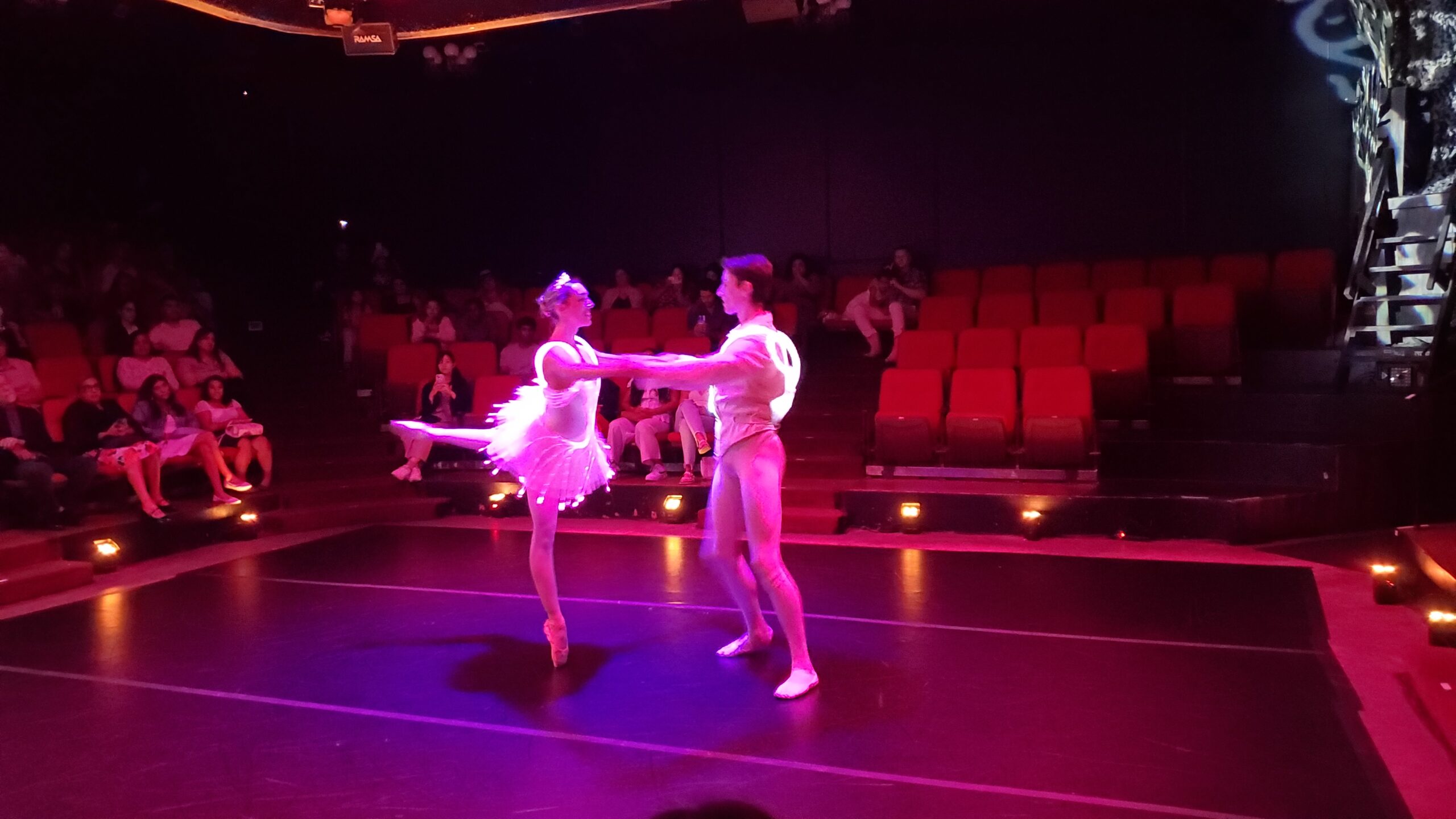
The costumes weren’t bad, really, but when the stage was still fully lit, the magic of the lights was dimmed.
The theater itself was also still pretty lit up, so it wasn’t like they were dancing in complete darkness, which would have been very neat. No, they were still dancing in moderate stage light. I don’t know why.
The Audience & Ushers
My real gripe, though, is with the audience (and thus to some extent with the ushers). What a noisy, disrespectful audience that happened to be here tonight. One woman brought her little yappy dog, which continued to bark and yip for the first 10-20 minutes until she mercifully got up and left on her own. Hello, ushers, what are you doing if not removing a yapping dog? Not to mention all the people chattering away.
And the flashes! They announce that cameras and recording are strictly prohibited until the very last dance number, at which time they will announce that photo and video recording is allowed as long as there’s no flash. Somehow, to a dozen older people in the audience, this must get heard as “take out your phones immediately and record video with the flash constantly on.” This was so annoying – they’re all so bright, especially when the whole point is that the costumes are the light show, not a bunch of bright points of light from idiots in the audience.
It’s a wonderful performance here, but those lights were so distracting in person. For a show that relies so heavily on darkness and visual subtlety, this kind of disruption damages the production.
You would think that any usher would walk over and enforce this, but no. I don’t know how people can sit there and film without realizing that they’re being so rude about it, but even if they truly are just oblivious, then it’s an usher’s job to politely step over and fix it.
But no, instead, we just end up with all kinds of bright and noisy distractions that seriously detract from the enjoyment of the show for the polite 90% of the audience. Boo.
The Performance!
Finally, let’s get to the positives: everything about the ballet itself.
The full ballet can be anywhere from 2-4 hours long; this version was condensed to just 60 minutes (without intermission).
I thought it was absolutely wonderful!
Even from my unfavorable seat, I loved the staging, the choreography, and all of the excellent dancing.
It was a small cast, which means they all had to do plenty of work, and boy did they ever do it. The fairies all had some individual highlights. The coordination was on point. And the male lead–the only man in the production–was an absolute treat.
Annabel Macdonald’s Aurora was great, with a commanding presence every time she was on stage (which was often).
Carabosse, no less talented by any means, totally stole the show for me. She did such a good job playing the villain, and it’s so easy to love the dynamically-choreographed villains in ballet. Excellent “evil” lighting effects for her too.
So, please, ignore my gripes about the rest of the event–or at least isolate them to their proper container–because I have nothing but compliments for the dancers.
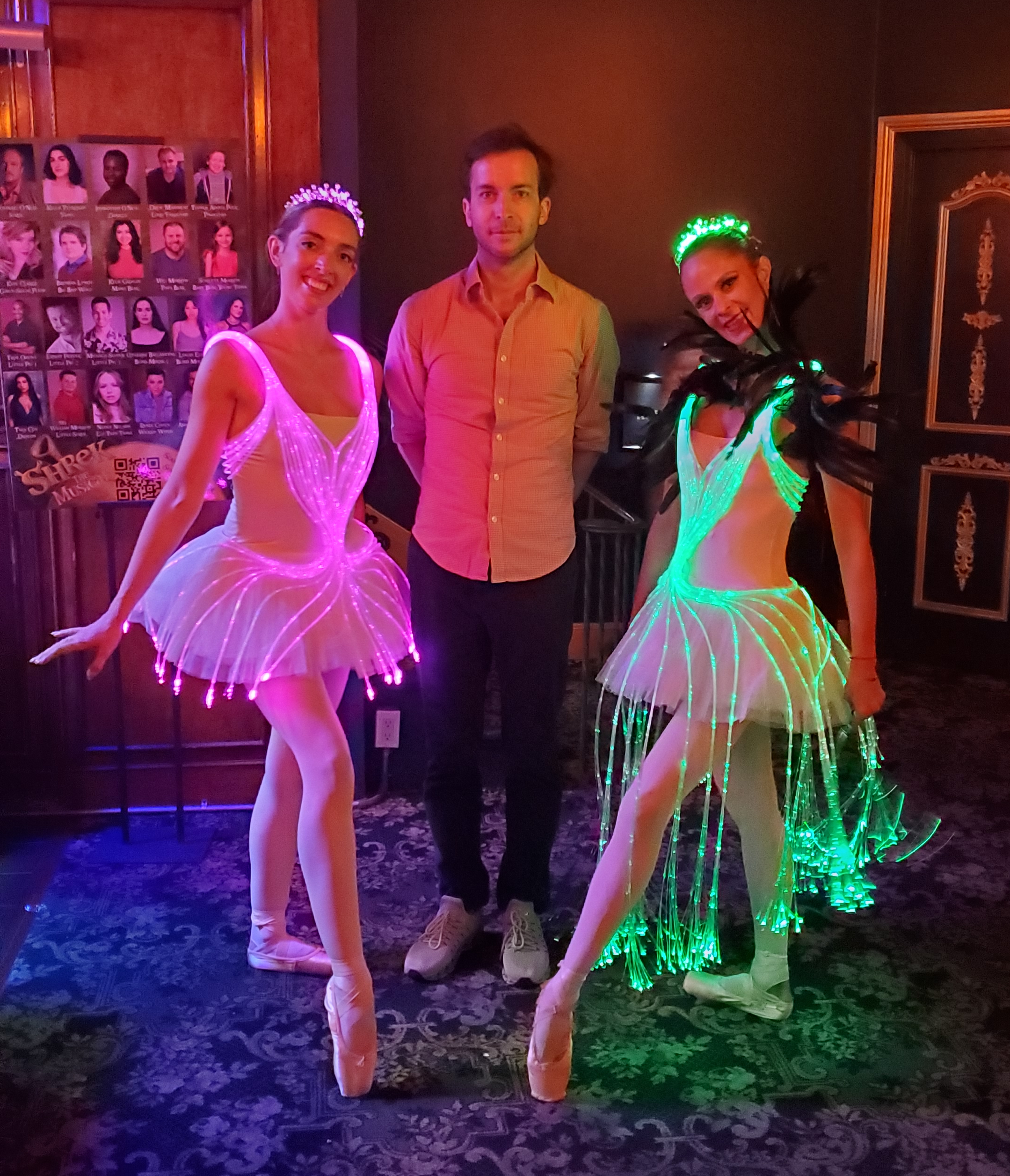
I got to take a photo with the ballerinas who played Aurora and Carabosse afterwards, which was such a delight. How is one supposed to pose in this situation? When I stepped up I suddenly realized I had no clue.
Full Cast & Context
Sadly, Fever is very bad about publishing cast lists. I don’t know why they always hide the performer identities; it’s extremely annoying and, in my opinion, disrespectful.
The one ballerina’s name I could find was Annabel Macdonald, who played Princess Aurora.
I would love to put names to Carabosse, Prince Désiré, and the rest of the ensemble. If you know them, please contact me. I was there on 7/12/2025.
The story of Sleeping Beauty goes way back, long before ballet. Versions circulated in European folklore for centuries, but the two sources people usually point to are Giambattista Basile’s much darker 17th-century tale Sun, Moon, and Talia and Charles Perrault’s later French version from 1697, which softened things into the familiar curse, spindle, century-long sleep, and awakening kiss. By the time the Brothers Grimm published their own version in the 19th century, the story had settled into the elegant, fairy-tale shape that audiences recognize today: royal pomp, fate, time passing, and a neat restoration of order at the end.
The ballet version comes from Imperial Russia, premiering in 1890 at the Mariinsky Theatre in St. Petersburg. Choreographed by Marius Petipa to a lavish score by Pyotr Ilyich Tchaikovsky (Opus 66), The Sleeping Beauty was designed as a grand, old-school spectacle, full of court dances, formal patterns, and technical bravura. Unlike earlier ballets that leaned heavily on plot shortcuts, this one treats dance itself as the main event, especially in the long classical set pieces like the Rose Adagio and the final wedding divertissements. Over time, it became a kind of gold standard for classical ballet, less about narrative surprises and more about precision, control, and the idealized beauty of the form itself.
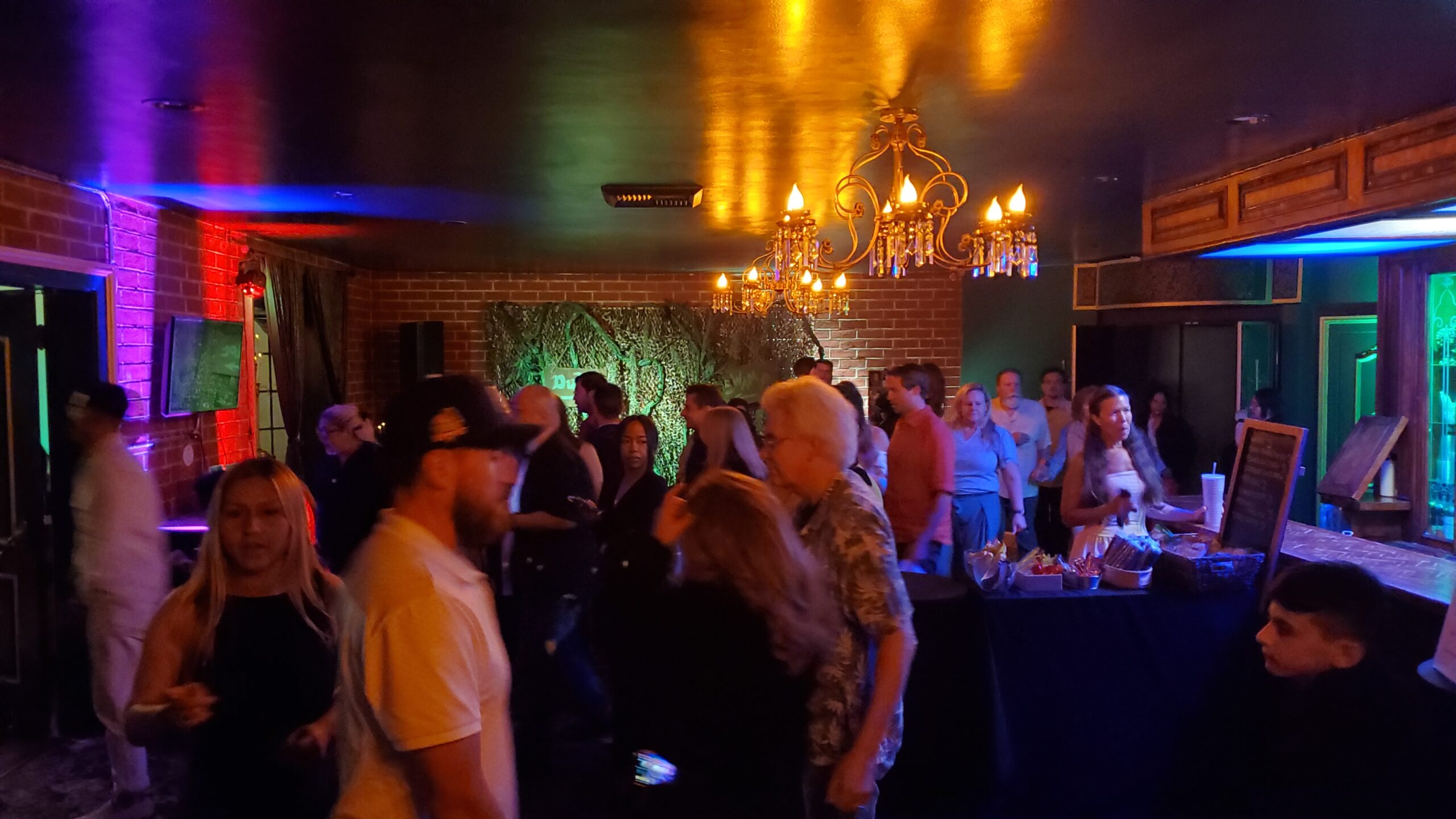
Nocturne Theatre lobby & bar
The Nocturne Theatre in Glendale (very conveniently located north of where I am in downtown Los Angeles) is a wonderful place, one of my most-attended theaters. Despite my nitpicks with this night, I adore the Nocturne overall.