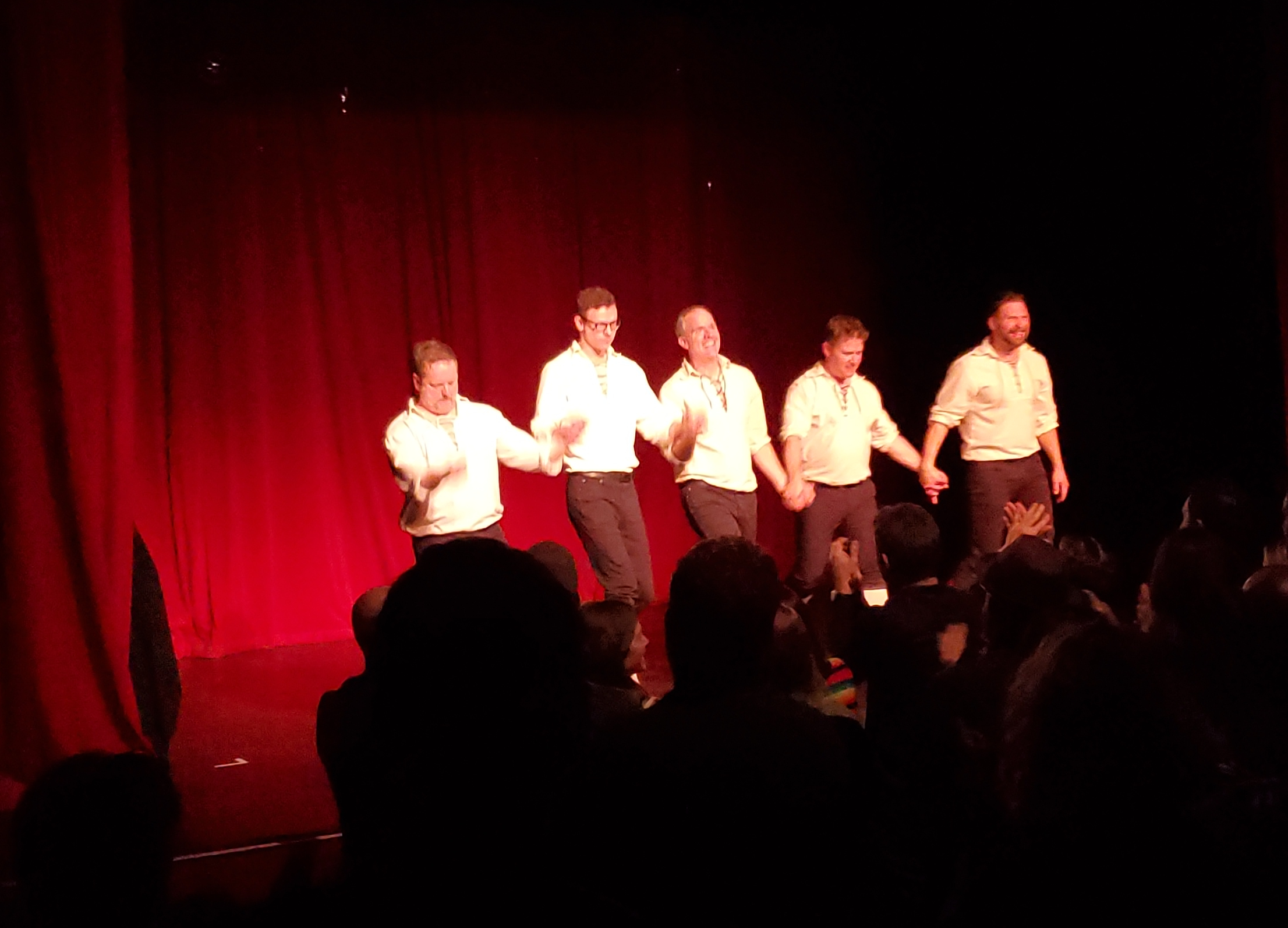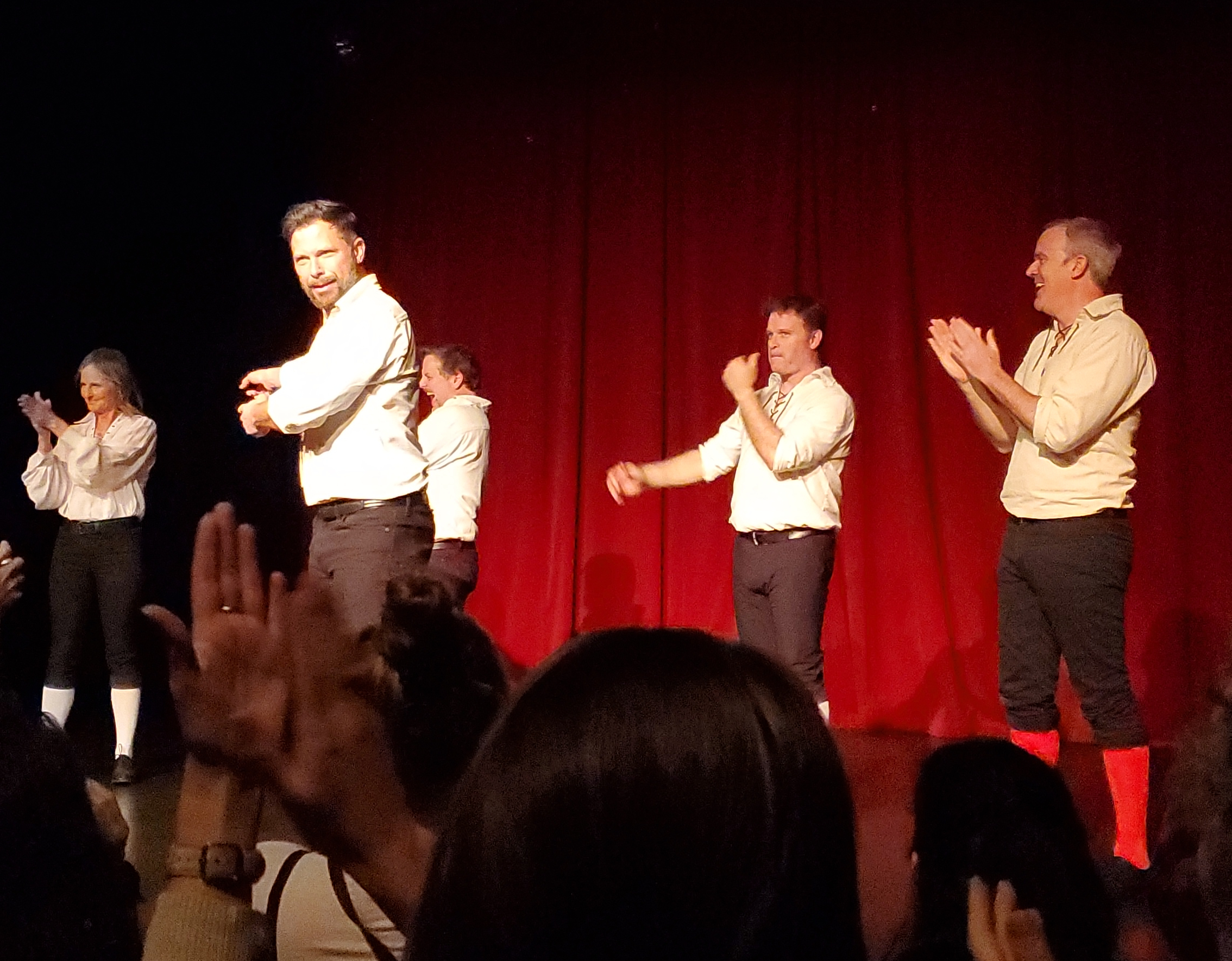
Time for another Improv Shakespeare. As always, this is one of the few improv shows I attend–and they’re always absolute gold.
Tonight (10/5/2025), I saw them at a venue called “the Largo at the Coronet.” This mouthful of a name is because the theater building itself is a historic place called the Coronet Theatre, and the Largo used to be a different organization at a different place called the Club Largo.
When Club Largo moved into the Coronet Theatre in 2008, instead of picking something easy like the Largo Coronet or, chef’s kiss, the Coronet Largo (rolls perfectly off the tongue), they chose “the Largo at the Coronet” which can confusingly sound like a place at another place. The Pizza Hut at the Taco Bell, if you will.

The Largo at the Coronet is, to put it generously, not exactly my favorite venue in Los Angeles. But I truly would go anywhere to see this great troupe perform.
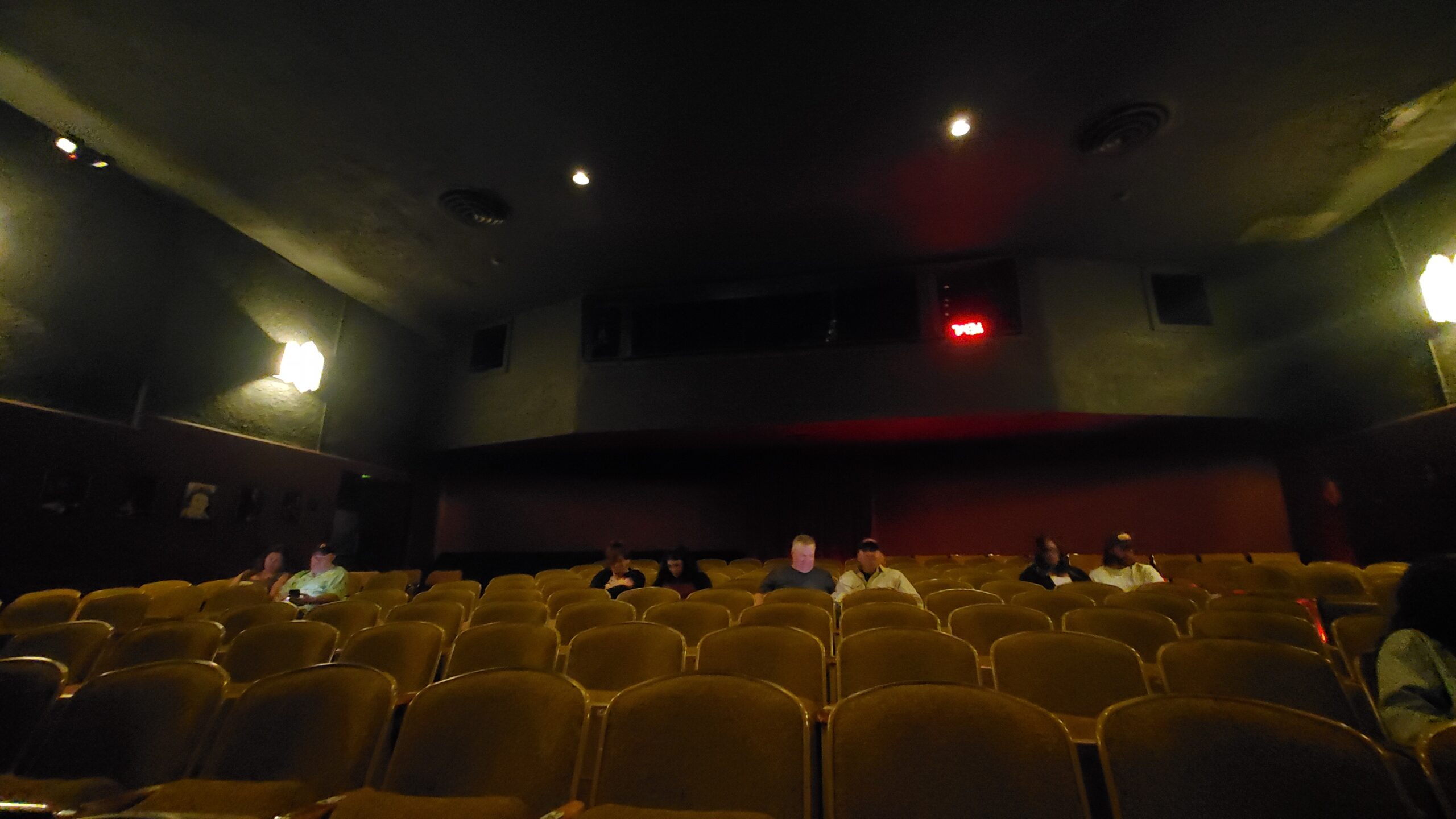
The theater itself is bare-bones, but it works.
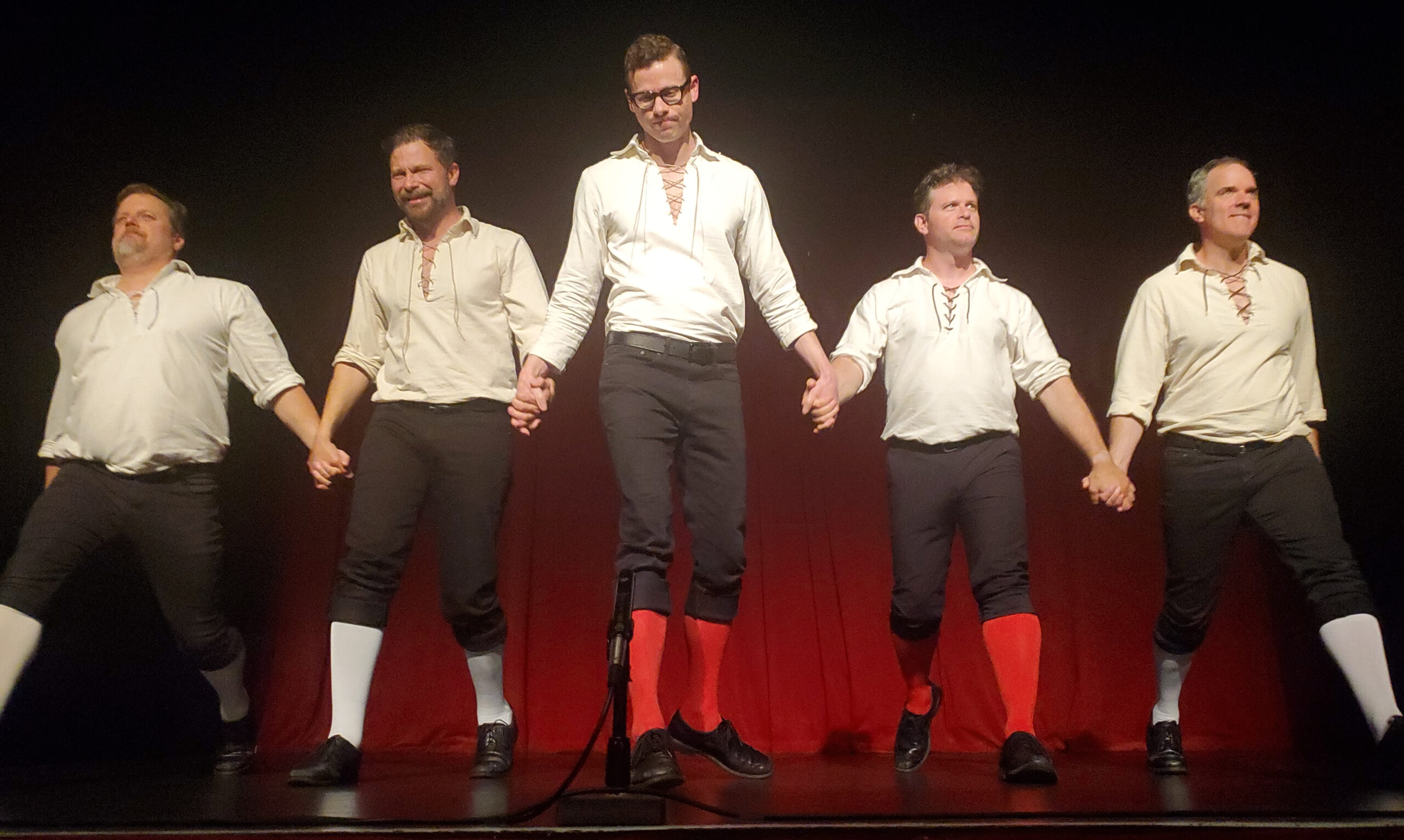
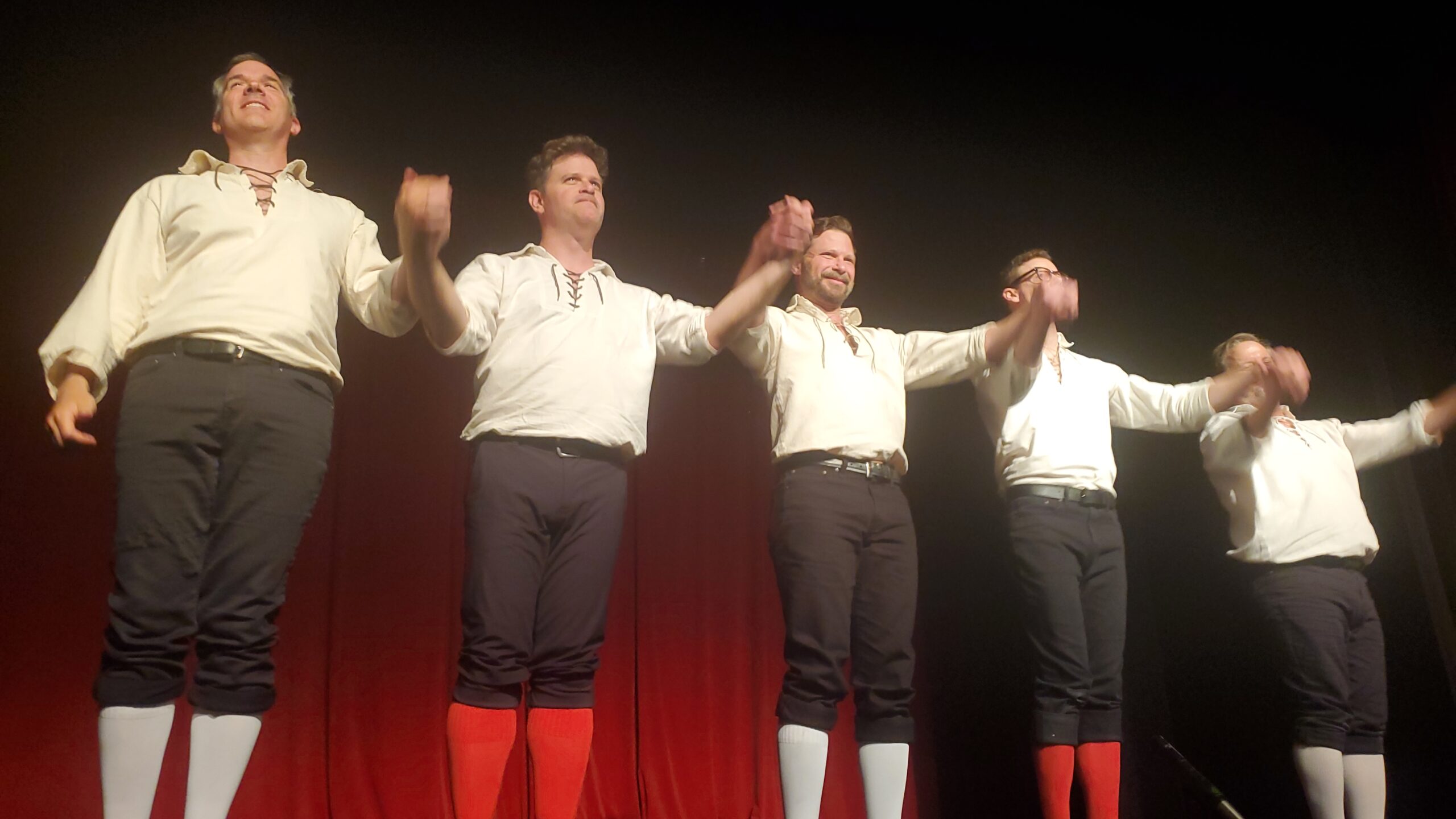
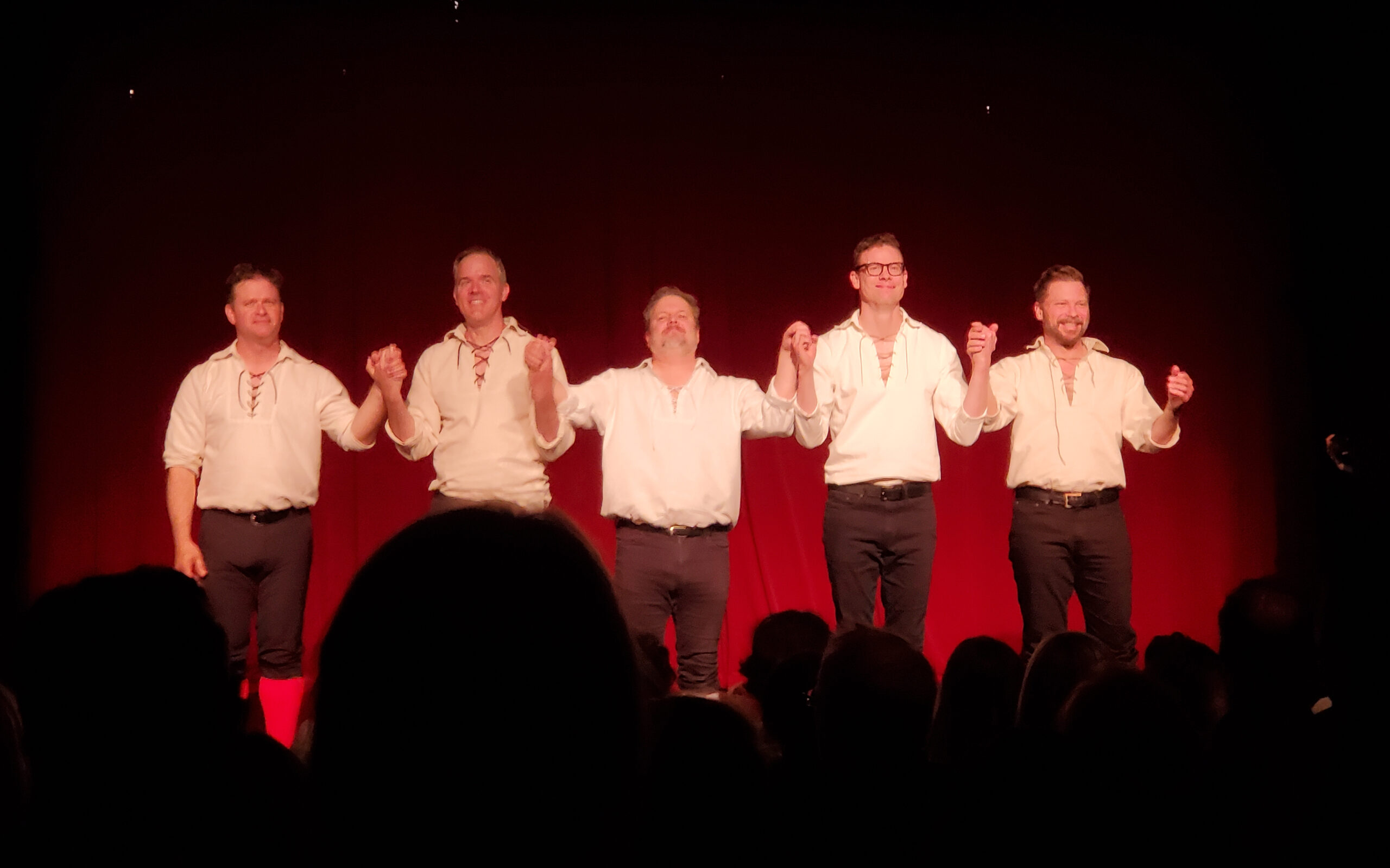
Tonight’s Improv Shakespeare had their usual Los Angeles group, with Greg Hess in for Randall Harr. They gave their usual introduction speech, and then the show began.
The Play: Henry 3000
The Bard himself wrote a number of plays about English kings: Henry IV Part 1, Henry IV Part 2, Henry V, Henry VI Part 1, Henry VI Part 2, Henry VI Part 3, and Henry VIII. (There’s also King John, Richard II, and Richard III.) These are variously grouped in different ways into a literary block called Shakespeare’s Henriad.
It was this literary tradition that a member of the audience was referring to when they shouted out the winning suggestion for the name of the night’s play: “HENRY THREE THOUSAND!”
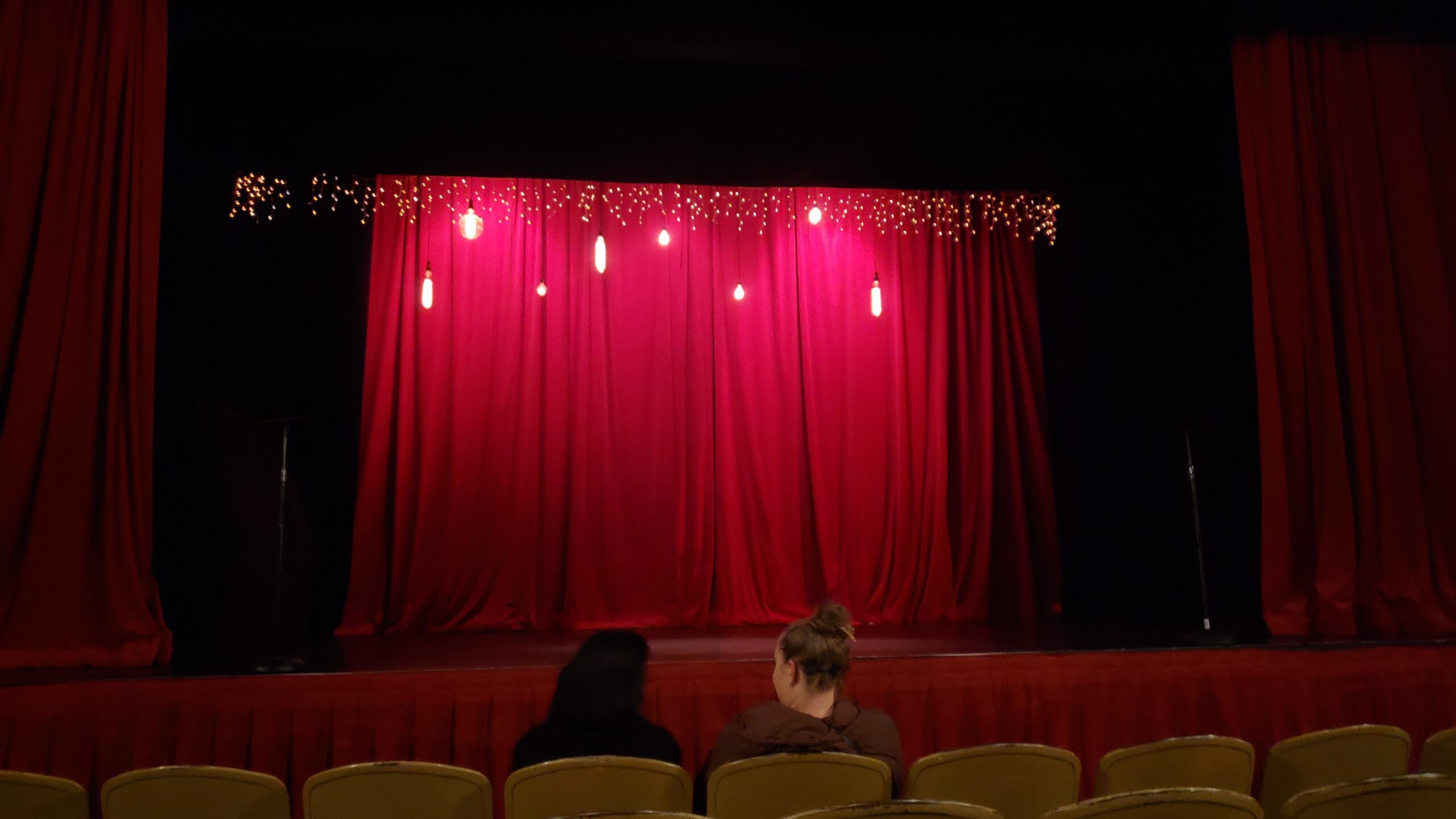
View from the center, fifth row.
If you wish to retain the Roman numeral titling, by the way, that makes this play’s title Henry MMM. So, no, let’s not call it Henry MMM.
Now, as we all remember from grade school, the final King Henry in England was the infamous King Henry VIII, sometimes described as one of the most important and influential European rulers in history. Henry VIII died with only one heir, Edward VI, who did not have any heirs himself because he died when he was 15.
With the title Henry 3000 I was thinking that the troupe might go in some far-futuristic direction, as if there had simply been so many other new King Henrys in the meantime that it was perhaps in a future that had returned to a Renaissance-esque setting. Instead, the character of Prologue–who sets the general tone and themes for each improv session, tonight played by Ross Bryant–went in a different direction.
King Henry 3000 in tonight’s play was an outcast king. Or should I say, an Outkast king? Bryant immediately thought of the hip-hop duo/band Outkast, formed in 1992 and achieving major popularity especially between the mid-90s to mid-00s. You’ve almost definitely heard their songs like “Hey Ya!,” “”Ms. Jackson,” “The Way You Move,” “Roses,” “So Fresh, So Clean,” or “B.O.B.” One half of the Outkast duo, you see, has the very famous stage name Andre 3000. Who better to draw inspiration from for this freshest and cleanest installment of a King Henry?
In Henry 3000, our titular kingly outcast protagonist sends his much more popular and powerful brother, Magnus, off to war, so he–Henry 3k–can finally woo Lady Erica instead.
However, Lady Erica’s scheming father has secretly been intercepting and withholding Henry 3k’s letters to Lady Erica. This father has also been posing as Lady Erica and sending love letters to Magnus instead–very graphic love letters, in fact, all in his daughter’s name.
There is also the maid, Maud. Maud also has her letters.
Lady Erica’s father desperately wants Lady Erica to marry Magnus, so badly that he dresses up and disguises himself as his own daughter, goes on the road, finds the traveling Magnus outside of York, and seduces him in the moonlight.
Henry 3k finally meets with the real Lady Erica in the flesh, and the two begin falling in love.
More letters come in, and it becomes a race to marriage–because if the father, disguised as Lady Erica, marries Magnus as Lady Erica in her name first, then that’s the valid marriage–because that’s just how the law words, as we all know.
To complicate things, the marriage must be performed by a horse vicar–a marriage mare–as we also all know.
Magnus and father-as-Erica reach York, and Magnus meets with the Duke of York. The Duke and Magnus conspire together to form a new alliance, rather than make war, and betray Henry 3k.
Behind Magnus’s back, the Duke then conspires to further betray Magnus himself, as soon as Magnus has eliminated Henry 3k. Treacherous times indeed.
The performance takes a detour to focus on the plebian Rear Guard troops, who are assigned with the task of building a lovely motivational love nest. The troops bond through healing therapy talk: “we learn to listen–and listen, to learn.” In fact, they even make a nice little song out of it.
Back to the action, Magnus and father-as-Erica get together for a little above-the-waist hand-stuff. Must be a pretty good disguise. And then, with a horse vicar supplied by the Duke of York, it looks like the scheming dad wins as he marries Magnus, the first marriage over the finish line. Oh no!
But wait! That horse vicar isn’t who he says he is. He’s actually Henry 3k in a horse disguise, rendering the marriage a sham and proving Magnus’s disloyalty all at once!
Then most of them, including, sadly, the chummy fellows of the Rear Guard, die one after the other in quick succession.
But not Henry 3k and Lady Erica! They live happily ever after, proving once and for all that “love’s the exception.” Hey ya.
Thus forever concluded William Shakespeare’s Henry 3000.
I laughed until I cried and then I kept on laughing some more.
Outkast song puns were laced into the lines at every opportunity. I’m sure there were plenty I didn’t get, as I’m only a surface-level fan; I’m very sure that the older woman sitting next to me didn’t understand any of them at all. Although she may have missed a few laughs, I can tell you she still loved the show. They were a great bonus, but not necessary knowledge for the night.
Masterful, as always.
Formal Analysis
Whenever I see an Improv Shakespeare show, I like to think about the plot afterwards and analyze it as if it were a completely serious work. Many plays do not get saved–Shakespeare himself wrote at least two plays that are forever lost to time. Sometimes all we know about a play is a summary or review that someone else wrote about it, because only that document survived and not the play itself.
Suppose historians uncovered a very old document containing the plot summary of Henry 3000 that you just read here. No other context, no lines or source text, but the full story outline. They would use themes, motifs, imagery, probable inspiration sources, genre conventions, comparison to the canon, and historical context to analyze the work as best they could. Here, then, is my formal analysis of Henry 3000.
As you would expect from the title, Henry 3000 is a history play, and positions itself within the Henriad tradition. However, given that the plot was more focused on romance than reigning, we might say it was a hybrid play, a history with a comedic love story as a central engine. This isn’t at all unusual for Shakespeare, with Henry IV Part 1 and Part 2 being full of comedic material (I’m looking at you, Falstaff), and Henry V‘s whole emotional resolution hinges on the courtship of Katherine. Henry 3000 simply combines these elements and elevates their importance; while the political aspect of the play is pushed to subplot status, it is still very much an important theme.
The plot structure may seem simple at first glance, but the piling up of deceptions dials up the complexity. We have:
- The father deceiving Lady Erica by intercepting her letters and impersonating her in correspondence with Magnus
- Magnus deceiving Henry 3k by attempting an alliance with the Duke of York
- The Duke of York deceiving to betray Magnus by betraying him the moment he’s no longer useful
- Henry 3k deceiving near everyone by disguising himself as the horse vicar
Each character here believes themselves to be the most clever person in the room, while almost always being manipulated by someone else at the same time. It’s a fitting end that Henry 3k uses the tools of deception that have up to then only been used against him to finally win in the end. But this fits in nicely with the other history plays, which are full of provisional alliances and fastly-flickering loyalties.
Another hallmark of the history plays, and of the real-life clashes over the English crown through the centuries, is the use of technicalities in arguments over who has the right to rule. Henry 3000 keeps this theme but transposes it onto who has the right to marry Lady Erica instead, adapting a macro-political conflict into a micro-social conflict.
The Rear Guard pastoral interlude functions as a surprisingly coherent ironic mirror of the main action. In a world where everyone seems to be deceiving each other, the Rear Guard displays earnest emotional openness. It can also be interpreted as class commentary in that the kings, dukes, and nobles are dishonest (whether forced to be or by nature), while the plebian working class citizenry are the only ones with truly honest values. This, then, makes it a harsh and pointed bit of commentary that they all die in the final massacre. Shakespeare is pointing out that even (or especially) the innocent are consumed by the political machinations of their rulers.
We also see an endearing parallel between the character of Henry 3k with the character of young Henry V as he appears in both parts of Henry IV, as the rebellious, tavern-frequenting delinquent Hal. Both Henry 3k and Hal are seen as underdogs–appearing less likely at first to be worthy of the throne than their rivals, less powerful, and less able. But these are, in a sense, “inevitable origin stories,” and the audience knows to expect the events of these plays to transform these characters into their worthy and matured versions. When the horse mask comes off to reveal Henry 3k beneath, it shows he has passed the plot’s tests and arrived in his moment, or mastered the Campbellian “magic world” and returned.
I did want to highlight one aspect that deserves special attention: the father disguising himself as his own daughter to woo Magnus. This makes for great surface-level comedy, but can read much deeper and darker with analysis. The father’s plan requires him to truly become his daughter, inhabiting her identity, speaking in her name, and performing her sexuality for political advantage. This is a grotesque escalation of the usual senex blocking figure, and it can be read as a total patriarchal colonization.
While Shakespeare has cross-dressing disguises frequently enough, they are almost always women disguising themselves as men for protection or to exert agency. A man disguising himself as a woman is not entirely unheard of in Shakespeare–you have Falstaff disguising himself as the fat woman of Brentford in The Merry Wives of Windsor, or the page boy Bartholomew disguising himself as the wife of Christopher Sly in The Taming of the Shrew–but the manner in which the father disguises himself as his daughter here is far beyond those instances.
Ironically, of course, in Shakespeare’s time, all actors were men, so any female part was, in a meta sense, a man disguised as a woman.
Shakespeare drew on Raphael Holinshed’s Chronicles of England, Scotland, and Ireland (published 1577, expanded 1587) for much of his English historical inspiration. It’s certain that this would be the primary inspiration of Henry 3000 as well. We may also point to Plutarch’s Lives of the Noble Grecians and Romans, another common Shakespearean source, as it contains various instances of forged or intercepted letters to drive the plot along. Much of the drama around the clandestine marriage would come naturally from Shakespeare’s lived context in Elizabethan England; likewise, the idea of an outcast king and his rivals is basically the repeating story of the real English throne.
This play would probably have been written in roughly 1600-1606. We can generally assume that it would have been written after Henry V (1599) but the darker political satire and evolution of political to romantic dramatic engine push for a little later still, perhaps on the Jacobean side.
Full Cast & Context
The Improvised Shakespeare Company creates a fully improvised Shakespearean “masterpiece” right before your very eyes, based on whatever catches their ears at the beginning when the audience shouts out title suggestions of plays that have never existed. Nothing is planned, rehearsed, or written. All of the dialogue is said for the first and last time, the characters are created as you watch, and as they joke: “if you’re ever wondering where the story is going… so are they!”
“Tonight you are about to witness the world premiere, opening night, of … [TITLE]. By coincidence, you are also about to witness the final showing of [TITLE]!”

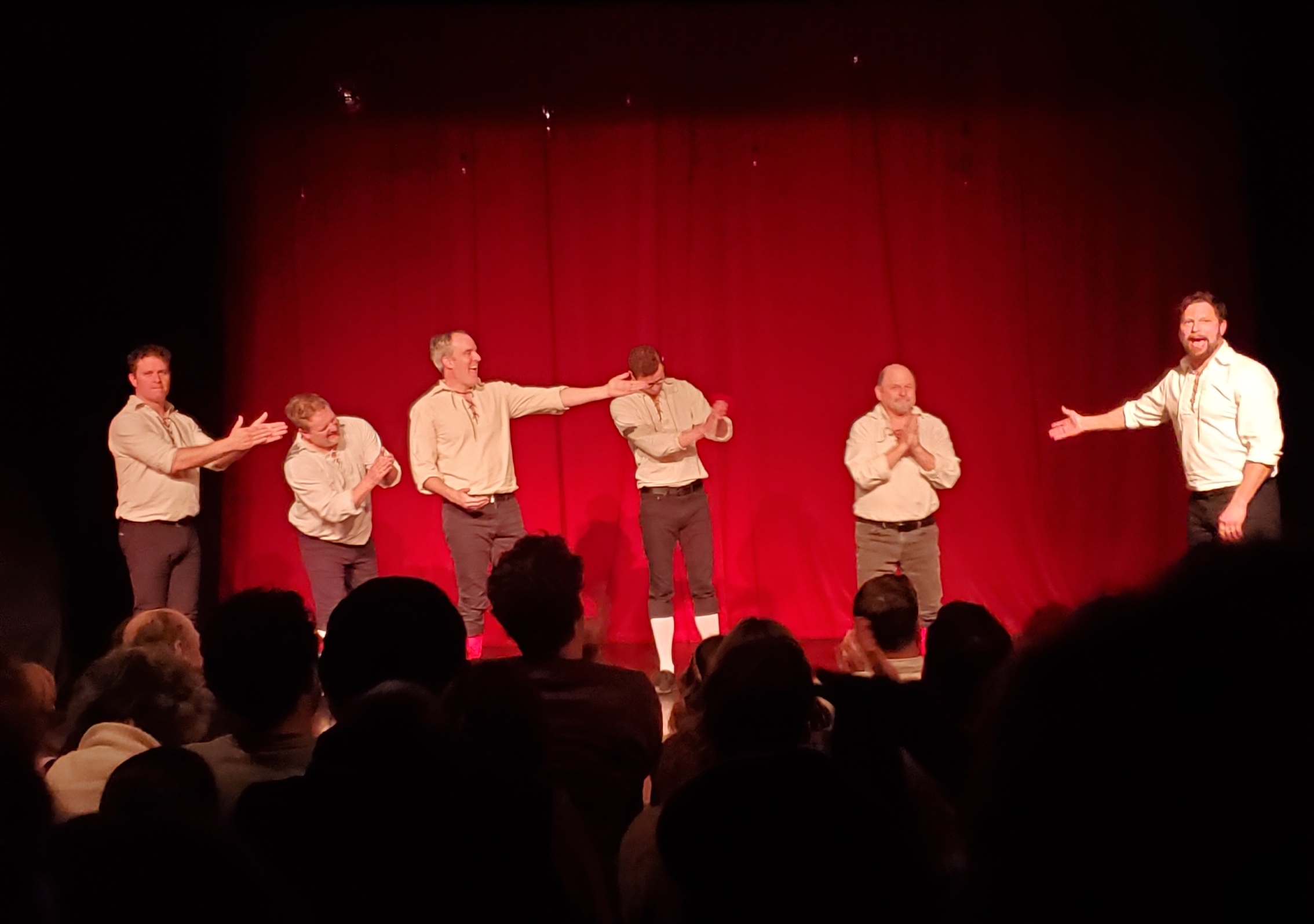
Some of the troupe came out to meet people after the show.
The company began in Chicago in 2005, and regularly tour around the globe, piling on the accolades and awards as they do so.
The Improvised Shakespeare Co. sometimes changes out a member here and there, but tonight was the usual crew that I’m used to seeing:
- Blaine Swen (founder & director, also named the “Best Improviser in Chicago” in 2010)
- Joey Bland (also a two-time Jeopardy champion)
- Ross Bryant (also a writer for Mystery Science Theater 3000)
- Brendan Dowling (also a writer and actor, including an award-winning short)
- Greg Hess (who I’ve seen appear less often than Randall Harr, but is still a standard member, also a prolific tv actor)
The Largo at the Coronet positions itself as one of LA’s most legendary low-key clubs, and it’s known for comedy, music, and strange productions that don’t happen anywhere else. Largo as a venue started in 1989, and moved into the Coronet Theatre in 2008.
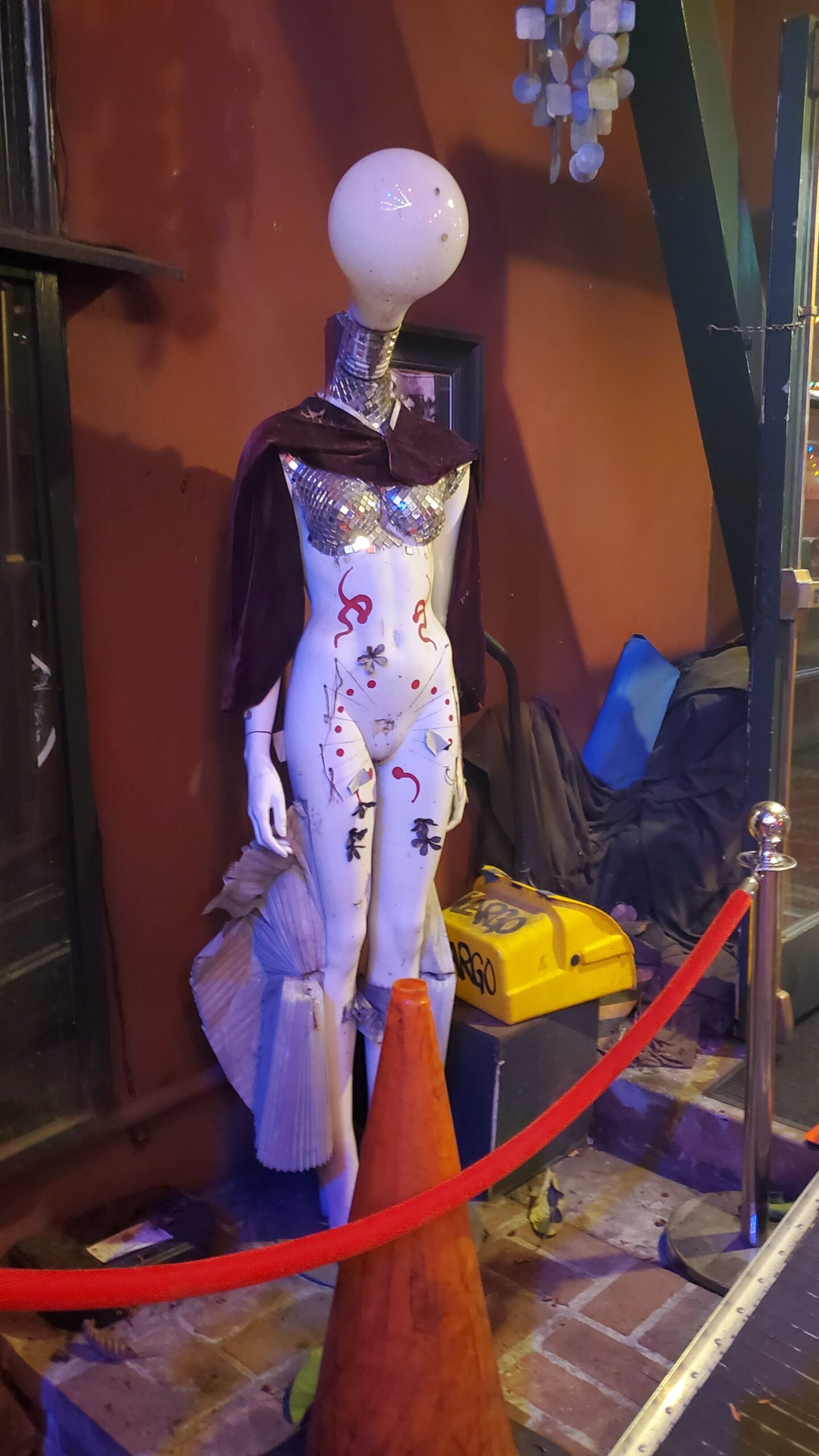
It’s this kind of venue.
The Coronet Theatre opened in 1947 as a neighborhood movie theater, went through long stretches of decline and disuse, but was finally restored instead of being torn down or turned into an Apple store. It feels old and a little vintage, but mostly in good ways–at least the building itself is a nice space.
I’m already looking forward to my next Improv Shakespeare.