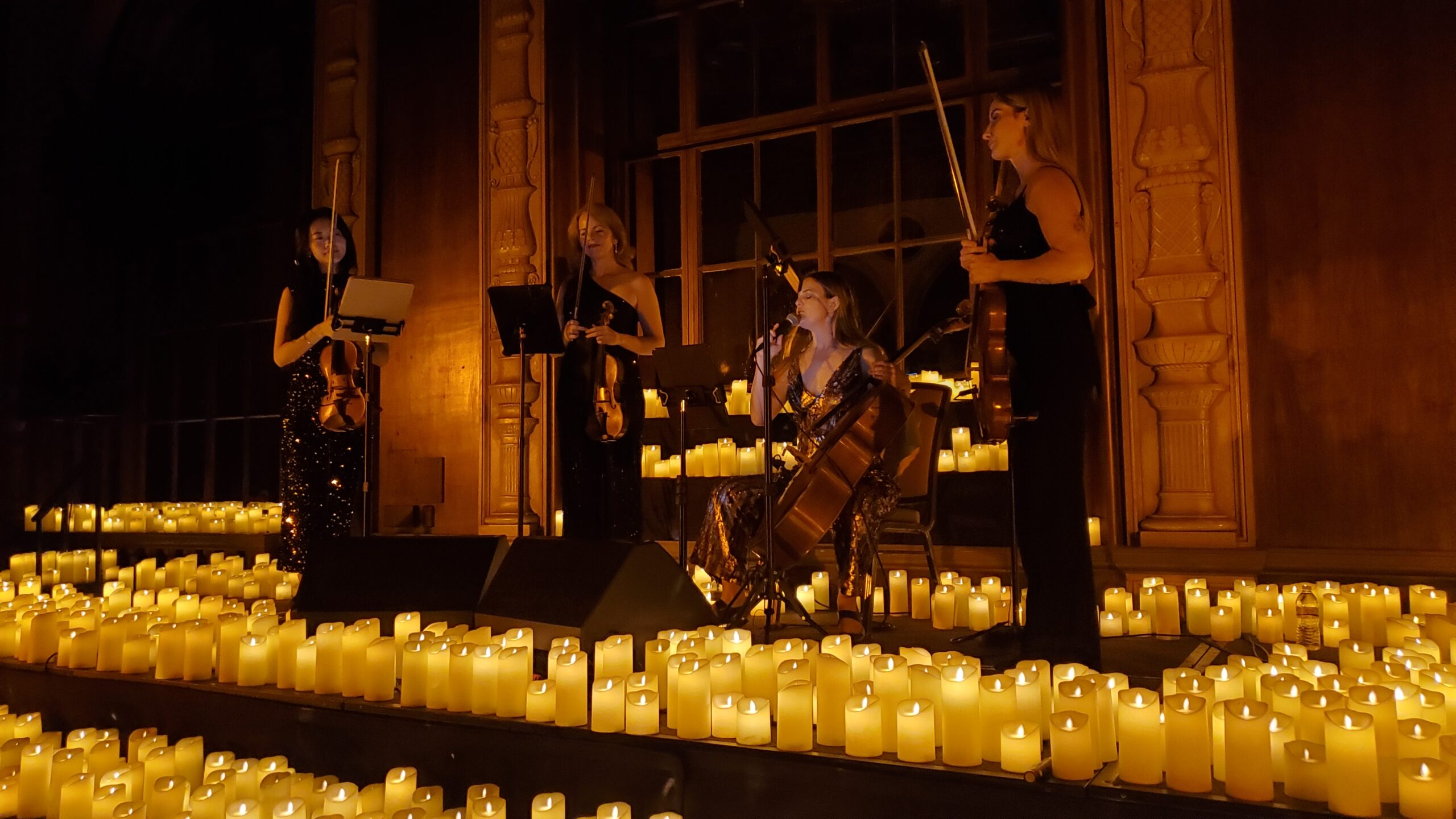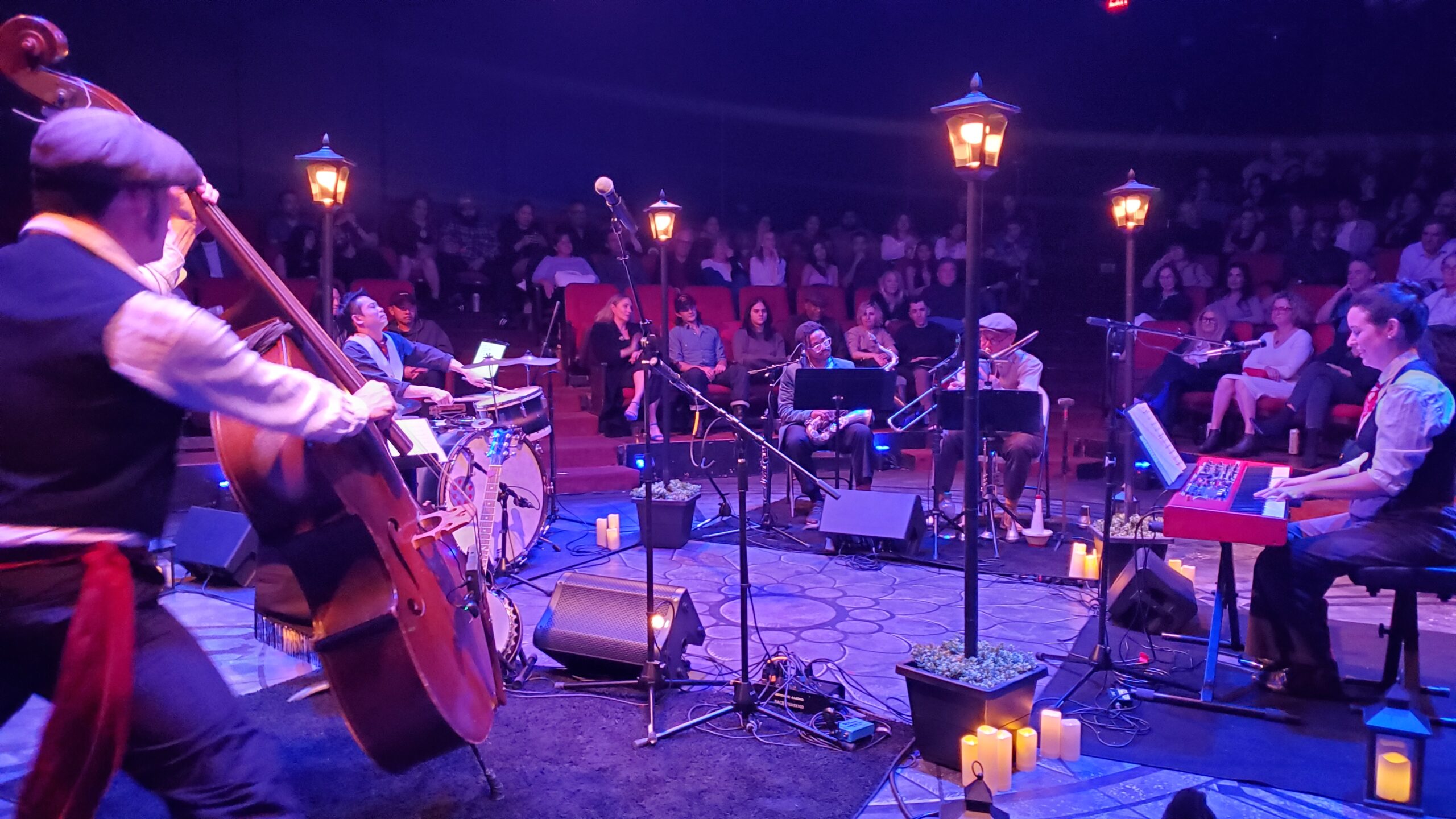
On Saturday, April 4th, I went back to the Nimoy Theater for another unusual concert. I had the most wonderful time listening to Laurel Halo on my first visit here, and I had high hopes for tonight’s show: a small, experimental chamber orchestra called Wild Up. I heard about the show from Instagram ads that featured the group playing whimsical, energetic music, and I love the use of classical instruments in new and strange ways.
Unfortunately, the show did not deliver for me. I walked out by the end feeling disappointed, and like my time had been wasted.
Let’s get into what happened.
Arrival
The Nimoy as a venue didn’t disappoint, at the very least. It’s a charming, modern theater with a fancy lobby and–something I look out for–possibly the best bathroom situation of any location in Los Angeles. It’s a visually striking place.
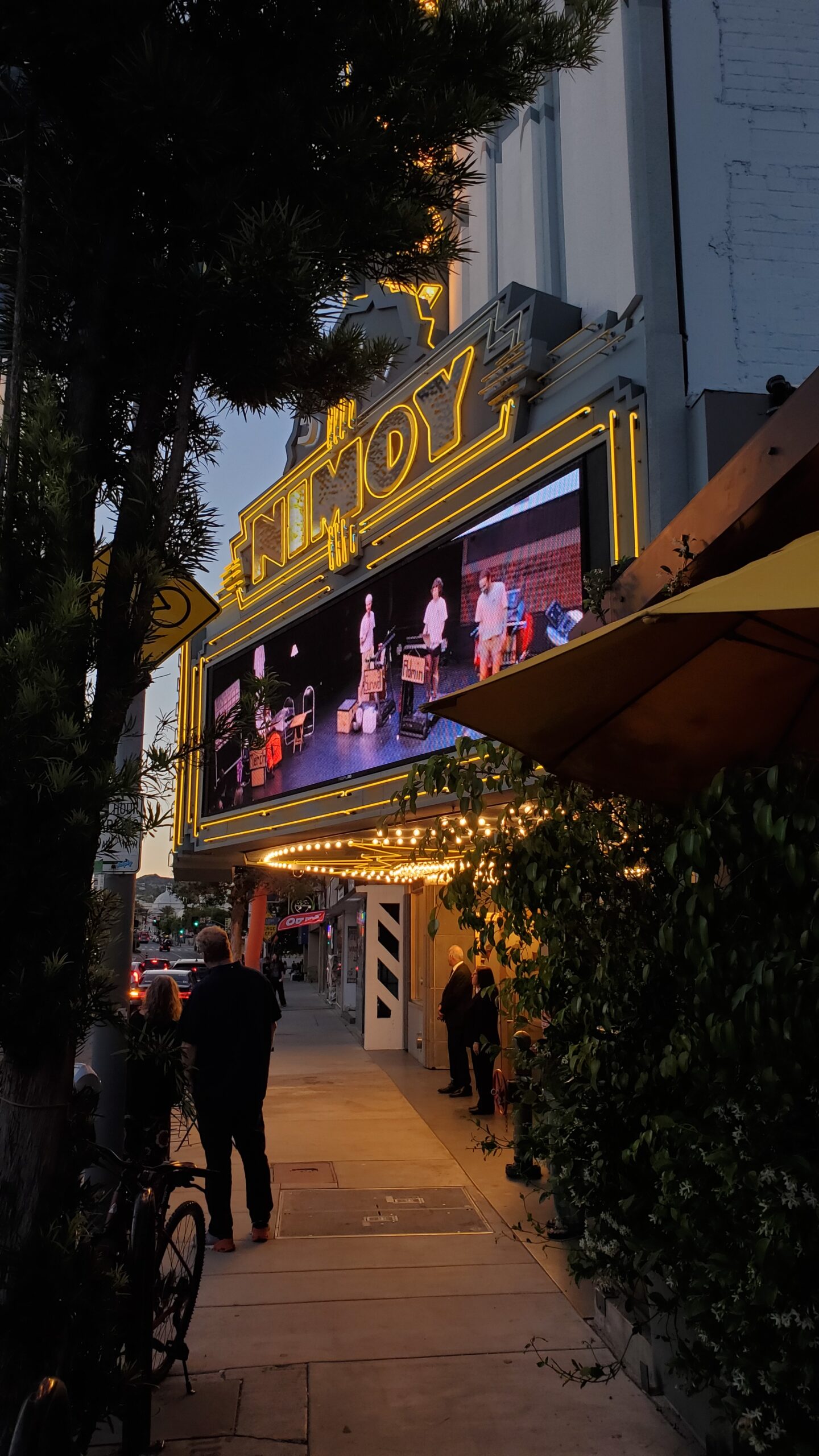
If you arrived an hour before the show, they had complimentary glasses of champagne, so you know I was there for one of those.
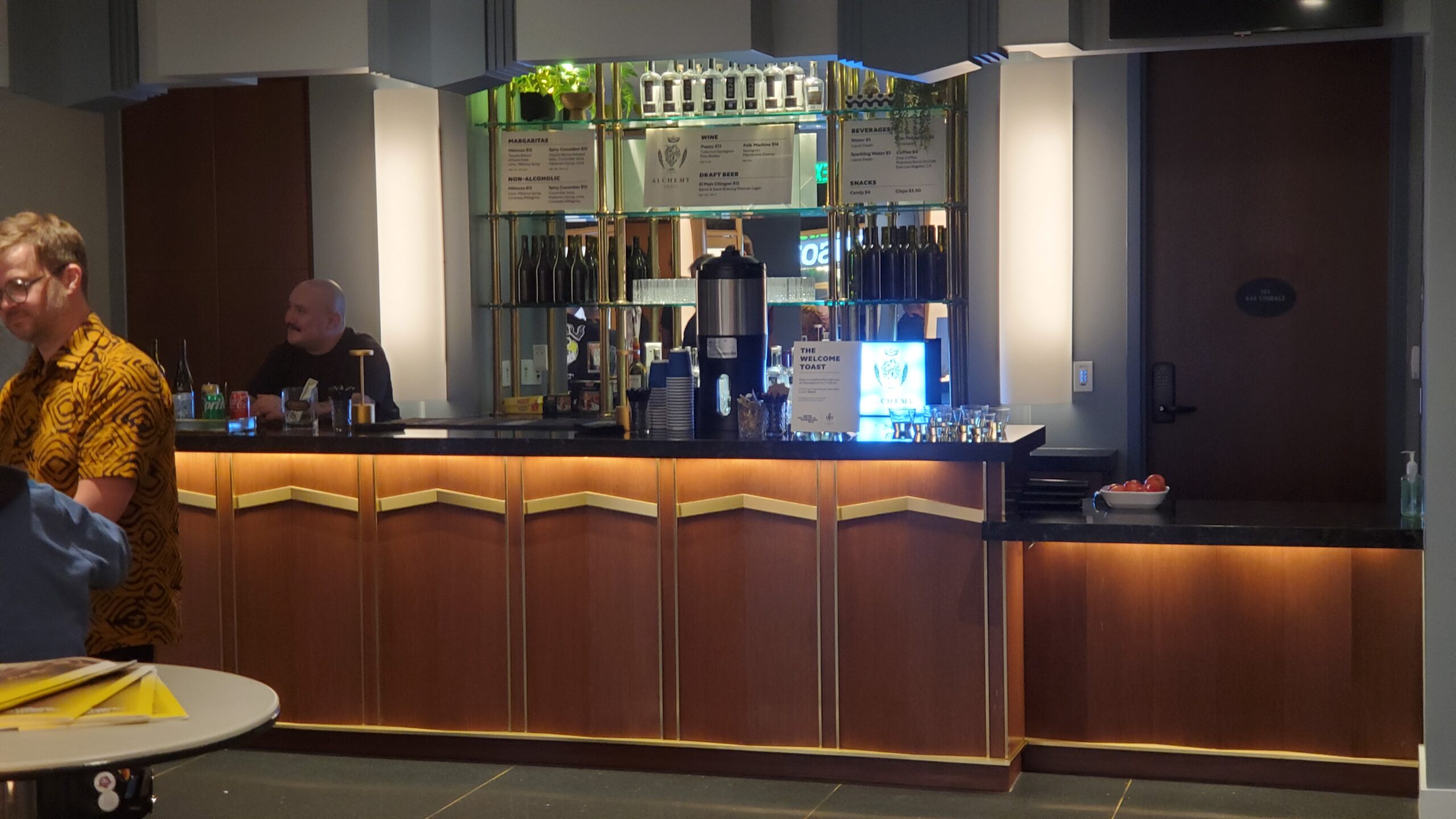
I am starting to notice that they keep their doors closed for a long time. I wonder if they have the artists set up later than other venues. Doors didn’t open until ten minutes before the show, and there aren’t a lot of places in the lobby to sit, so it ends up being 50+ minutes of standing around doing nothing. While there is a seating area upstairs, tonight it was occupied by people recording some sort of short film.
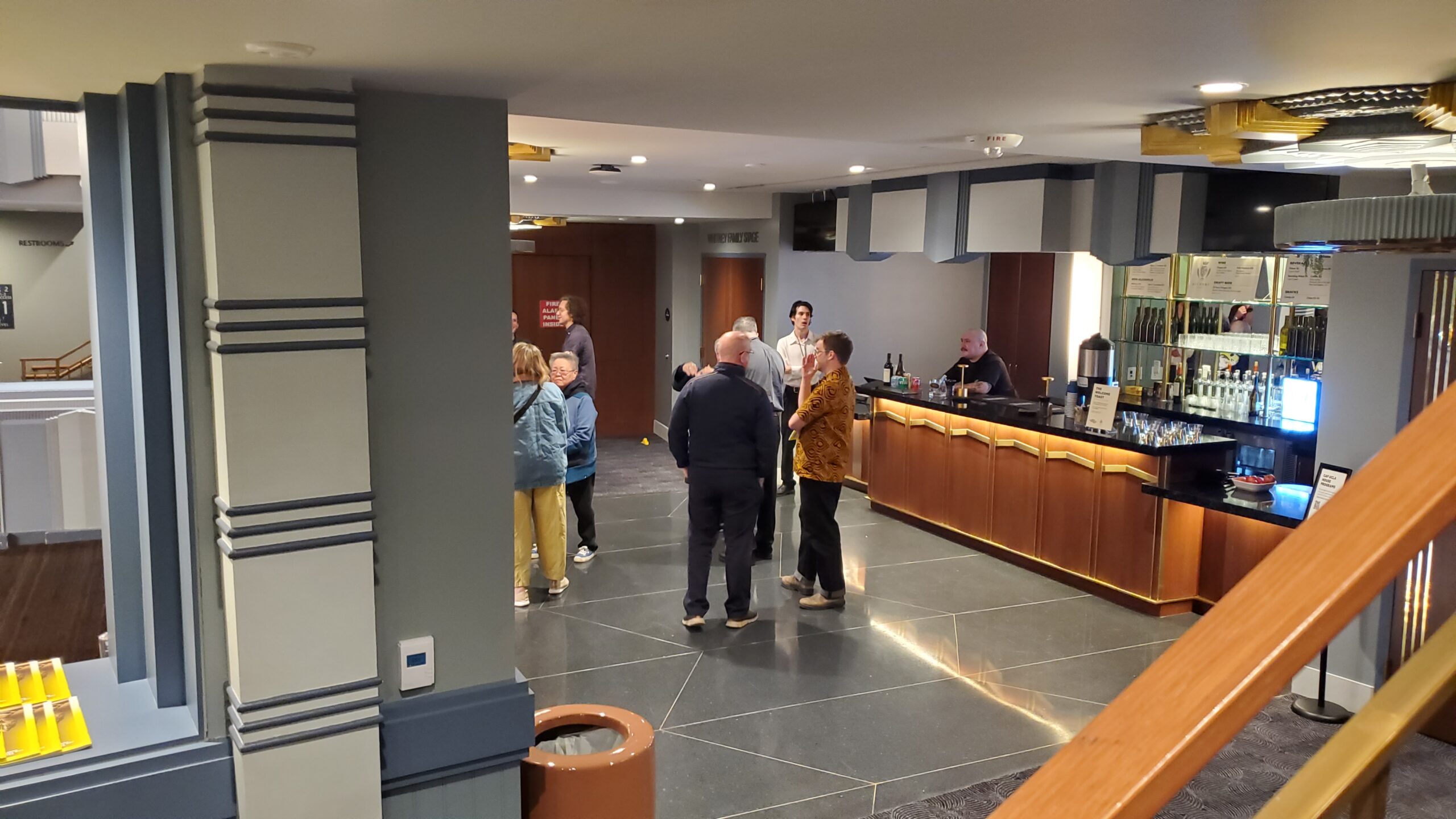
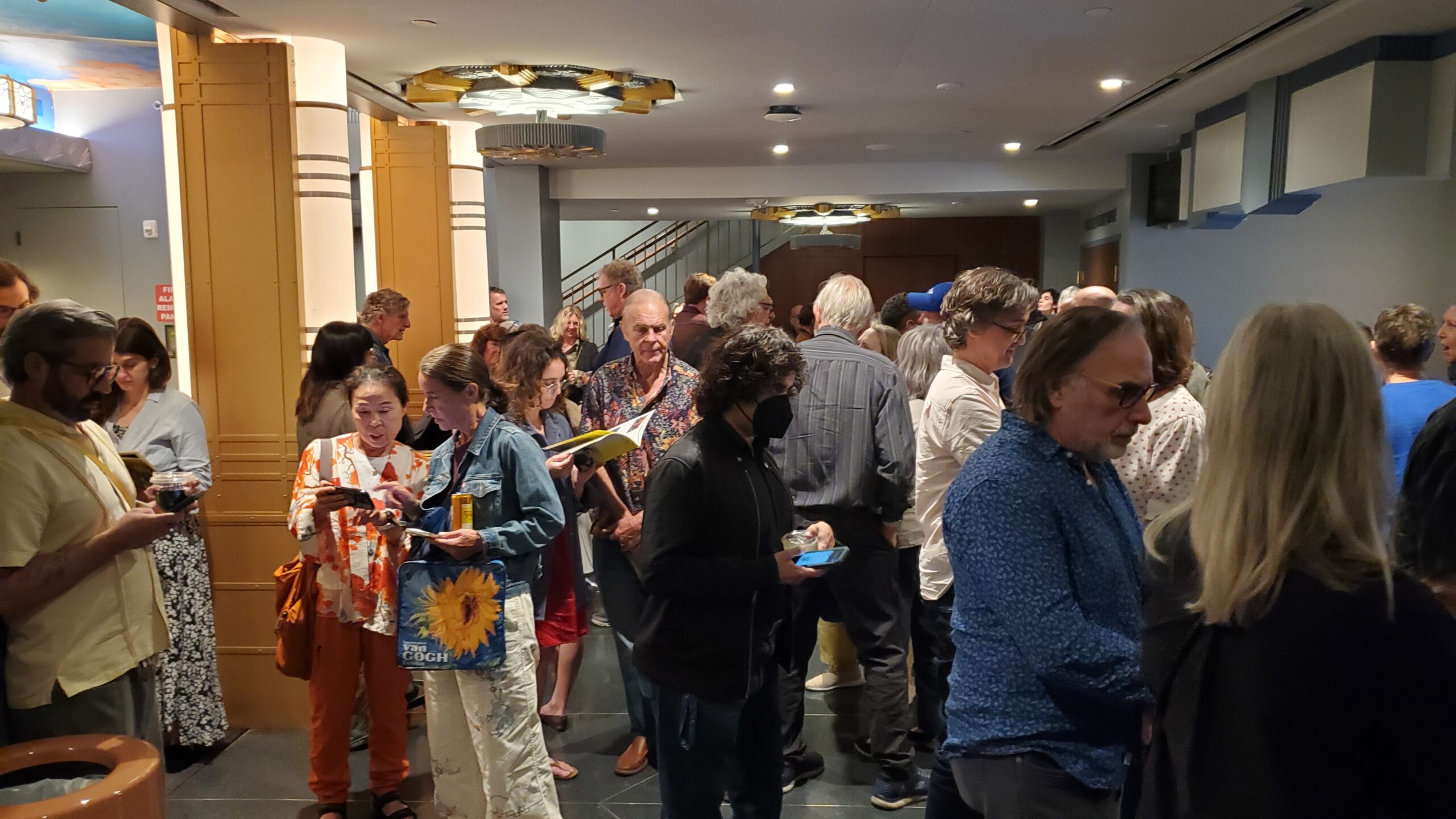
Regardless, when the doors opened, I was one of the first inside. Seating was assigned only by upper section or lower section, and I wanted a front row view.
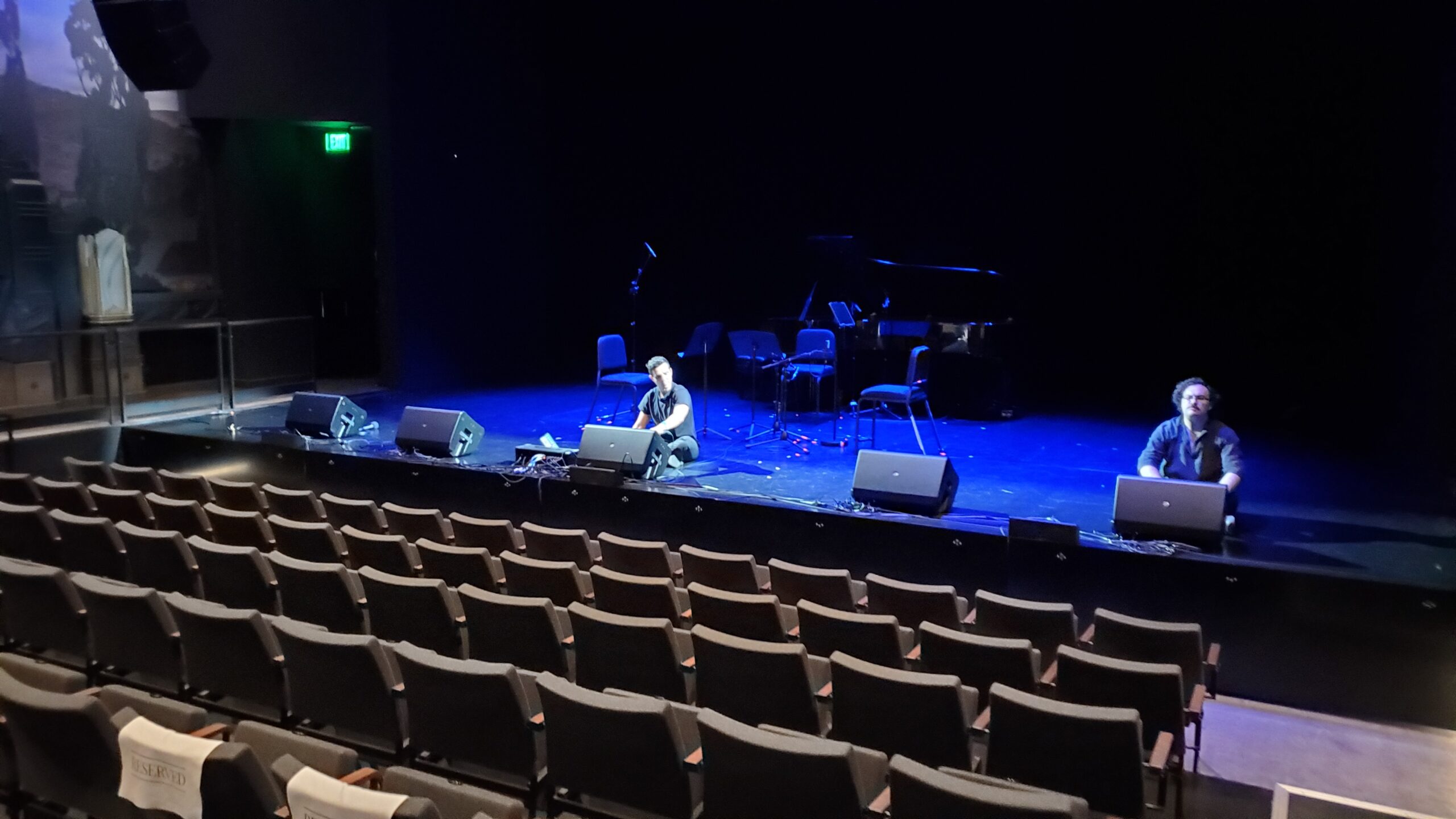
As I entered, five musicians were sitting in front of the monitor speakers on stage, microphones pointed at the monitors themselves, and they were making noise…
The Concert
This was something I had never seen or heard before. It was five people who were, essentially, “playing the monitors,” using the feedback tones from five different monitors at once as they slowly moved their mics around over them. One person in the middle had a laptop and seemed to be controlling the overall levels, but each musician was doing their own thing with the mics.
This was a fantastically creative idea. Using and perpetuating feedback itself to create an enveloping, warm, otherworldly ambient drone. No traces left of what sound originated the tone or what the natural source was. Making music out of sound itself.
I later noted that the five musicians here were, from left to right, the flautist, the violin/violaist, a guy who never came back out (the lead guy here though), the oboist/clarinetist, and the cellist.
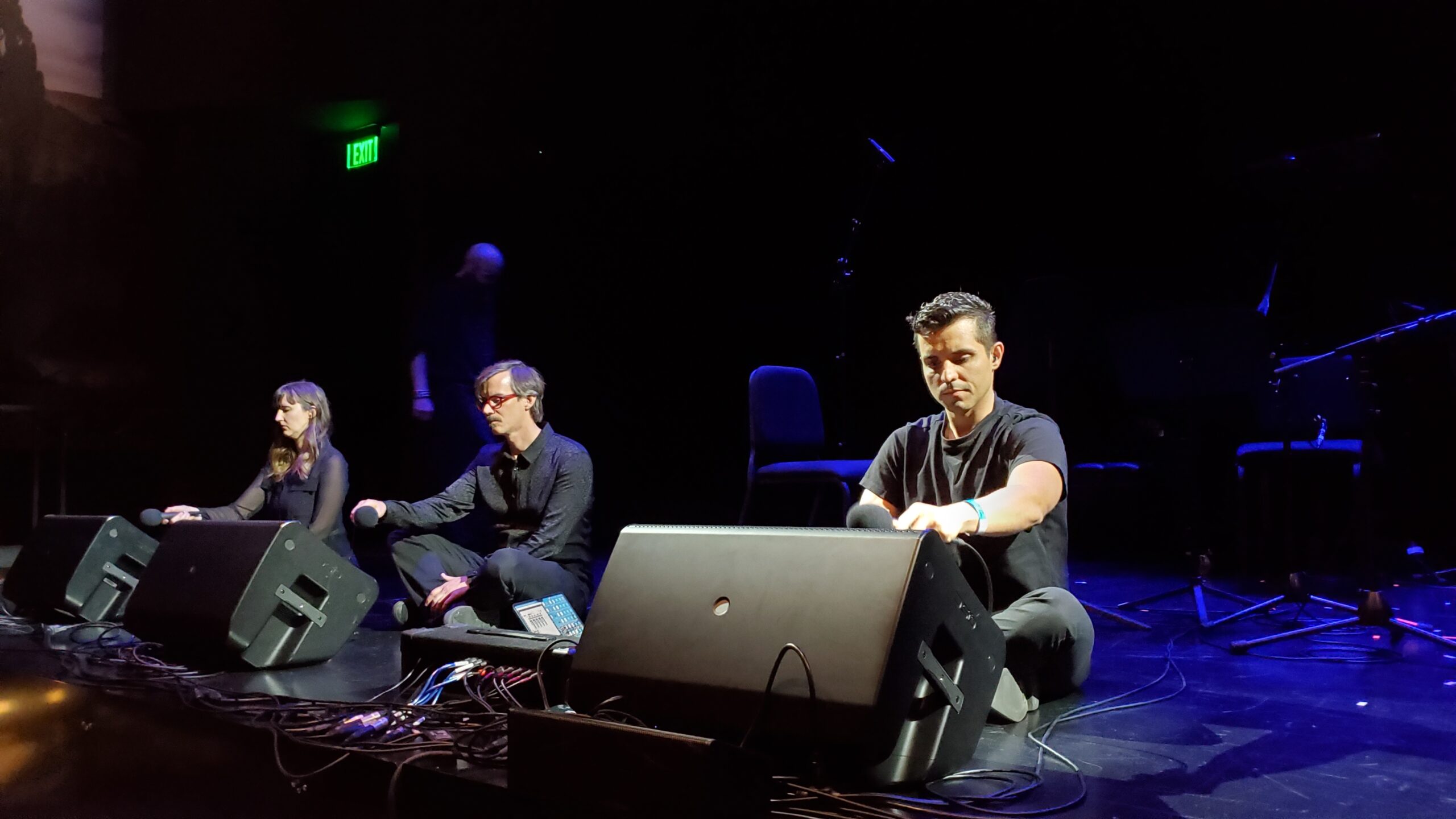
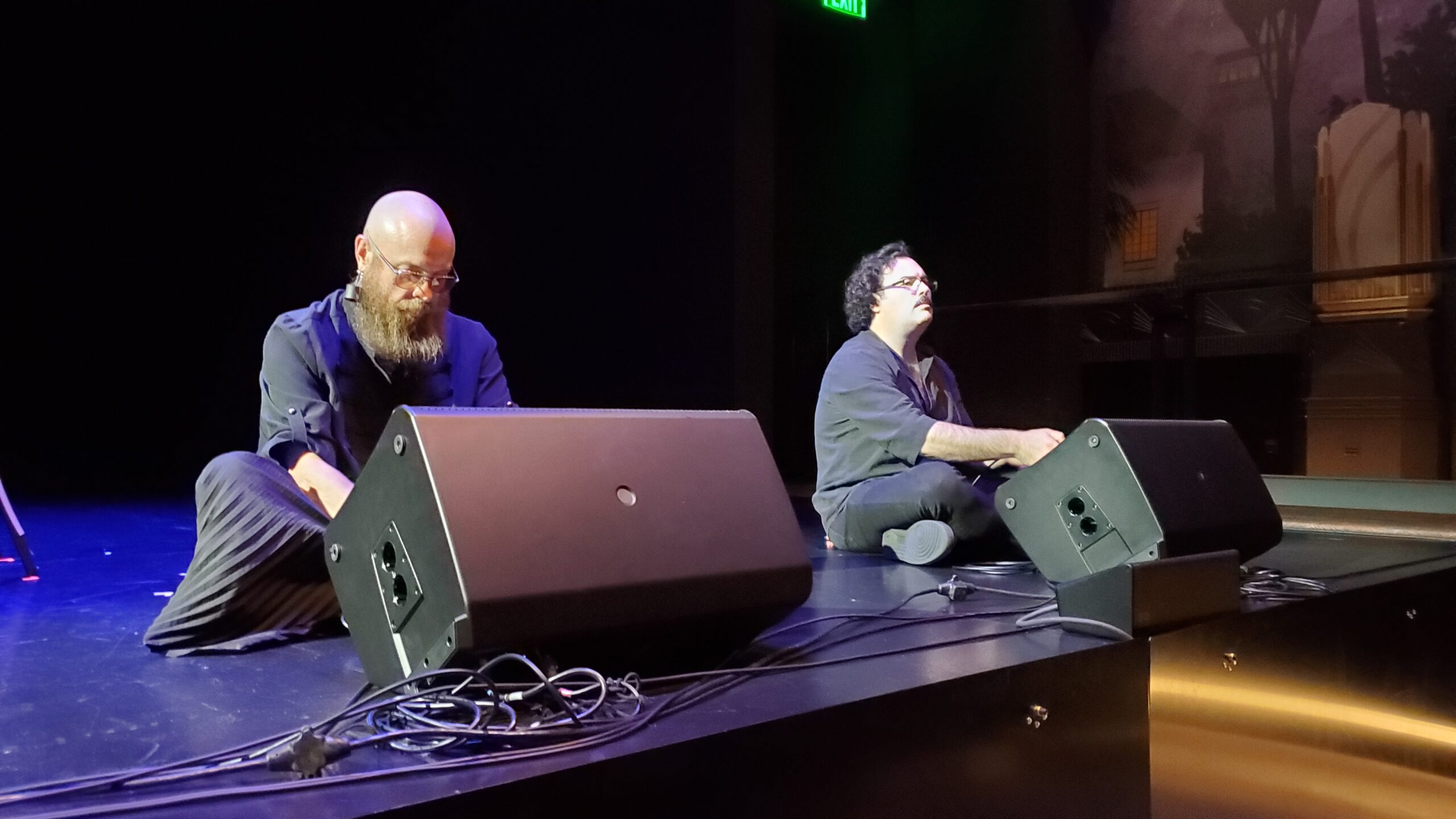
As interesting as it was, it went on a lot longer than I was expecting. It began ten minutes before showtime when we were first allowed in the theater; it continued 15 minutes into the showtime, or 25 minutes in total, which is a lot for one long barely-moving drone.
It was an enjoyable experiment, but I was happy when they finally wrapped it up. Time to get to the more interesting meat of the concert–or so I thought.
The title of this particular concert series–which I should also mention was being put on by CAP UCLA, CAP standing for the Center for the Art of Performance–was called “Perfect Offering.” Prelude aside, Act 1 was to be two works of “immersive spectralism” by composer Catherine Lamb, who is from Olympia, Washington. Act 2 was then three works from composer Cassandra Miller, inspired by “tape loops and birdsong to Leonard Cohen and Beethoven’s Op. 132.”
I wasn’t familiar with the composers, but I figured if it was anything like what they were playing in the ads, I was all in!
Unfortunately it was not.
Rather than something creative, quick, and whimsical, the two Lamb pieces of Act 1 (Nodes, Various and Three Bodies) seemed like an experiment in how uninteresting a piece could be before it was no longer considered music. It was only the violinist, the cellist, and the oboist, and they seemed to play the exact same note… together… without rhythm, tempo, development, or new ideas being introduced… for nearly the full hour.
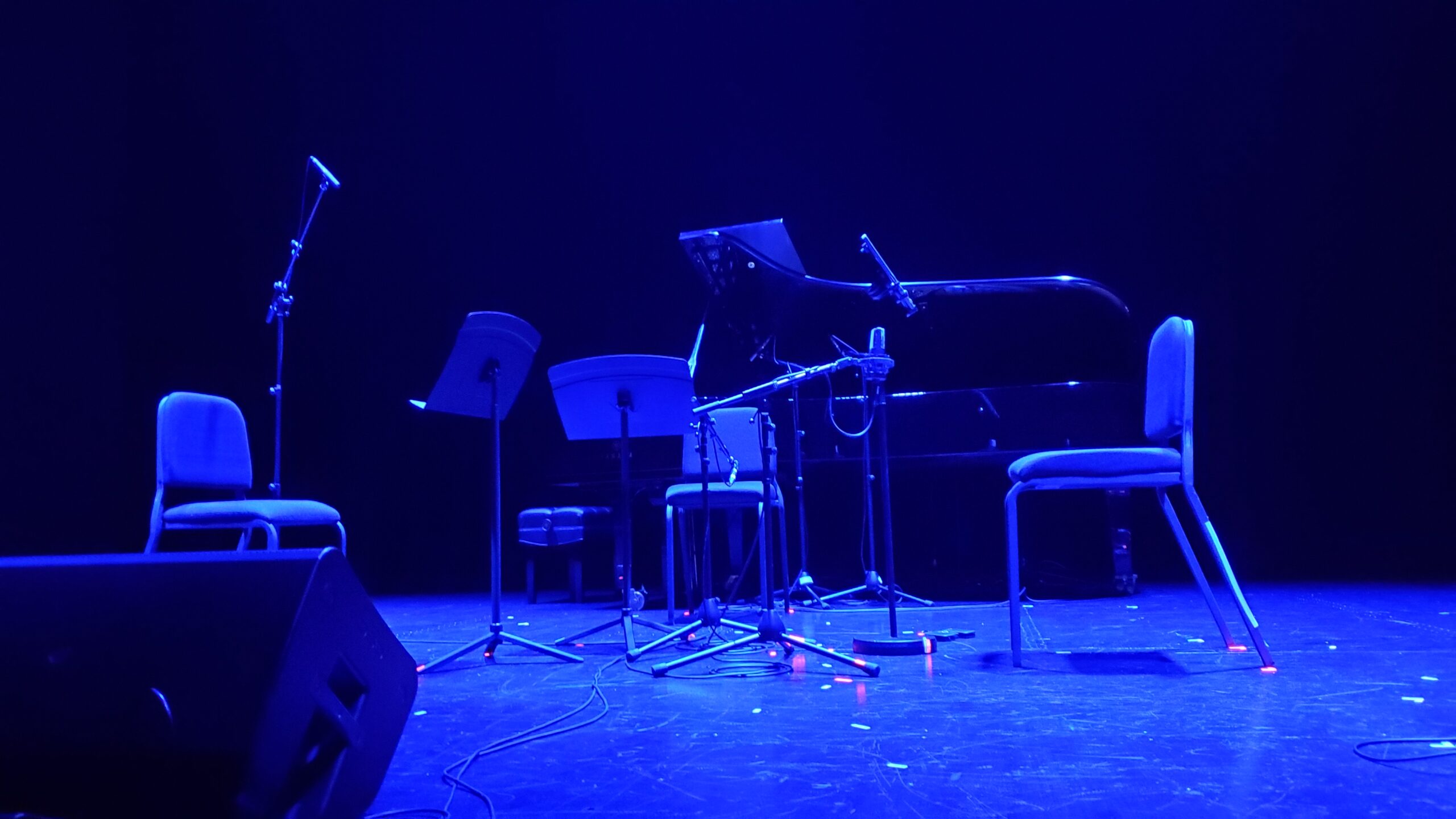
It was perhaps an interesting idea for the first ten minutes. It had me thinking about what I consider music to be, what this qualified as, how the slightest of wobbles was immediately audible, and trying to occupy the whole sonic space.
I should note that I am no stranger to ambient, microtonal, droning music. Less than two weeks before this, I went to an experimental ambient concert that I absolutely loved.
But these pieces simply had nothing to hold my interest. After an hour, I was hearing some sighs and snoozes from the audience around me as well. The pieces weren’t technically complex or impressively demanding, and even then, it seemed like the oboe had a few fumbled notes here and there. Extremely forgivable in normal music, but they stuck out like a sore thumb in this setting.
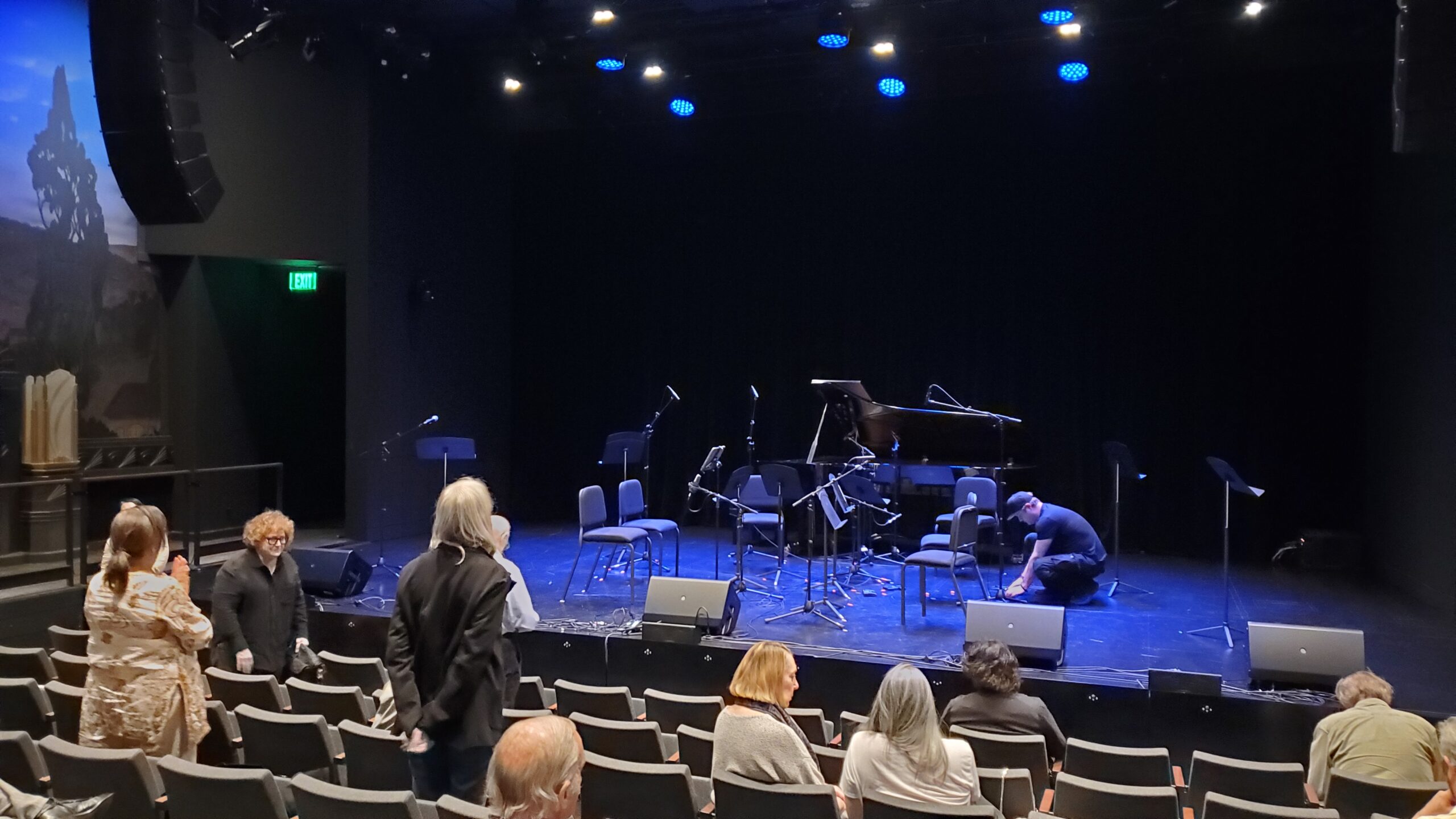
I was grateful when intermission came. I stretched my legs, got some fresh air, and bought myself another drink. I believe a few people left during intermission, but I was already here, and I was curious if they’d develop any new ideas in Act 2.
Act 2 was the composed-by-Cassandra Miller half. There were three works: Warblework, Thanksong, and Perfect Offering.
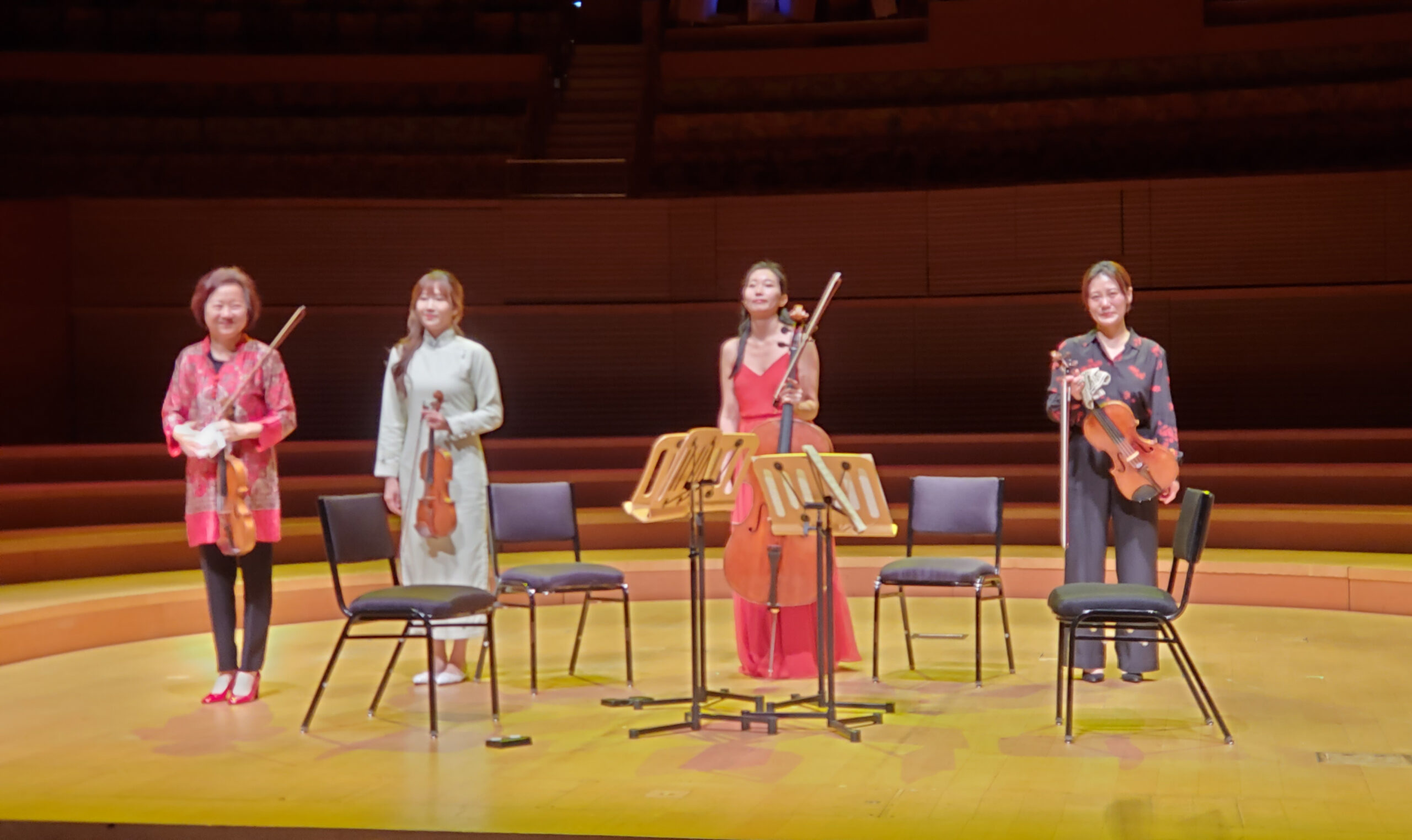
Warblework featured a quartet: 2 violinists (one new and one from Act 1), a cellist (the same from Act 1), and a violaist (the violin player in Act 1). It had multiple whole pitches! The simplest polyphony was a cool splash of water on a hot summer day.
As Warblework continued, though, it really went all over the place. I would best describe it as… perhaps a little juvenile, though not in a bad way, more like it was playing around, experimenting with pitch and tone. It felt odd and off, not unpleasant but not my new favorite song; I had a tough time mentally connecting it to birdsong of any kind.
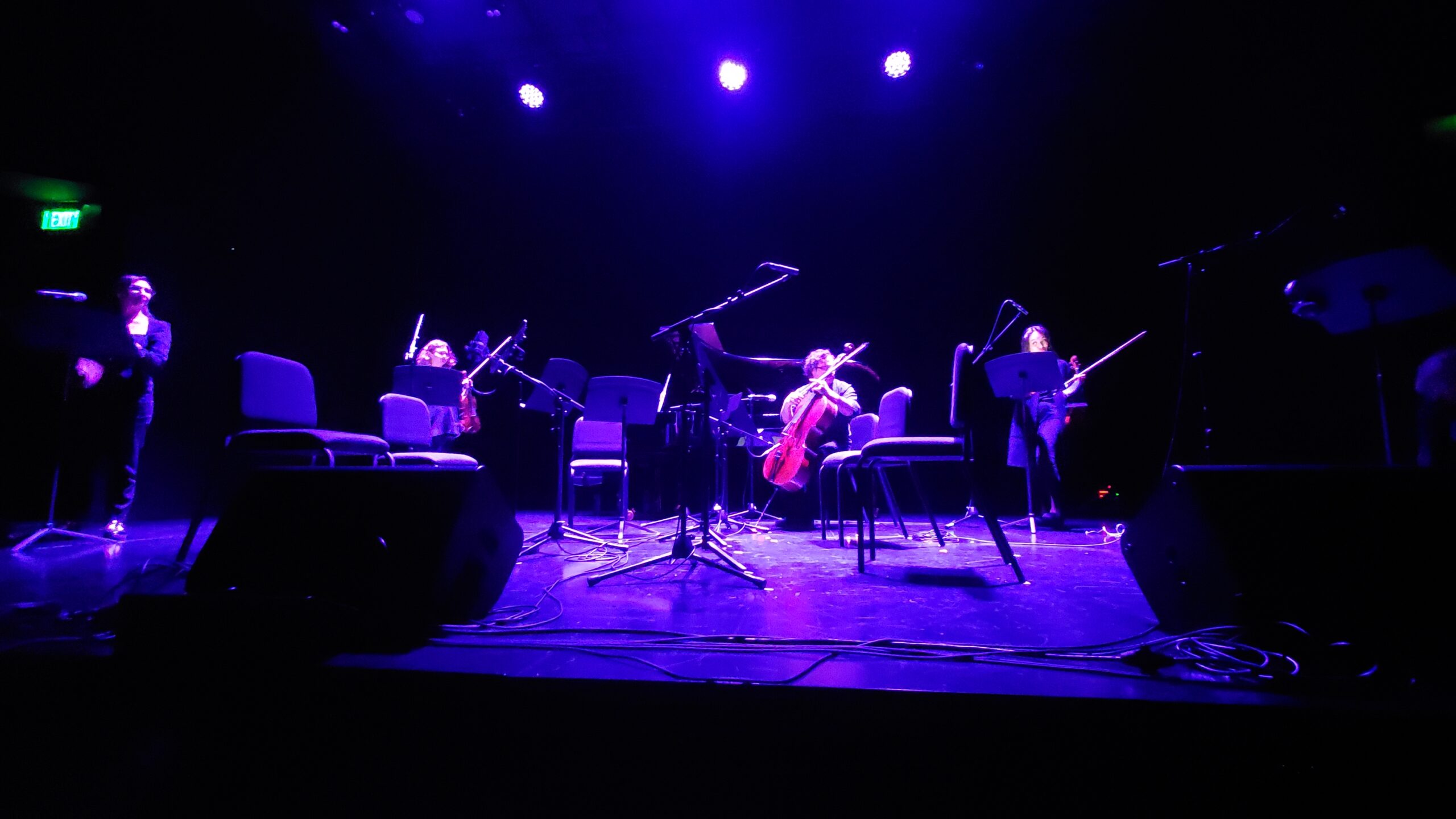
The instrumentalists shifted for Thanksong. This arrangement featured a new female vocalist, and then the same violinists, cellist, and violaist, but now in brand new scattered standing positions across the stage.
This was probably the best piece of the night, though it still overstayed its welcome on runtime. The lyrics were “thank you” repeated very slowly over and over again. Interestingly, the instrumentalists also eventually joined in the singing, getting to a point where there were no longer any instruments in the mix at all, only a cappella vocals. When instruments started being folded in again, it was a magical sensation.
Still, though, I think the ideas explored in this piece could have been thoroughly plumbed by a shorter expedition.
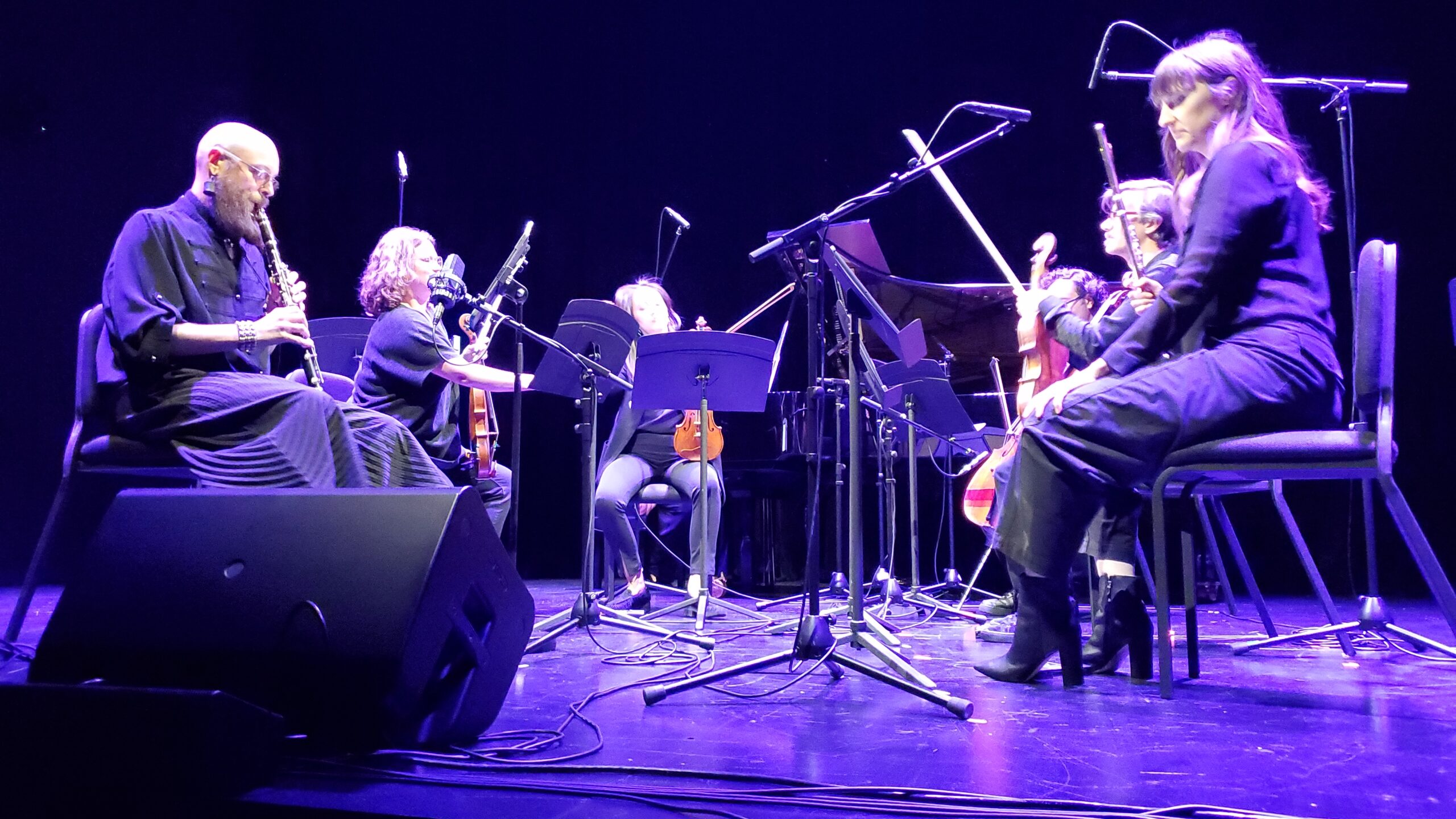
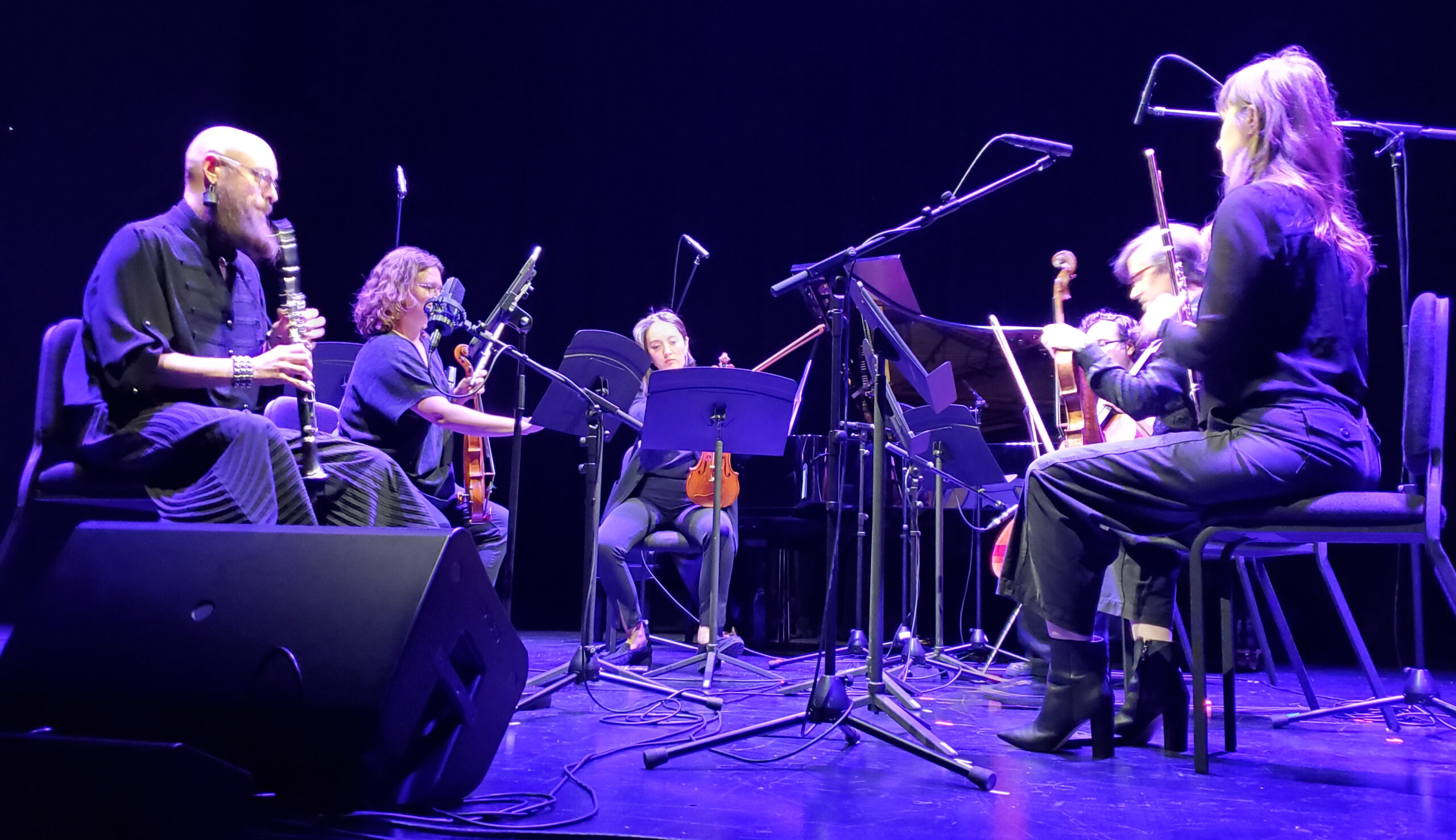
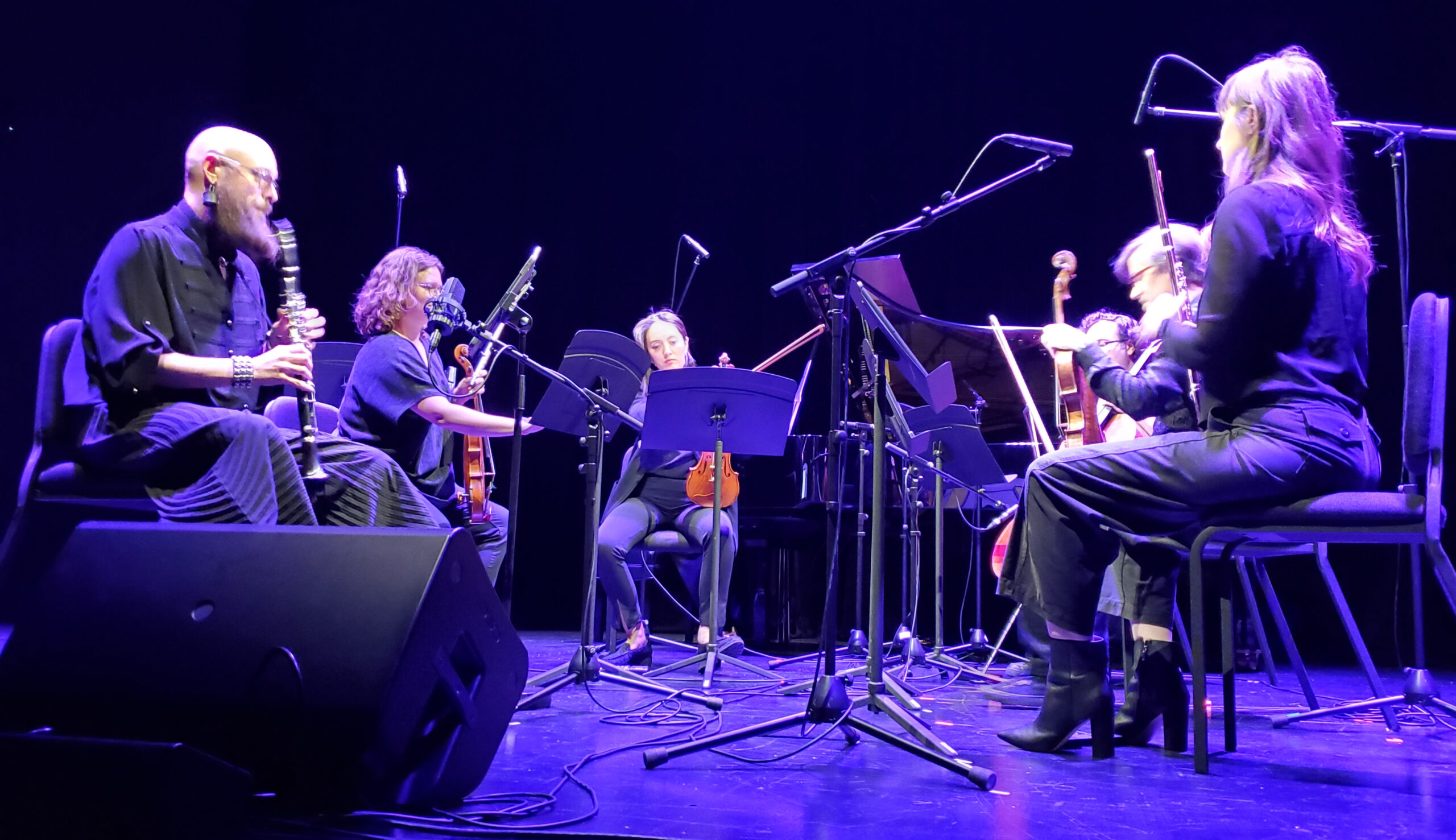
The final piece, Perfect Offering, brought out a full 7-person crew, featuring the same two violinists, cellist, and violaist, but adding a pianist, a flautist, and a clarinetist (the person who played the oboe in Act 1).
This piece started out more grandiose, with the piano bringing much-needed weight and drama to the evening. But as the piece went on, the piano dropped out completely. Soon, it was reduced to long stretches where only the clarinet would play, alternating only between two long notes, again and again, while the other six members sat silently on stage. It ended quietly and slowly.
The timbre of these instruments–whether solo or in ensemble–simply did not have enough texture to stand on their own over the course of these long, long stretches. There were not interesting layers and mixes of sounds. The warmest, most transportative tones came from the prelude with the feedback trick.
While Act 2 was stronger than Act 1, the concert was still a major miss for me. I’m sad to say it since I love experimental music, ambient/microtonal music, and orchestral music, but nothing in this really did it for me.
I was disappointed because the ads on Instagram for this concert showed this group playing such good, interesting, adventurous music. That’s what I wanted to hear! If you’re going to play a slow, droning, ambient, microtonal concert, do not advertise it with fast, dynamic, exciting music. The gap between my expectations and the reality probably made the show feel worse than it truly was.
Adding to the overall bad experience was the fact that in the front row, a few seats to my left (with no one in between us), there was a man who seemed to be tweaking out on some kind of drug. He was demonstrating spasms, sudden jerks, reaches towards the stage, fast fervent scratches at his own skin; he would loudly hum or start to sing, and held his hat up at the performers. It would have been distracting and unsettling at the best of times; at such a slow concert where movement was especially scarce, he practically stole the show. The Nimoy ushers never did a thing.
Full Credits & Context
The composers were Catherine Lamb and Cassandra Miller. The music direction was by Christopher Rountree.
The performers included:
- Adrianne Pope: Violin
- Mona Tian: Violin
- Andrew McIntosh: Leader, Viola / Violin / Electronics
- Derek Stein: Cello / Electronics
- Rachel Beetz: Flute / Electronics
- Pat Posey: Clarinet / Bass Clarinet
- Vicki Ray: Piano
- Anna Schubert: Voice
- David Saldaña: Electronics
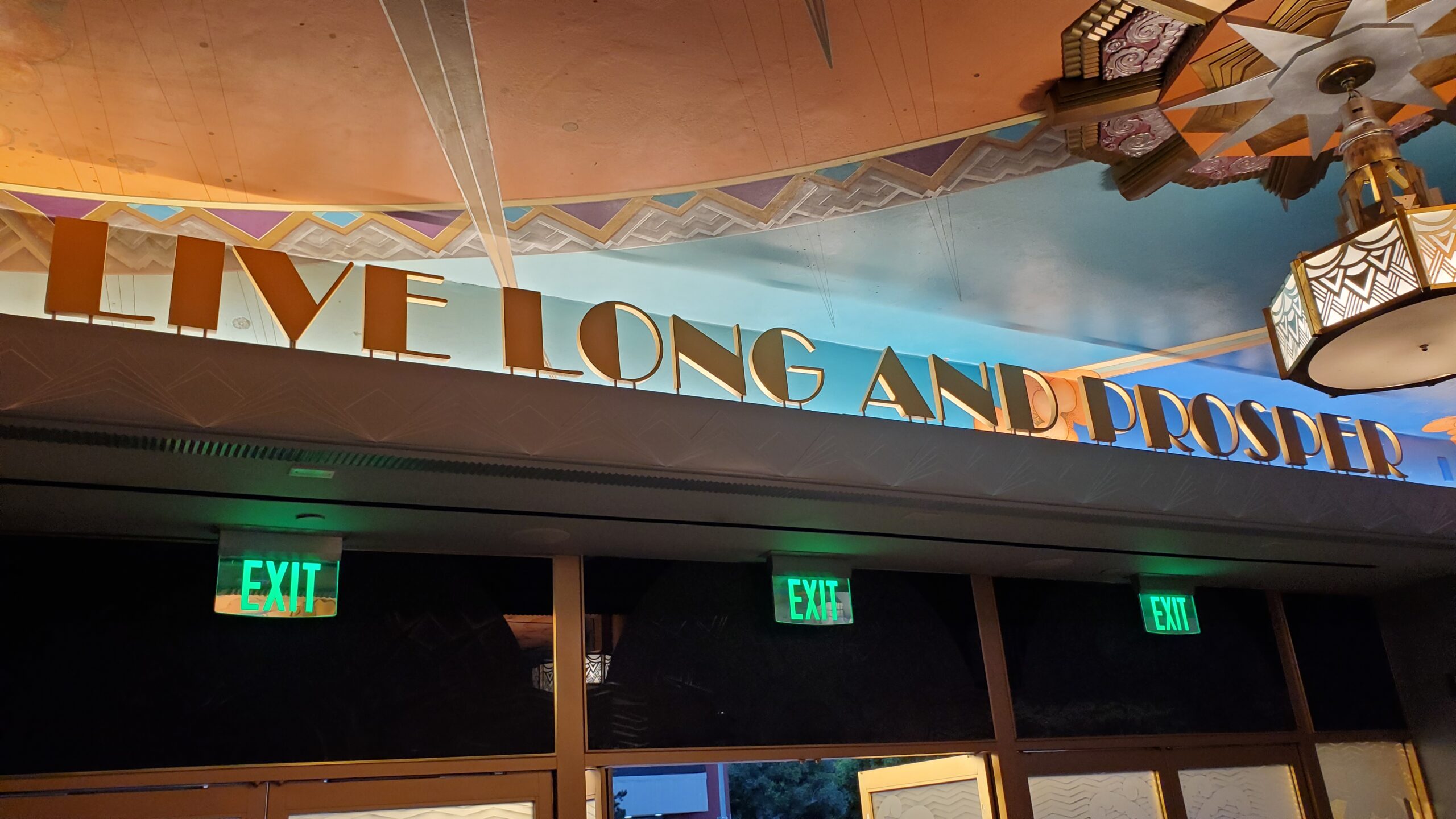
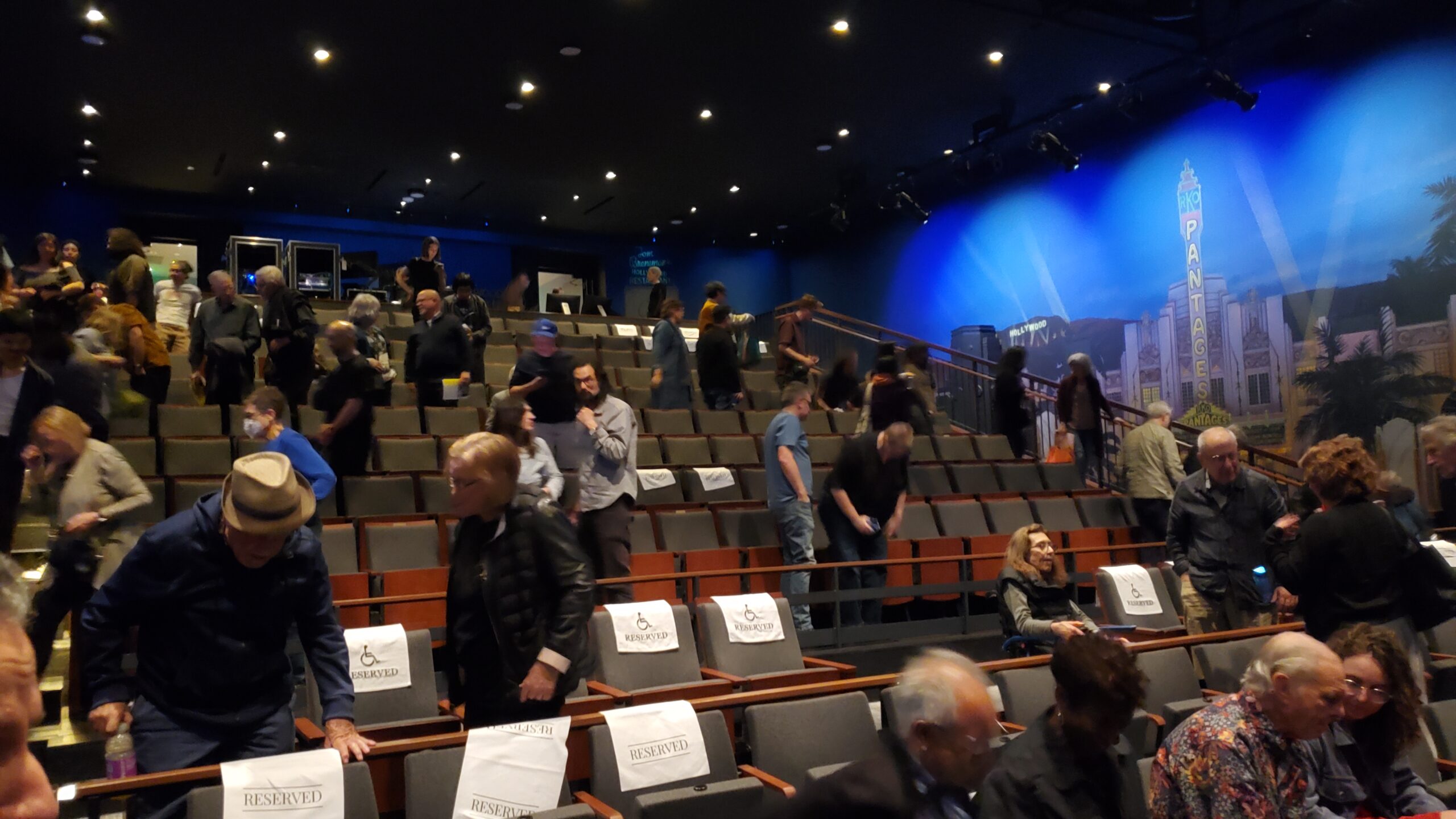
UCLA Nimoy Theater is a small, beautifully restored performance space in Westwood that was acquired by CAP UCLA 2018 and reopened in 2023. It used to be the Crest Theater (or the Majestic Crest, or the Bigfoot Crest, or the UCLAN, or the Metro Theatre), but after a major donation from Star Trek actor Leonard Nimoy’s wife Susan, it was renamed in his honor. It only seats a couple hundred, so it feels small, dark, and intimate. CAP UCLA often uses it for experimental artists.
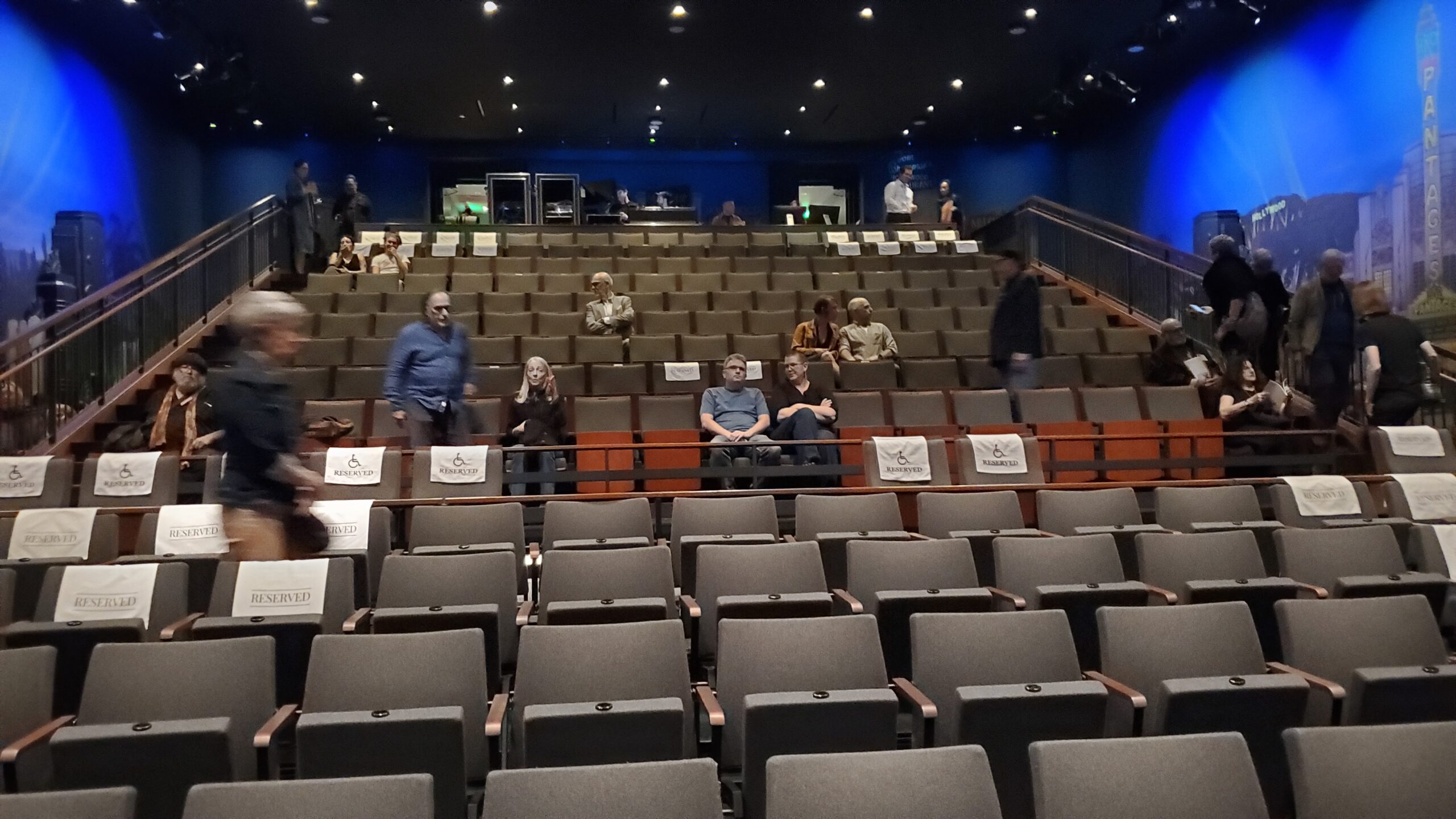
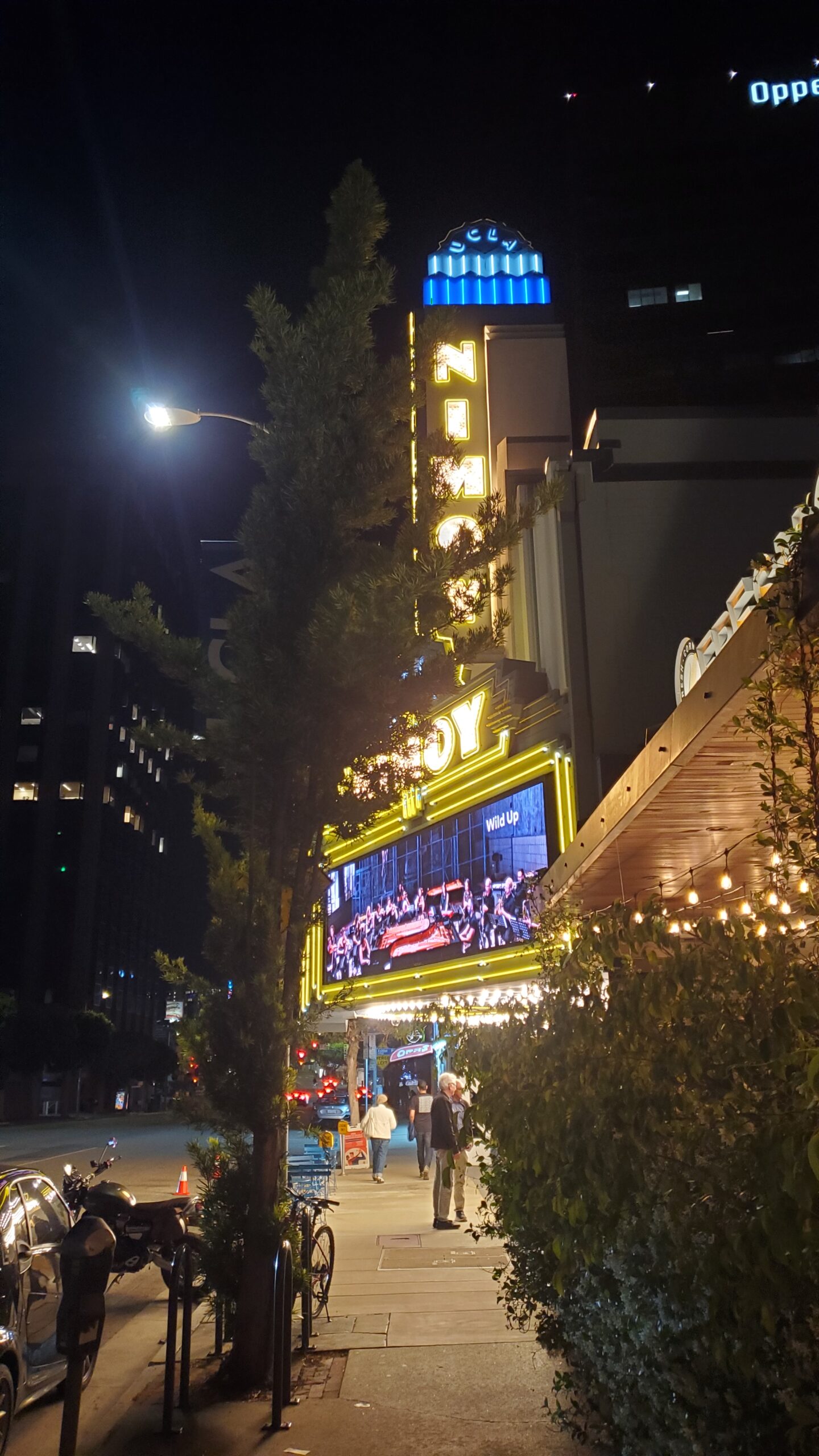
CAP UCLA is the University of California, Los Angeles’s presenting organization for live performance. They bring in everything from international theater companies to avant garde music ensembles to strange dance and film events. They can be described as taste curators, especially for Westwood and surrounding neighborhoods.
Wild Up is an experimental chamber orchestra founded in 2010 by Christopher Rountree. They have a loose, collective energy and play everywhere from museums to concert halls. They have a reputation for being a little bit chaotic.
Catherine Lamb writes music that focuses on the harmonic series and microtonal tuning, but not in an academic lecture sort of sense. She’s originally from Olympia, Washington.
Cassandra Miller is a Canadian-British composer living in London. She often starts with existing material that she then reshapes into something more fragile and personal.