I saw a lot of ads for the Jury Experience across social media, and seeing that it was a Fever Event being held up at one of my favorite venues, the Nocturne Theatre in Glendale, I decided to take a chance on it.
The advertising had all seemed very vague to me. “Step into an Immersive Live Theater Show!” “Debate Complex Cases!” “Vote Throughout the Show!” “Guilty or Innocent? You Decide!”
These types of phrases were often paired with images of some bedraggled, haggard man who looked as though he had been dragged through Hell, as if only you could save this Edmond Dantès-esque figure from some dramatic doom (unless he deserved it). Other ads had photos of impressive looking courtroom sets, which I knew would not be what you’d actually see at the Nocturne. Fever uses ad images from a number of different theaters across the country, so you get what you get from the location.
I do have some courtroom experience, to say nothing of the thousands of legal drama mysteries I have seen on TV (my favorite is Matlock). I have actually served on a jury for a real life murder trial before. It was declared a mistrial after a few days after it was discovered that one of the gangs involved was allegedly pressuring other members of the jury. (Really.) Luckily, it wasn’t me.
Not sure what exactly to expect from this jury drama, I headed up to the Nocturne on 1/11/2026 to find out what all the hype was about.
The Jury Experience: A Social Experiment
I had been at the Nocturne just last month for Madam Scrooge, and while all of the Christmas decorations had been put away, there were still some remnants of the production, mostly the old Victorian clock face painted on the floor of the stage. This felt like an appropriate decoration for a trial, too, so that actually added to the experience. The lobby was the least decorated I’ve ever seen it, without any holiday accessories or dressings for upcoming shows.
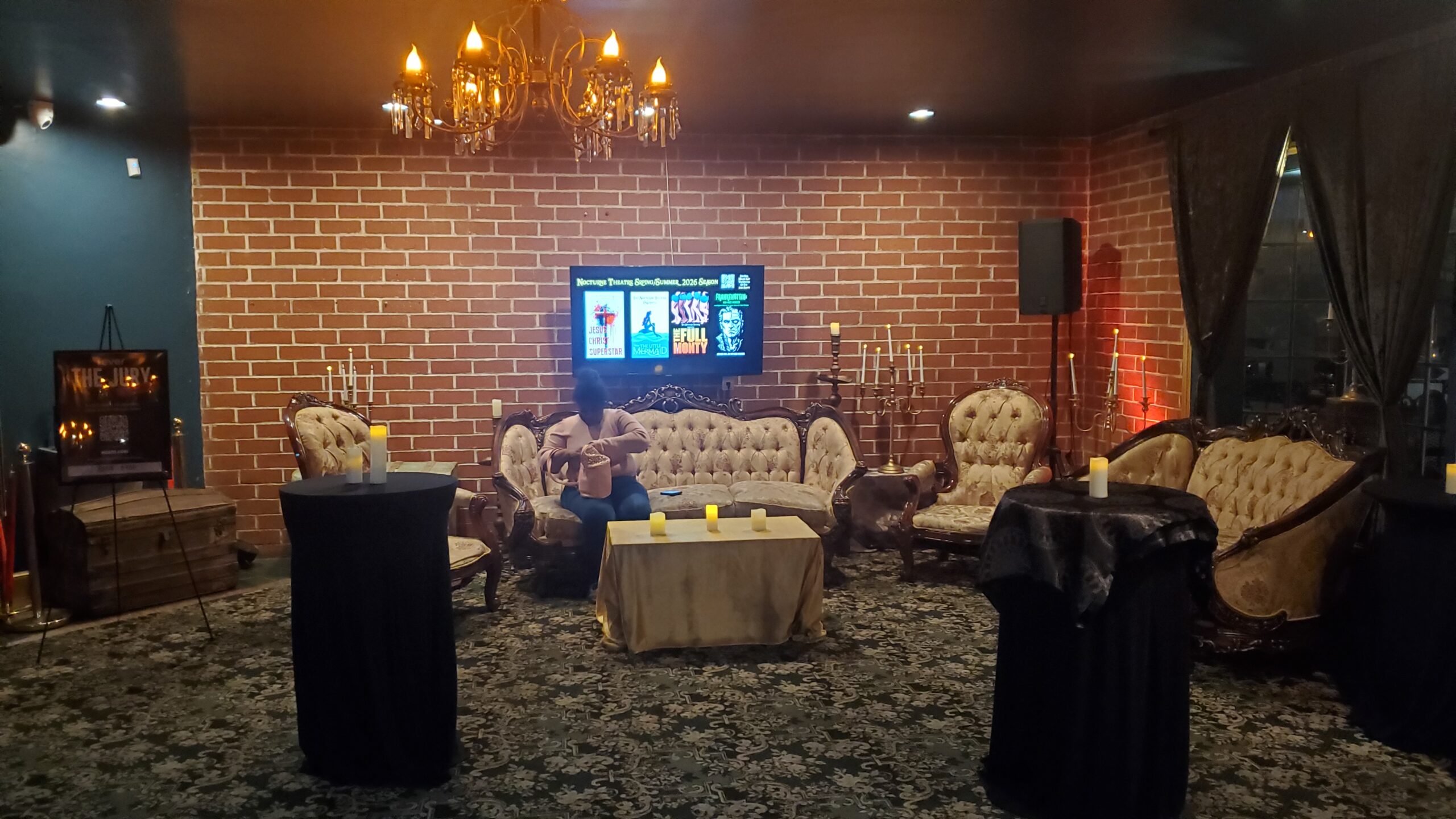
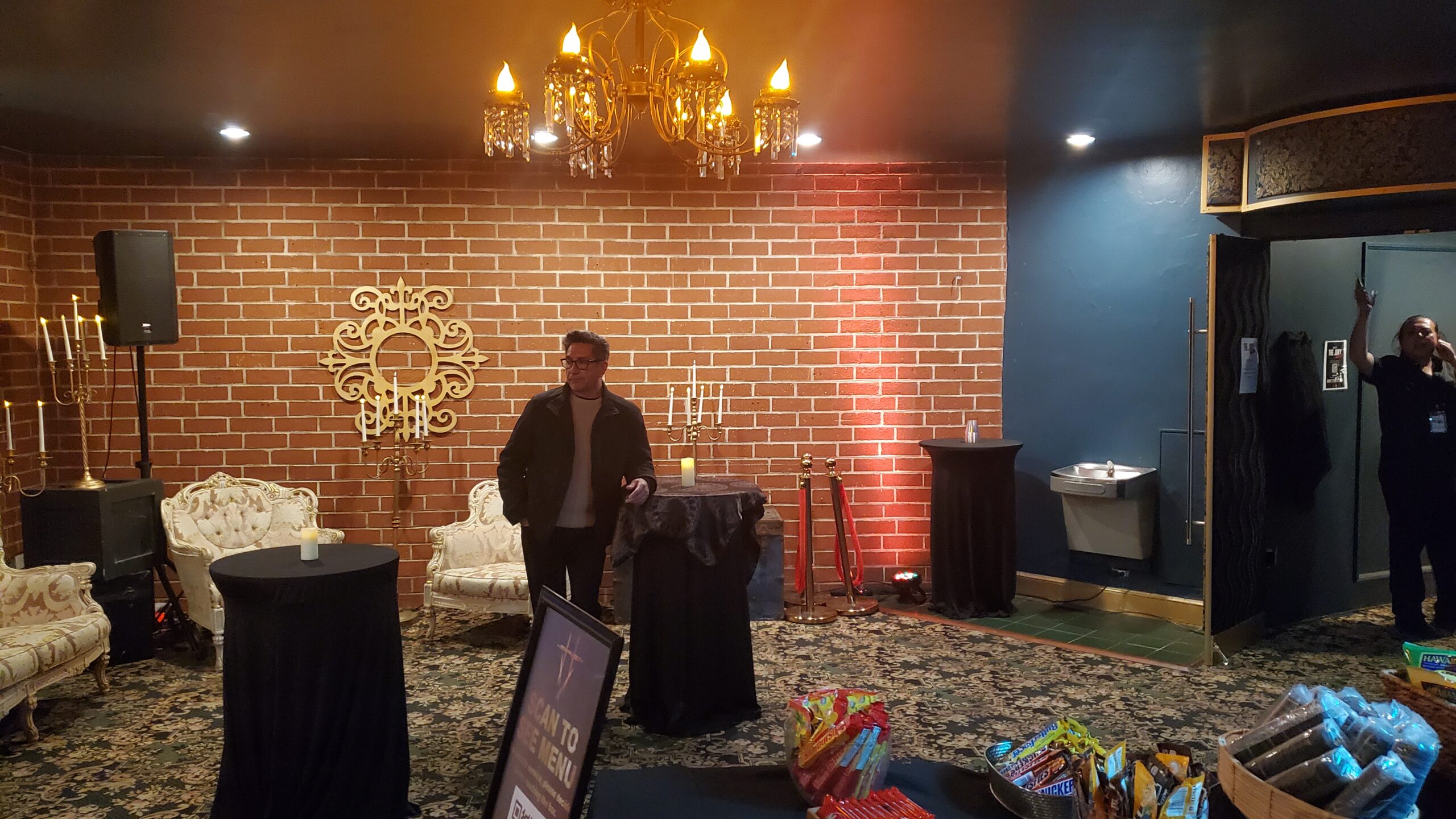
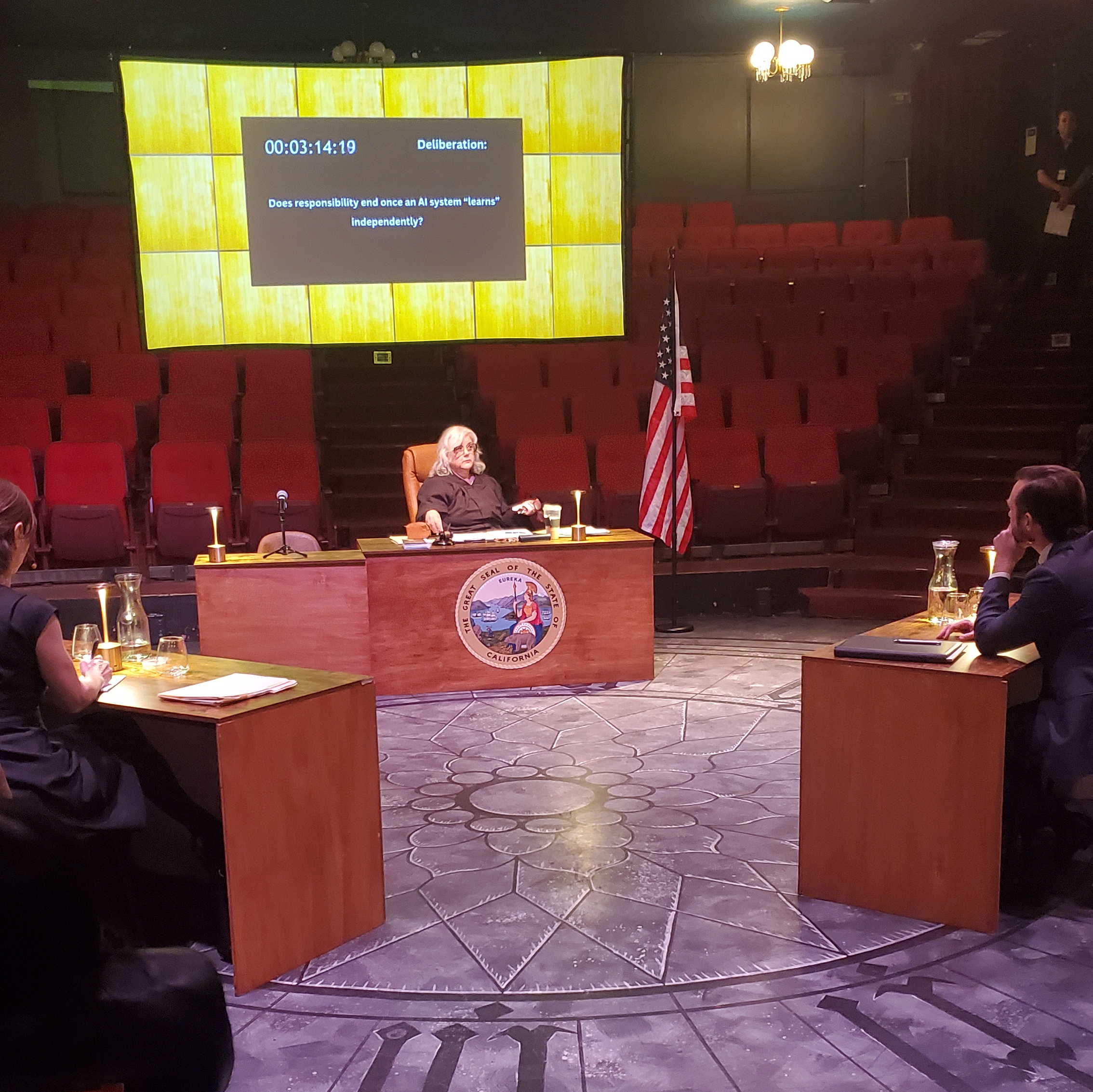
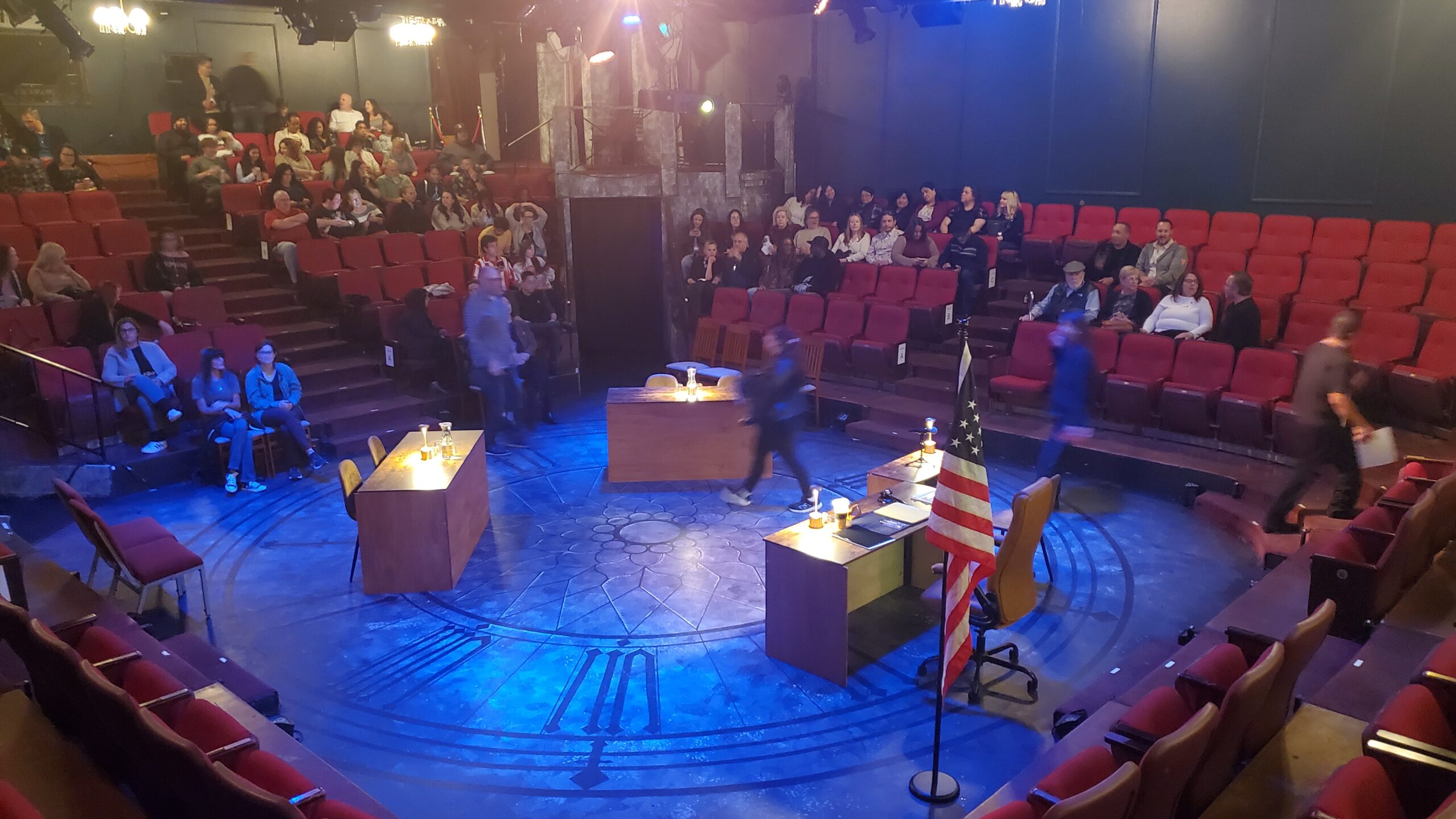
I got a glass of wine and headed in. The courtroom set was ready to go.
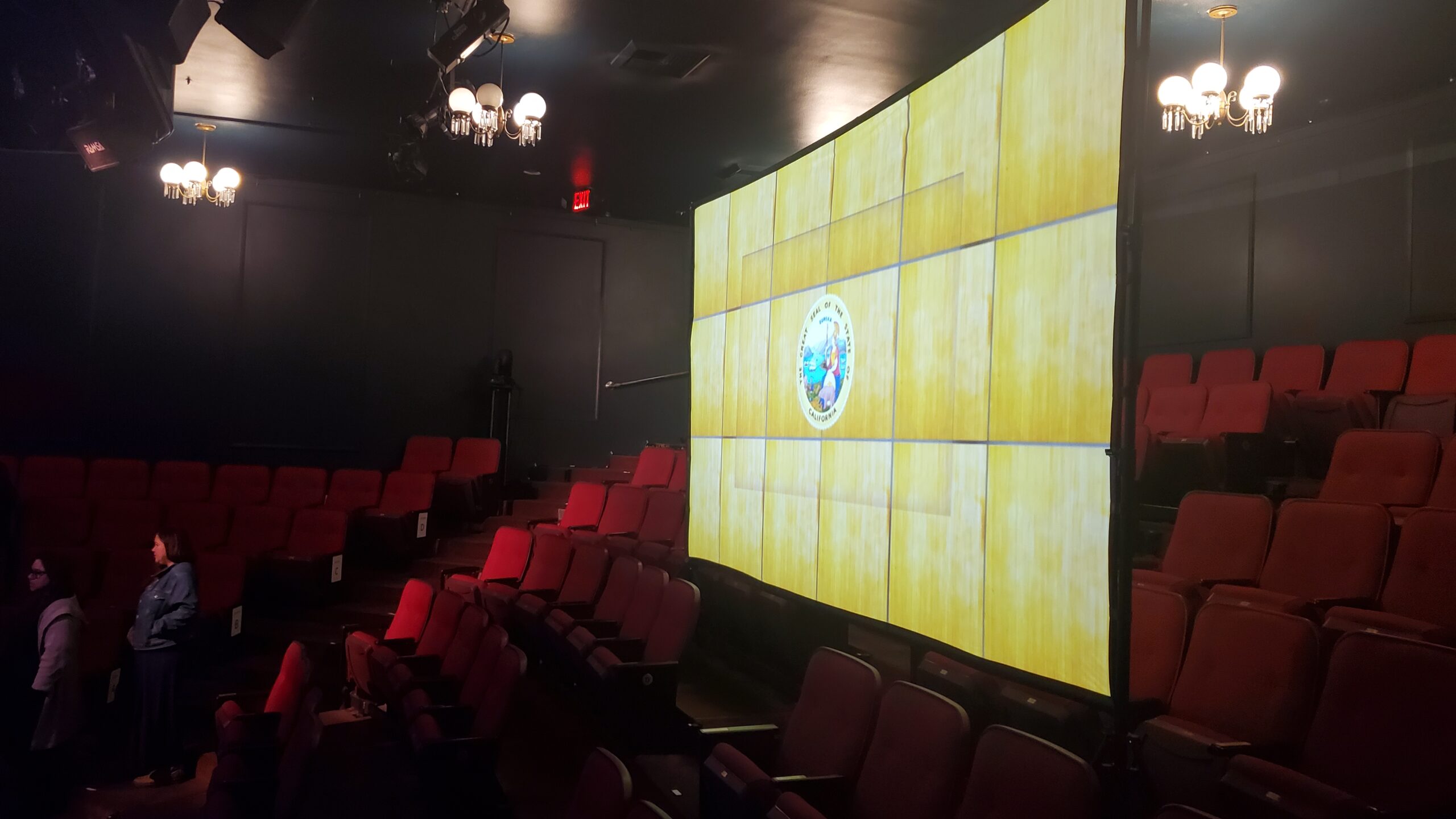
I immediately noticed the large screen mounted up over one of the seating quadrants. I didn’t expect to be seeing a presentation tonight, but then, what did I expect?
This is a Fever event, which means that you don’t get an assigned seat, but you do pay for an assigned seating zone. Zone A is the front seats, back to zone C or D which are the cheaper seats further away. I was in Zone A, so I was in the center section, around the second or third row, quite close. It was the first time I’d ever sat in the East quadrant, which means I’ve now sat in 3 of the 4 sections possible in this theater.
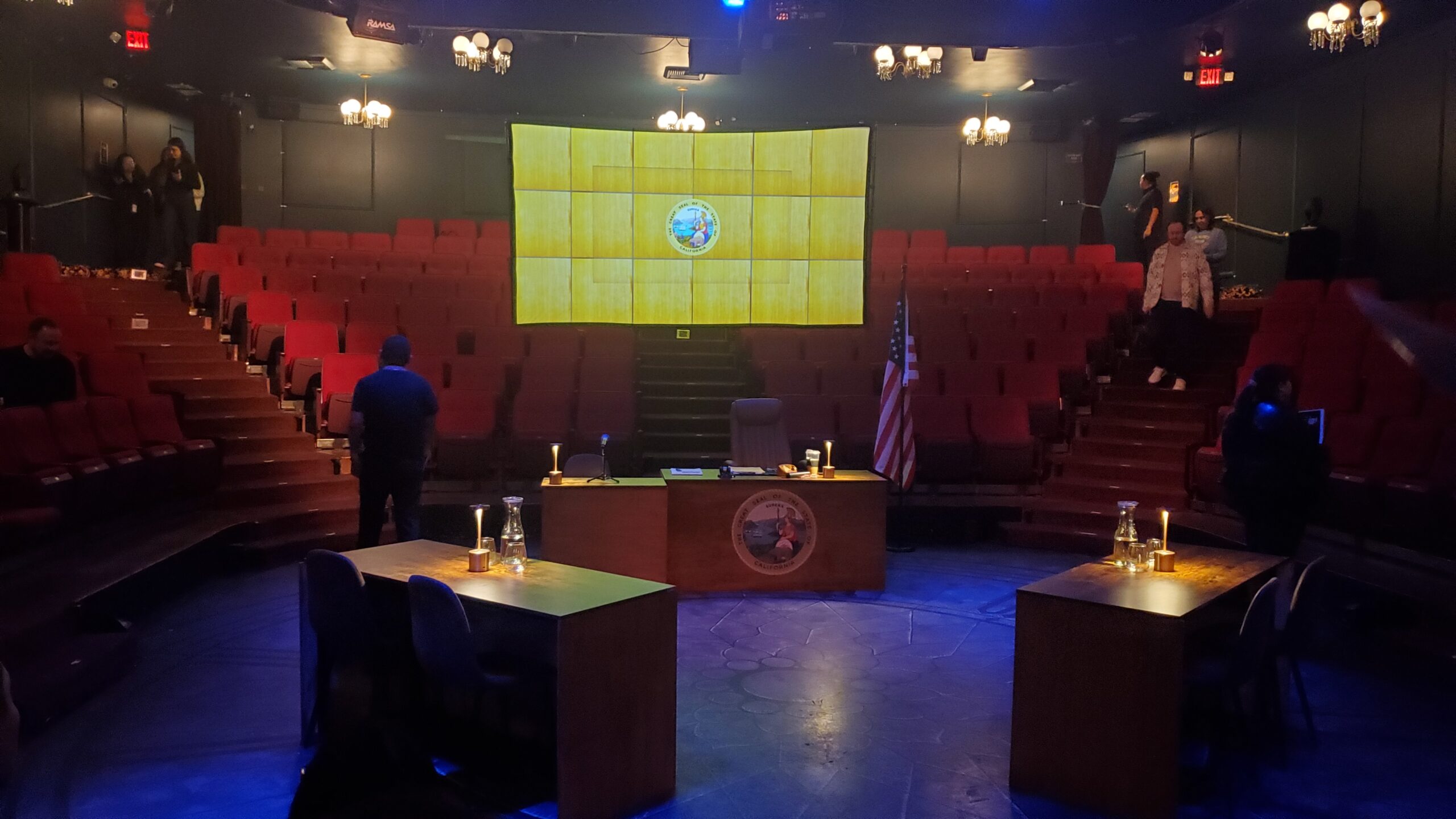
The experience began with a video on the screen. If you’ve ever served in a jury, you’ve likely had to sit through an introductory orientation video or two that–if you’re lucky–were filmed in the last decade, at best. Like a mandatory HR anti-harassment training video or a corporate IT security training presentation, they are dry, corny, hokey, and designed by committee to be as bland as possible.
Luckily, this video was a parody of all those qualities. It dialed up the ham and introduced the audience to the thrills and joys of jury duty with all the comedic earnestness you could imagine. Once we all realized it was supposed to be bad, it got quite a few laughs.
Next, even funnier, was a cartoon video about how to use QR codes. This might seem easy, but there were a fair amount of older people in the audience who didn’t know how to use their phones very well. This video was produced to explain the process, but in the corniest “radical 90s” cartoon style you can imagine. Actually, you don’t have to imagine, because I have a video of it.
The lamest “cool kid” animal mascots were highly educational.
“And if you still can’t do it, just ask a younger person in your row to help you.” ASK A YOUNGER PERSON FOR HELP!
“Cool is a state of mind, and scanning QR codes is… kinda required to be a part of society.” BONUS: BE A PART OF SOCIETY
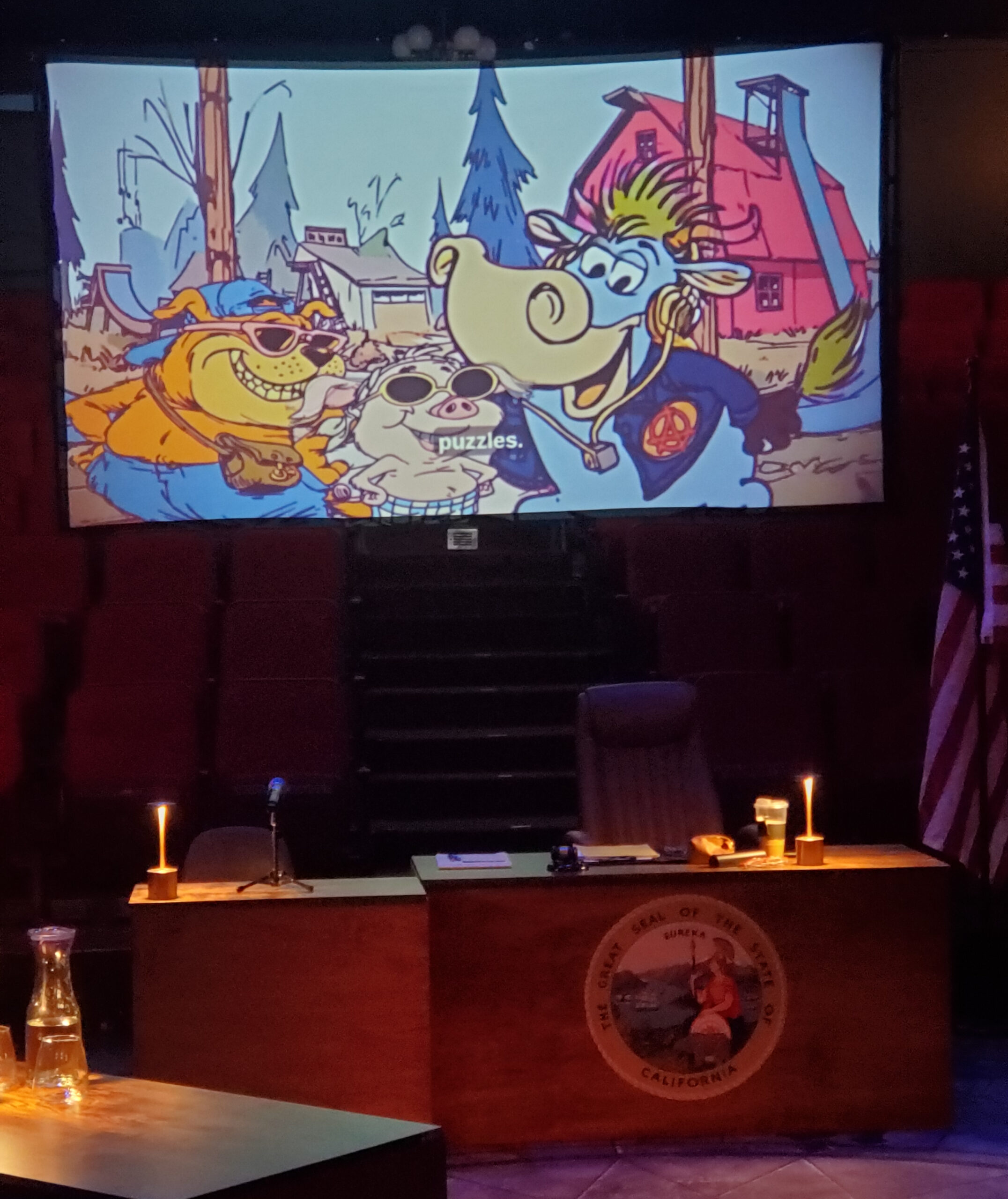
It felt a little tonally dissonant from the experience I thought I was getting, but then again, that’s reality–that’s how these introductory videos really do feel. Strange as it was, it did a shockingly good job of mimicking the weirdness and mood uncertainty of real jury duty. I can imagine someone who was unfamiliar with the process being confused, but for me, it added a lot to it.
QR code successfully scanned, I was brought to an interactive voting display on my phone screen that would change and give me options at certain designated times during the show.
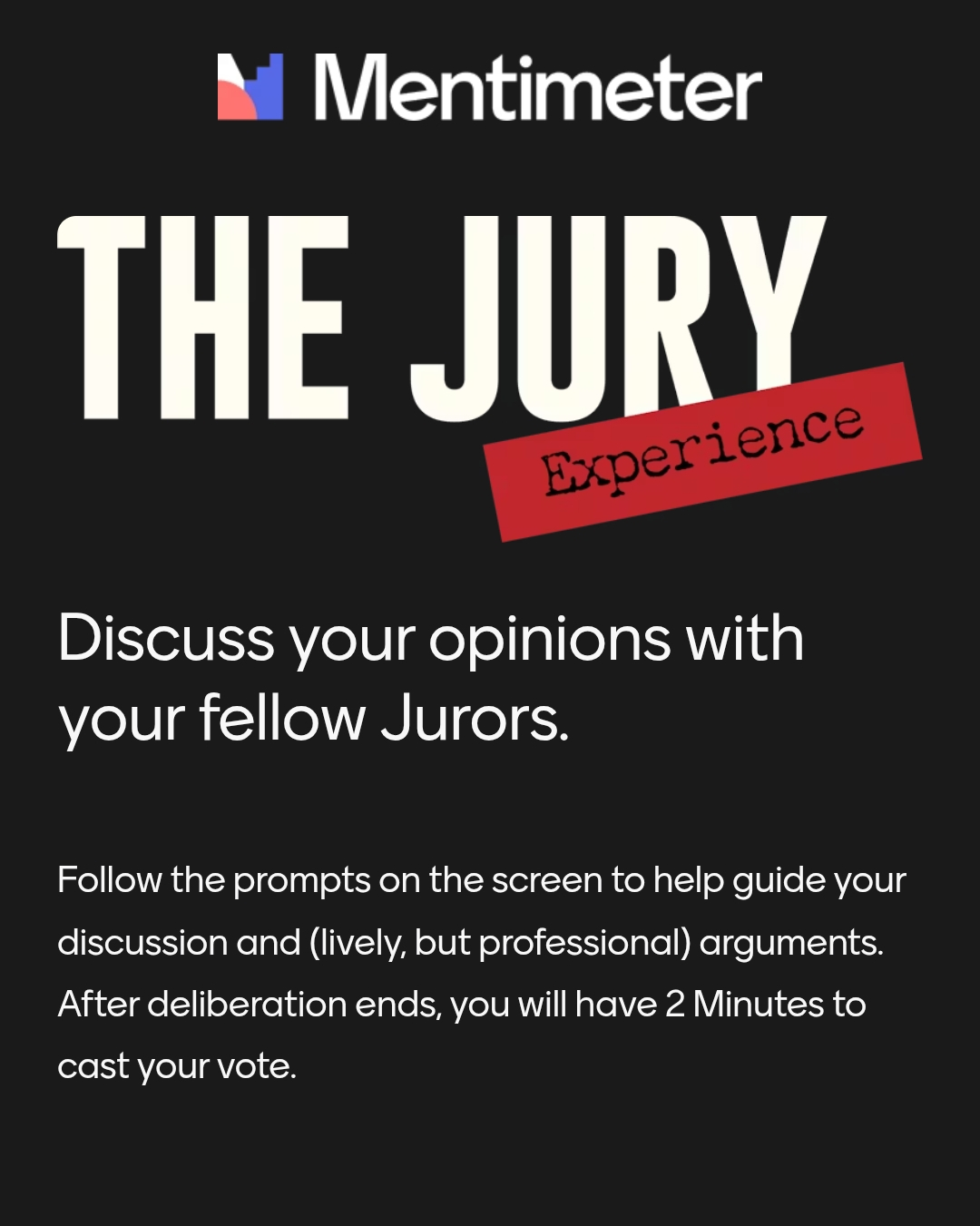
The judge came out, and talked a bit to us as “the jury” before she was joined by the prosecutor, the defense attorney, and the defendant. The defendant was the owner of an AI-powered self-driving car company. One of his company’s self-driving cars had swerved off the road (to avoid an oncoming driver in the wrong lane) and struck down a cyclist in the bike lane, killing him.
Should the owner of the company, responsible for the cars and their learning systems, be personally responsible for the death of the cyclist? That was the question at the heart of our evening.
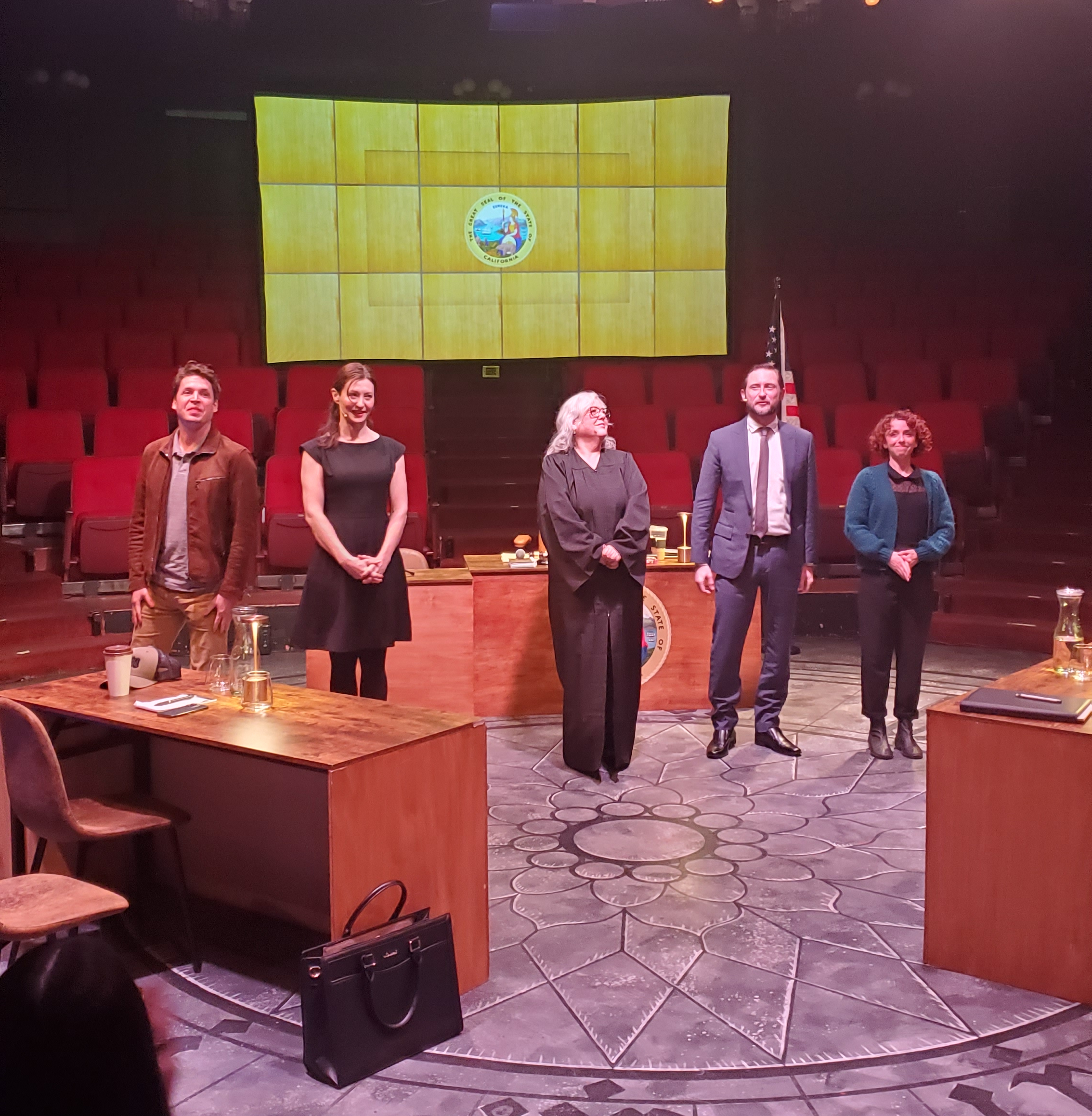
As the night continued, we heard testimony from different sides, witnesses, experts, ex-employees, and law enforcement. Many of these were presented as videos projected above, but the victim’s wife was also soon brought out as a witness for the prosecution (bringing the in-person cast to 5 total).
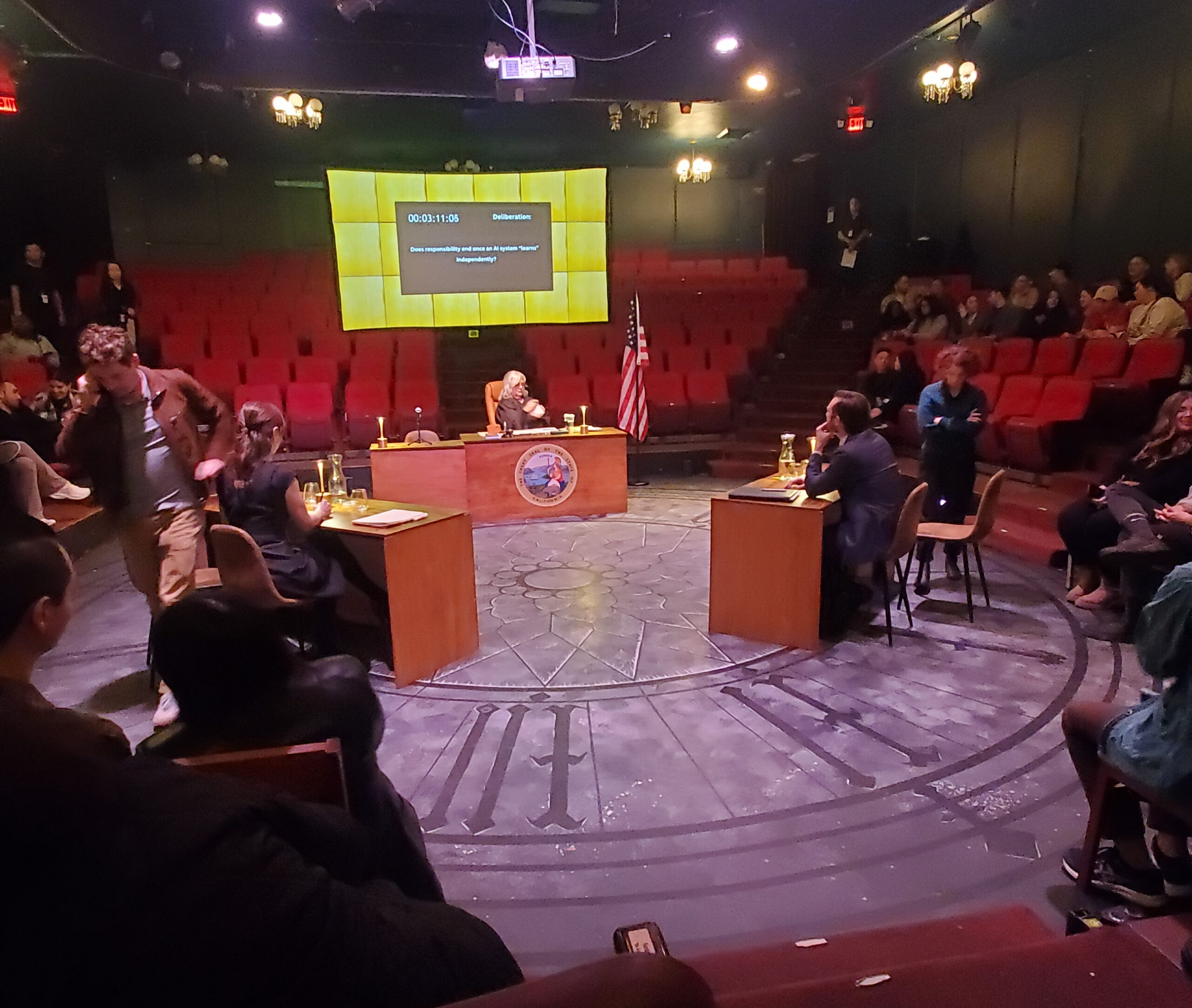
The performances were great all around. The defense attorney and the prosecutor were extremely convincing as seasoned legal workers without being too polished or “tv-like.” The judge, who had arguably the most important role as the anchor, always kept things under control. The defendant did a good job as being generally factual yet also generally unlikeable as a busy, detached tech exec. And the victim’s wife’s acting truly tugged at your heartstrings.
The audience was surveyed (on our phones) to see if we mostly thought the exec was innocent or guilty near the beginning of the trial, as a benchmark. Over 70% thought he was innocent.
During the case, we were surveyed now and then about other things, or allowed to vote on which question the prosecutor should ask, what decision the judge should make, and more.
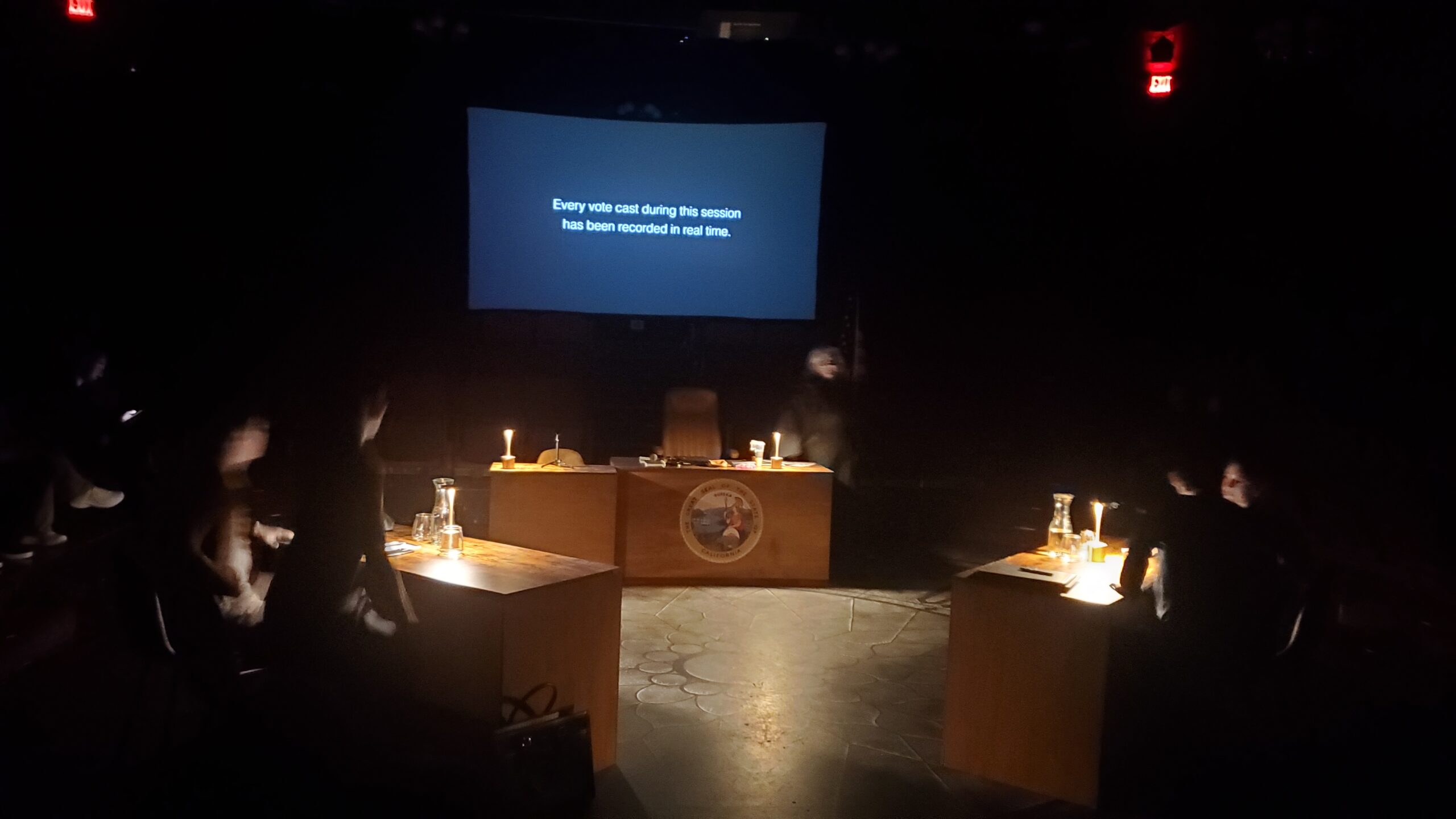
There was a short intermission. When we returned, there were a few more twists and turns, but finally the moment came for the final verdict.
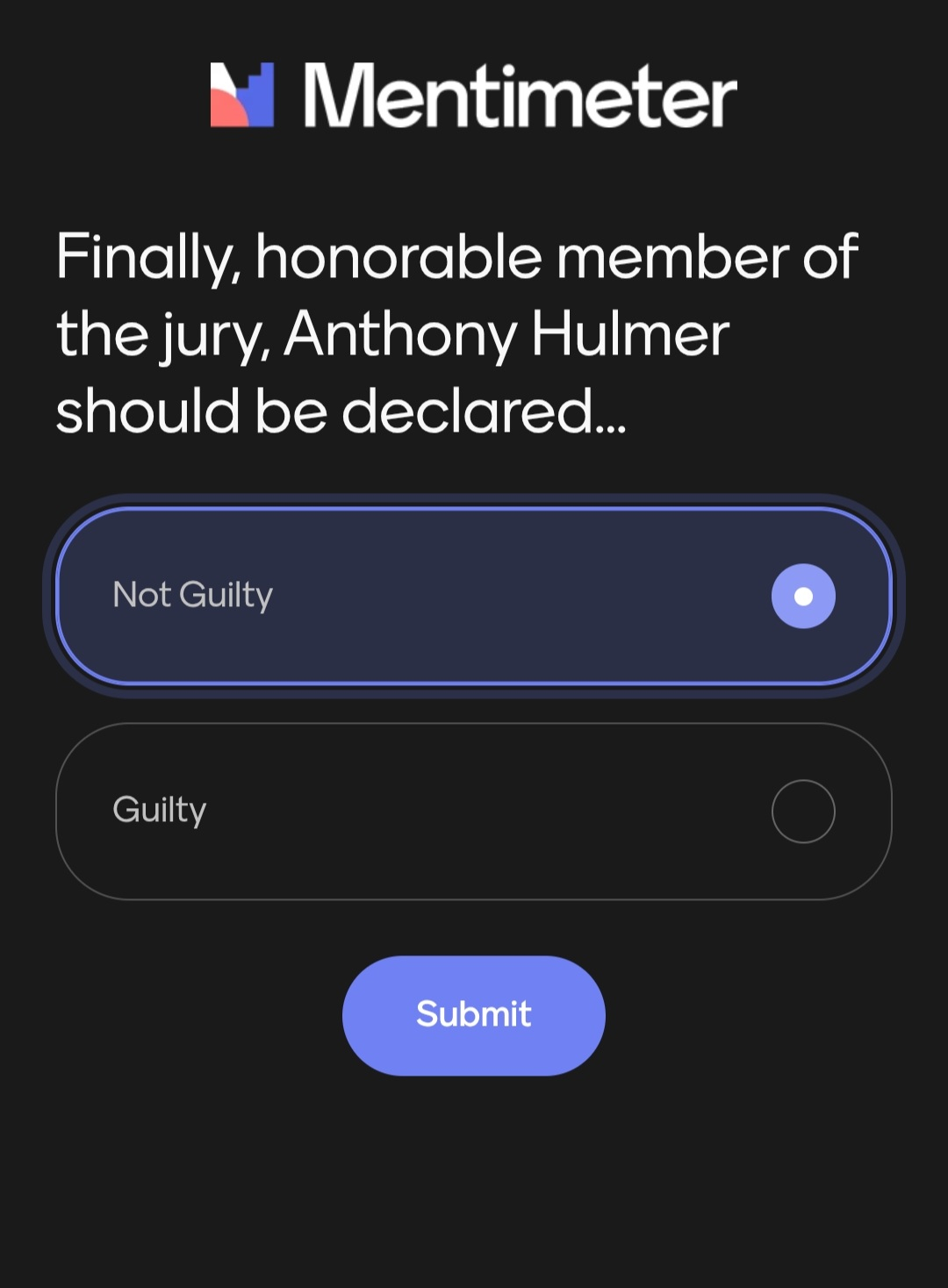
In the end, the night’s audience found Mr. Tech Exec… NOT guilty. However, the percentage of those who thought he was innocent had decreased by about ten points compared to the start.
The cast took a bow and that was that.
My Reaction
I thought this experience was interesting.
It’s certainly not the most fun I’ve ever had at live theater, and it’s not something I feel like I need to experience more than once–especially not the same case. It was intellectually engaging, but not visceral.
Of course, anyone who hears “The Jury Experience” and expects a thrill a minute is not being realistic anyway.
It was still pretty exciting, the acting was good, the ethical dilemma did have me considering both sides fairly, and it definitely kept my attention.
This is the one show ever where I think I lost something by coming alone. During the short deliberation breaks, we had time to discuss the questions with the people around us, but realistically everyone just stuck to their friend groups or significant others. It wasn’t really a sociable environment. I suppose the event could’ve tried to sit the single attendees together in the same group or something. Granted, I was pretty decisive on my own, so I didn’t need anyone else trying to argue about what I should vote. But having others to discuss the moral grey-area questions with would’ve been more fun.
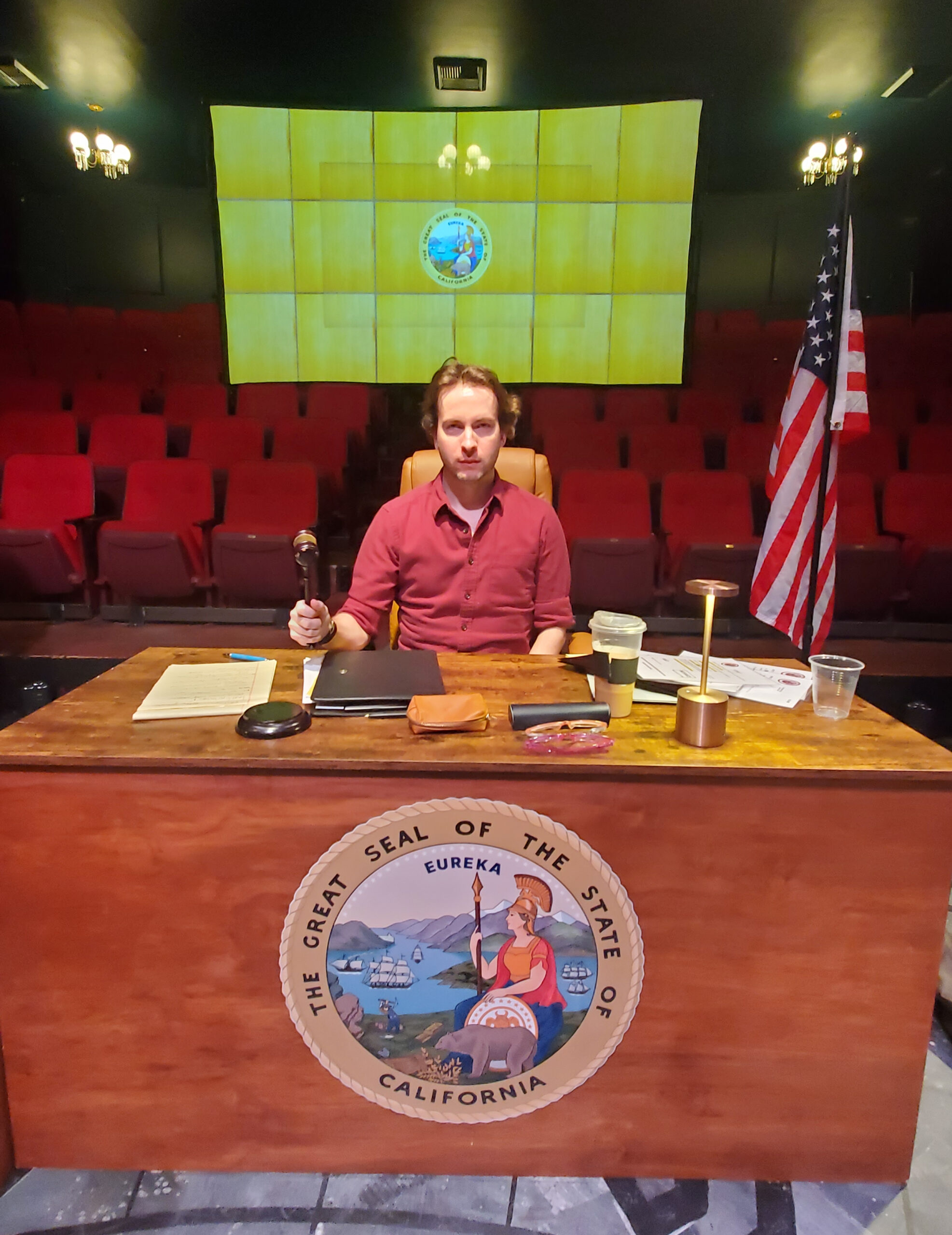
Is it actually immersive? Or is it just structured audience voting? It’s not the most immersive “immersive event” I’ve ever been to. But I think it probably just makes it over the line.
It really is a social experiment, and it really did make me think. I wonder if Fever keeps track of the data from all of these shows–I certainly hope they do, as it could lead to some fascinating studies in aggregate. The AI plot is timely and relevant for 2026.
Who knows, maybe they’re putting on this specific AI-based plot to gather data for AI companies, or even to influence public opinion somehow. But I’ll digress from conspiracy theorizing.
Unfortunately, Fever is bad about publishing the names of its actors, which I always find disrespectful. If you know who the actors I saw tonight are, please let me know. I did find that credit for script, staging, and creative direction goes to Agustina Videla and Pablo Destito.
The Jury Experience wouldn’t be my first recommendation for immersive theater in LA, but I did still have an interesting, thoughtful, and unique experience, and in the end, I’m glad I went.