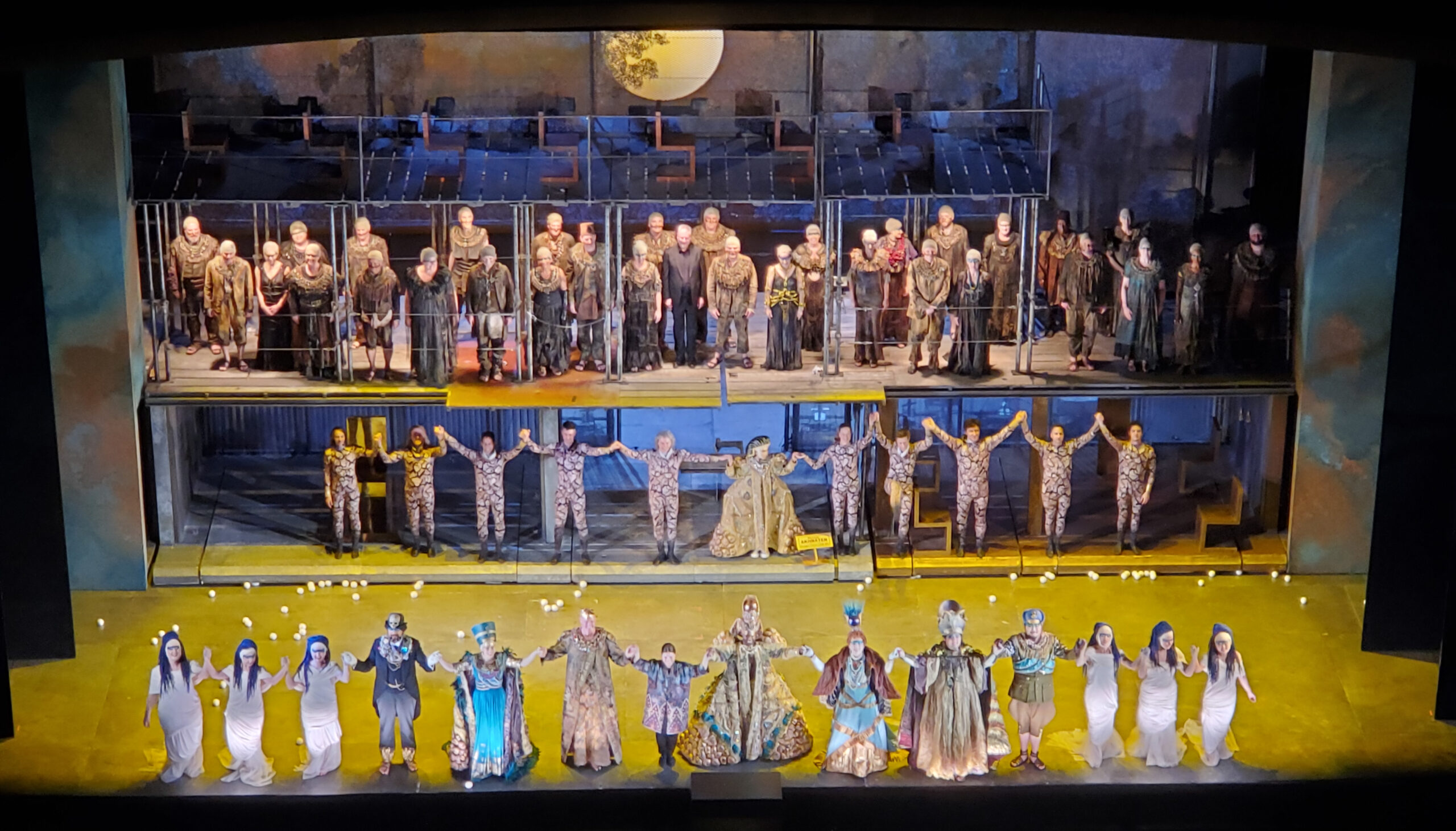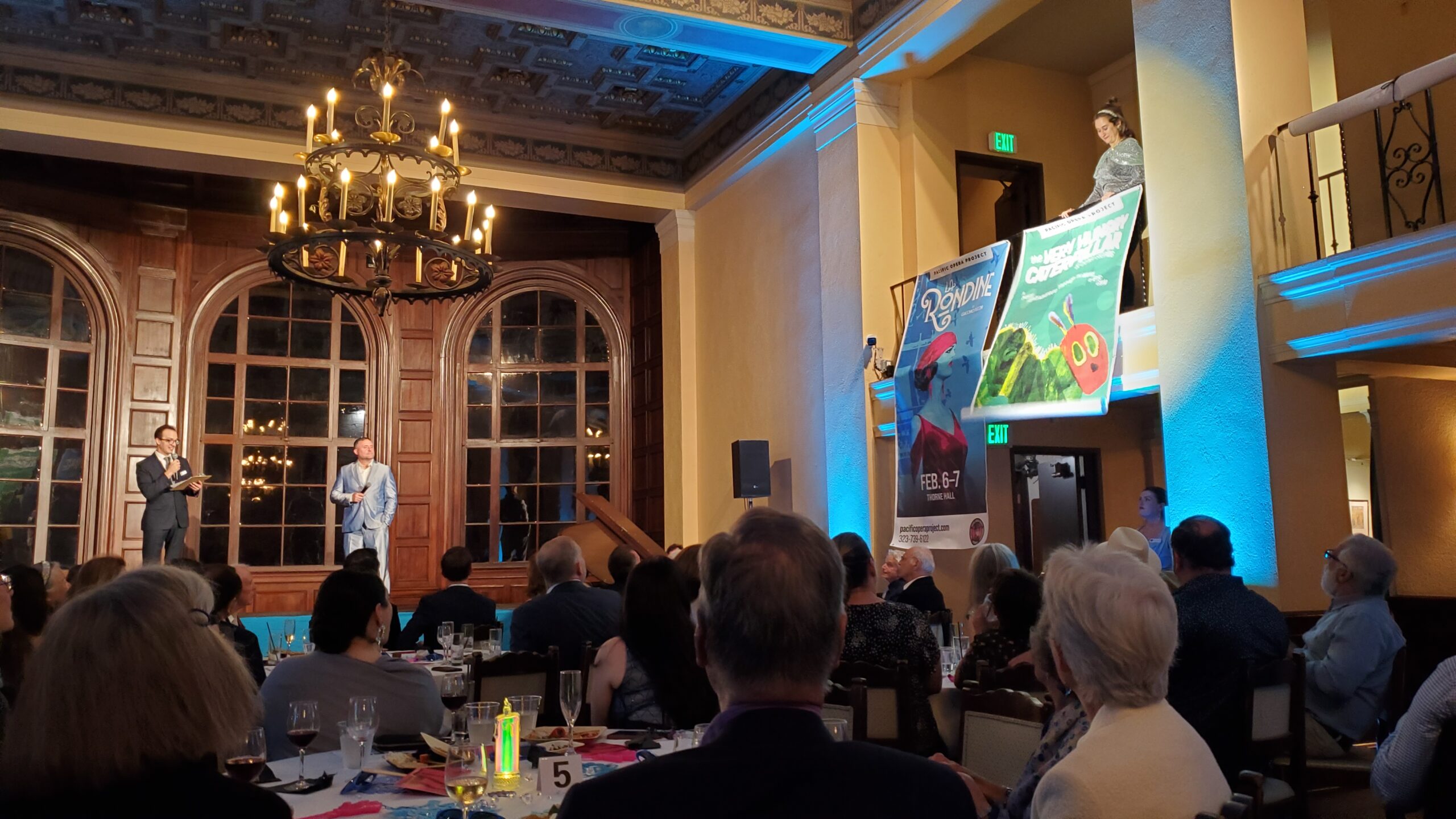
Send in the clowns, because it’s time for Pagliacci: the infamous Italian clown opera written by Ruggero Leoncavallo, first premiering in 1892 in Milan.
This has to be one of the most famous and frequently referenced operas ever made. So it was fitting that it was the first one I saw by the Pacific Opera Project, or POP, as the kickoff to their 15th anniversary season (2025-2026).
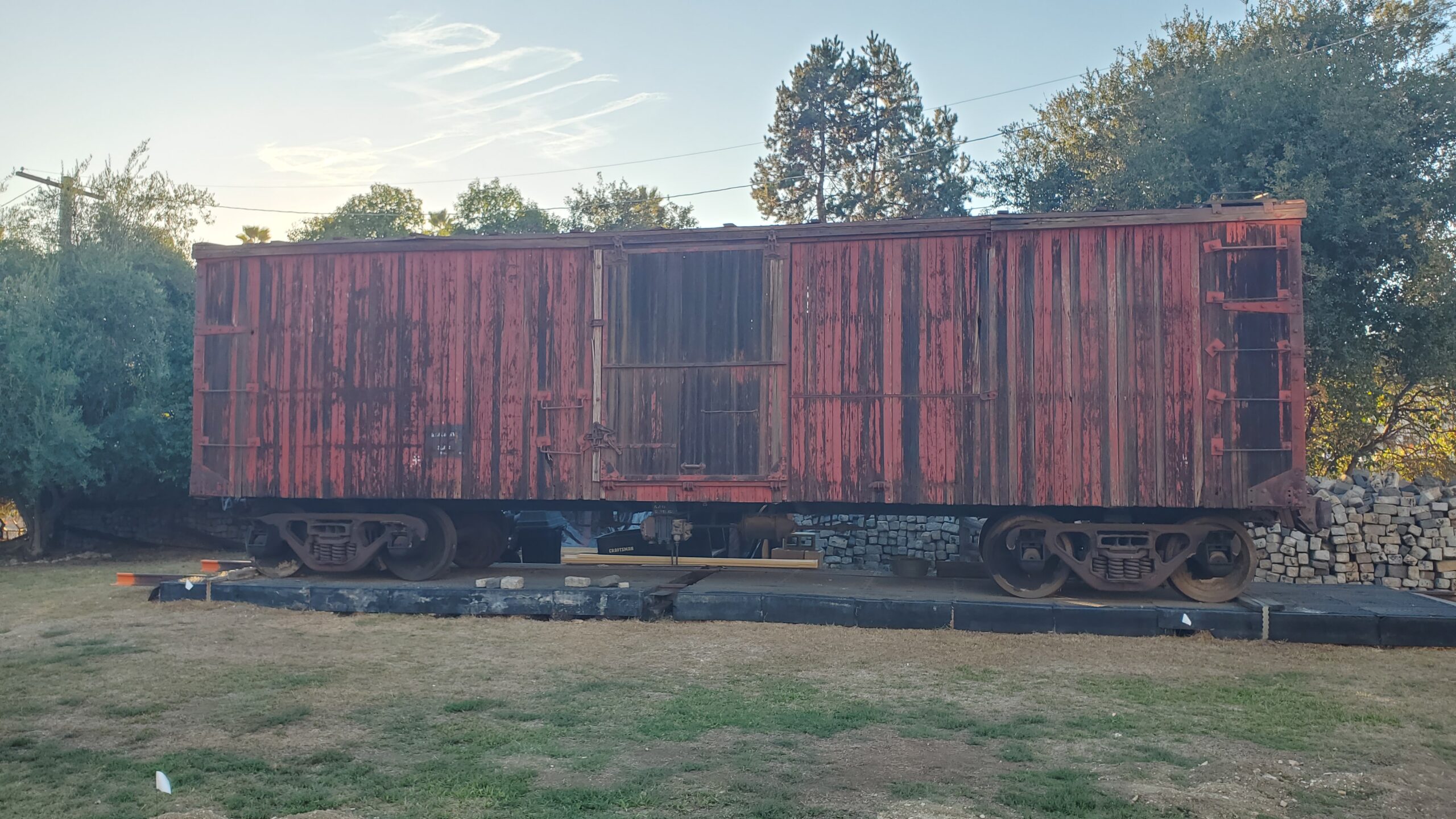
Rather than being performed in a theater or opera hall, Pagliacci was taking place outdoors, in Heritage Square Museum. This “museum” is actually a private outdoor park with lots of fabulous old buildings, including a church, an octagonal house, and some train cars. But we’ll get to that in a moment.
First, the walk there.
Pre-Show Entertainment
I came from the aptly-named Heritage Square stop on the Metro’s A Line. I’m a major proponent of public transit, especially in Los Angeles where people don’t realize how good we have it. From the stop, it was a short and easy walk along the street to a path leading off towards the square, with plenty of POP-branded signage pointing the way.
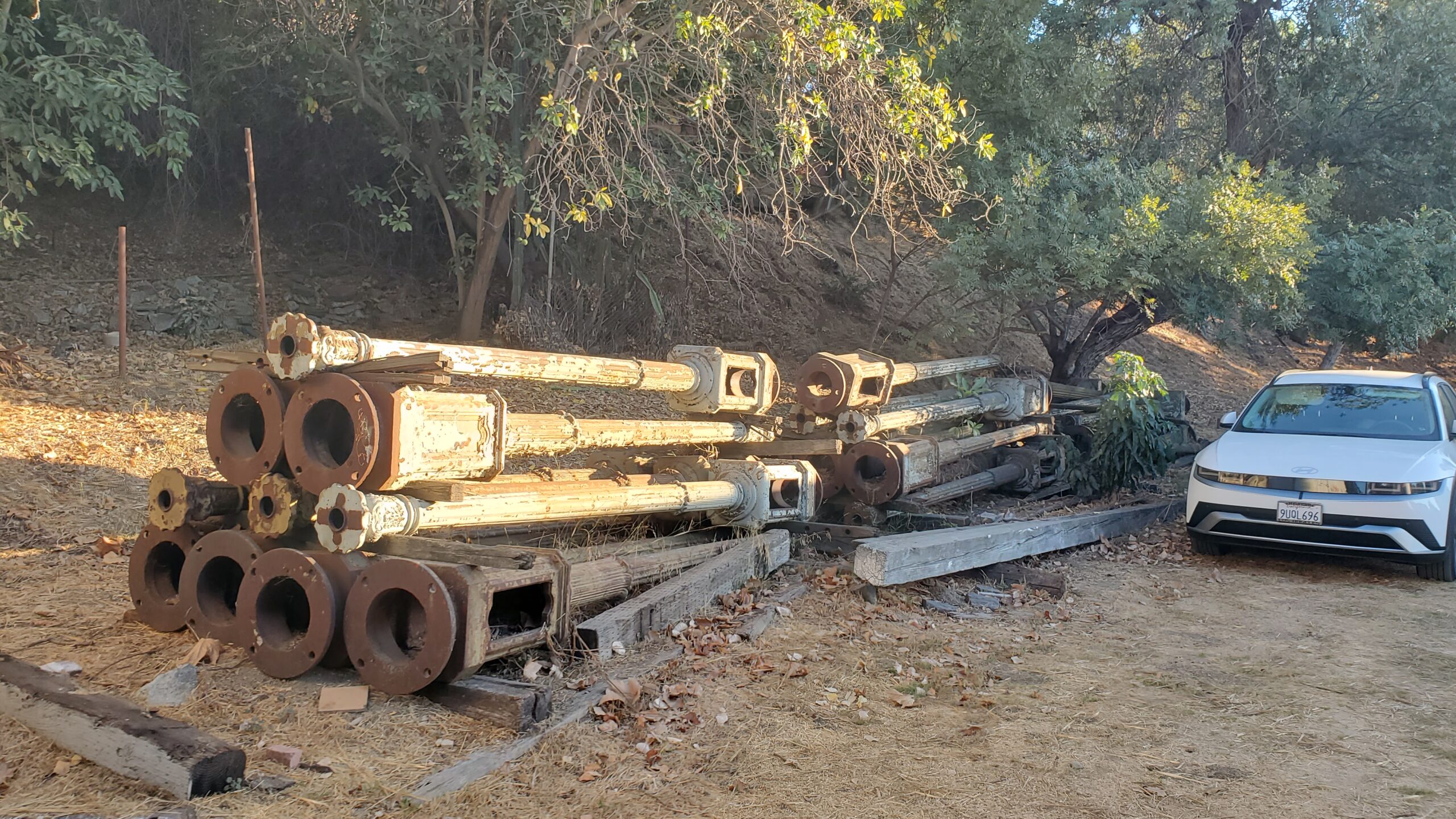
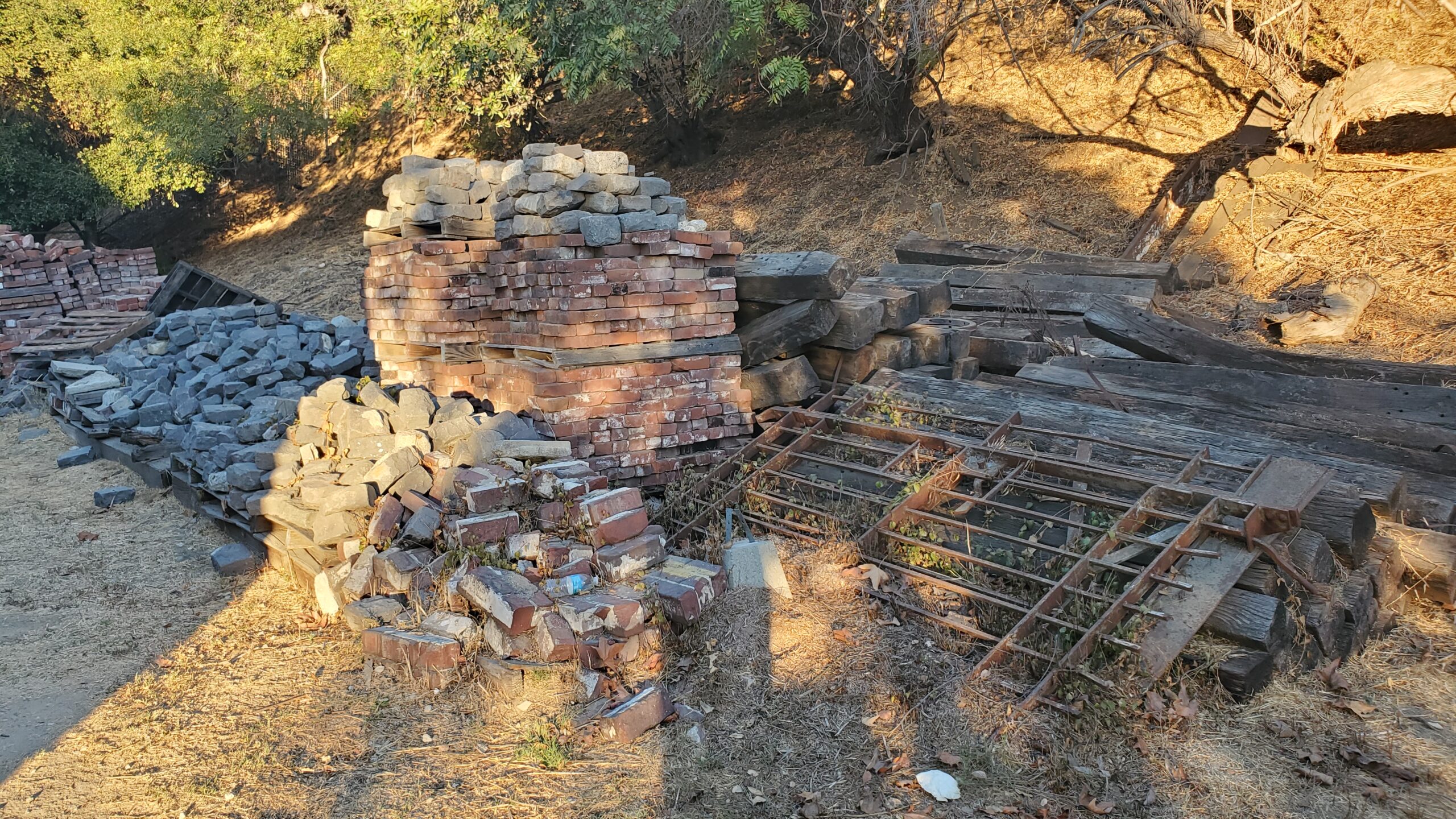
The walk was littered with these piles of old streetlights, bricks, and other infrastructure. I’m fascinated by this stuff on its own, and it was already transporting me into the magic of the experience.
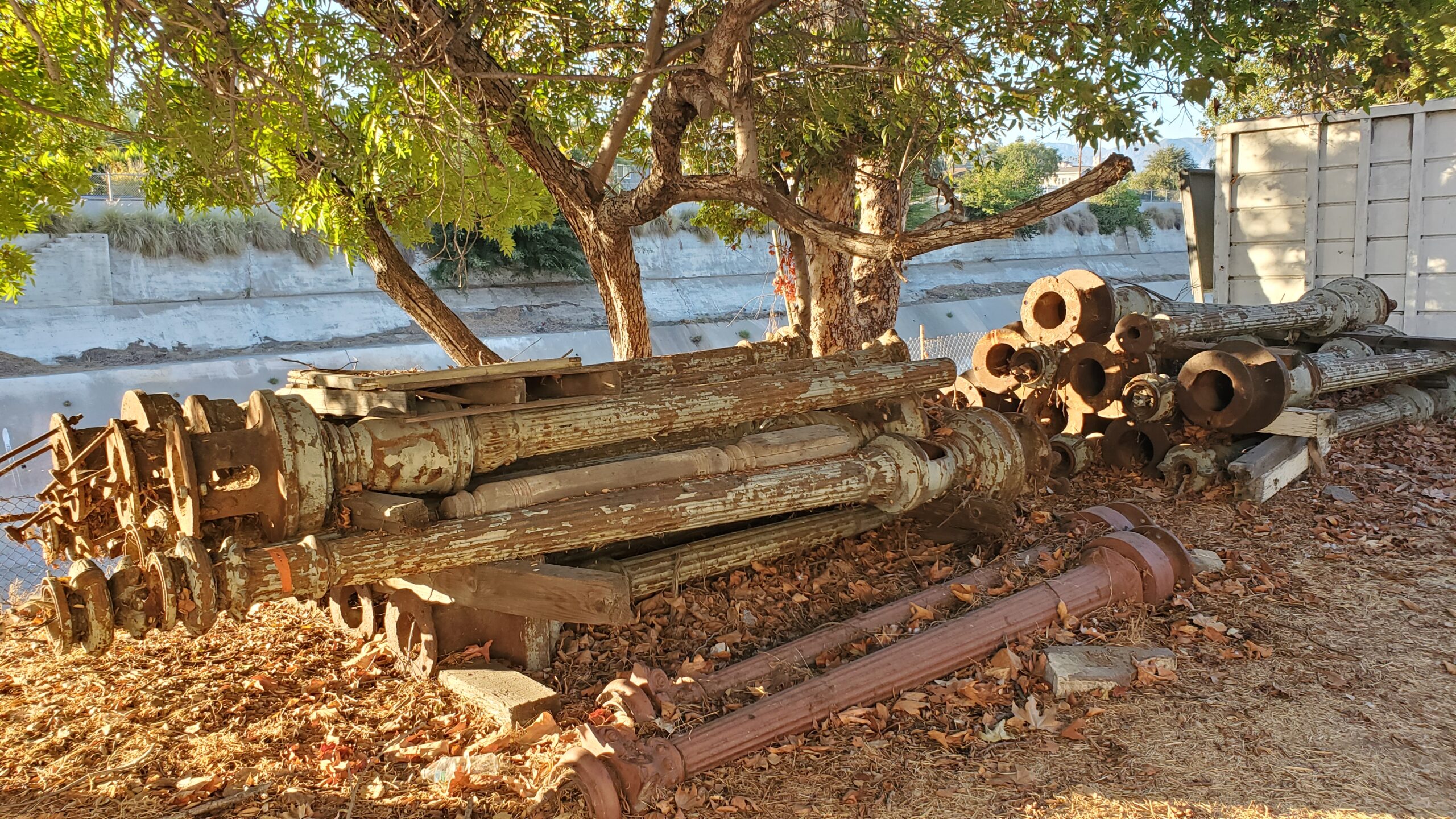
Arriving at a table to check in and grab a program, I was directed to keep walking further back through the historic homes and enjoy some pre-show activities and sight-seeing.
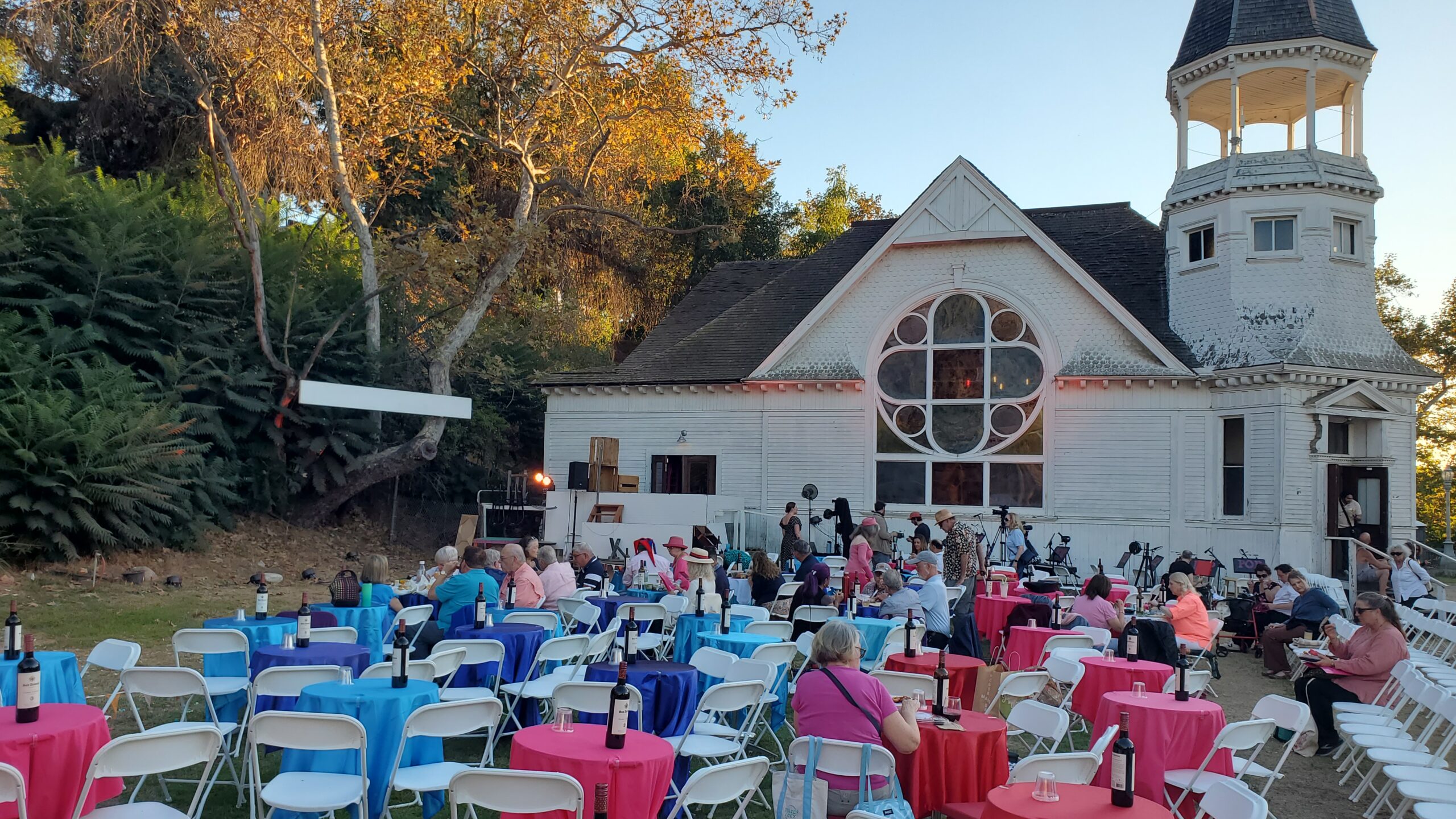
Past the big church, the audience area was obvious, with dozens of tables and chairs set up, as well as rows of chairs further back for those who didn’t purchase the whole wine & dinner package.
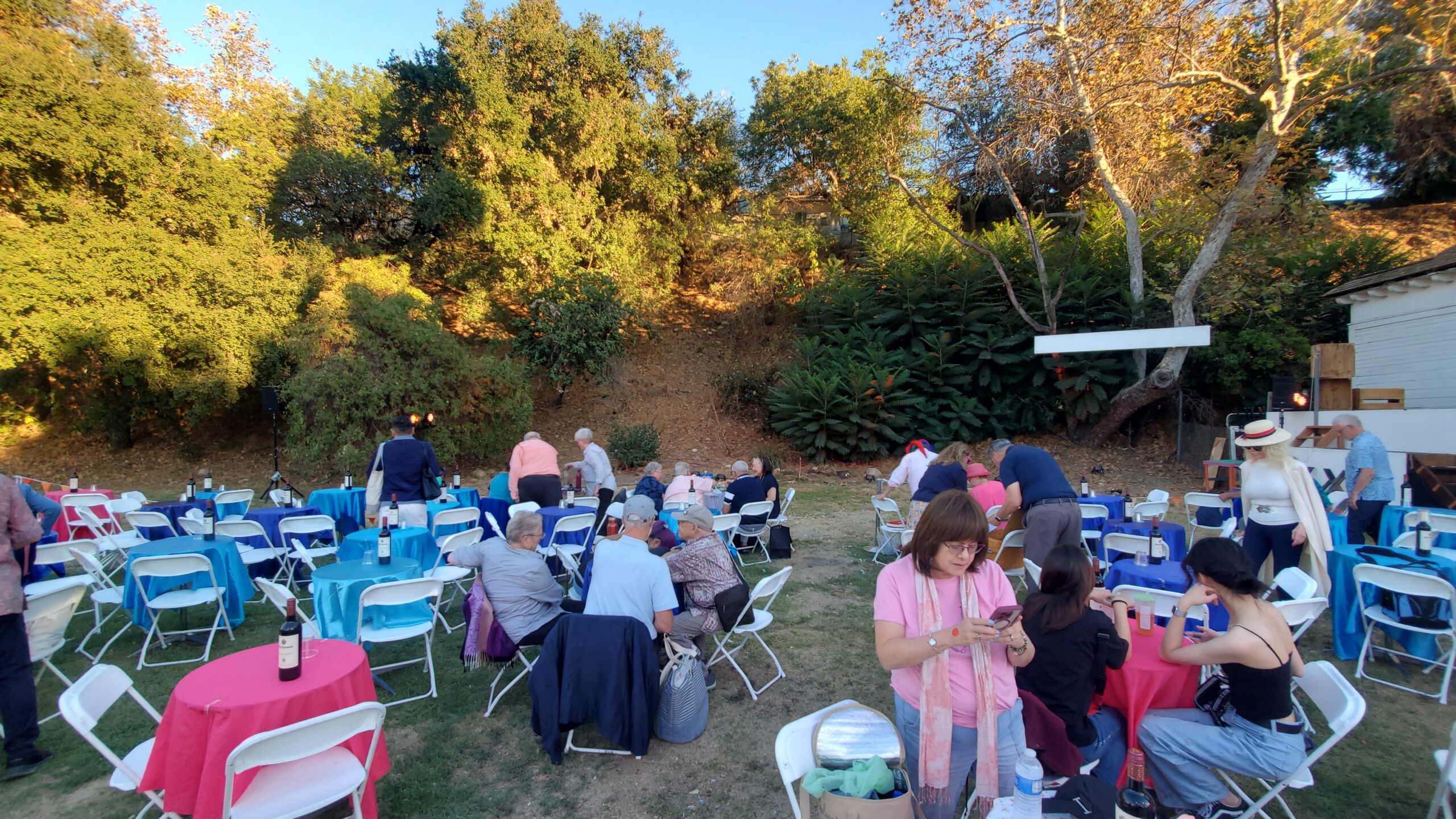
The stage area, with the supertitle projection strip mounted to the side.
It was a beautiful fall day (9/7/2025); I set my things on my seat and walked around.
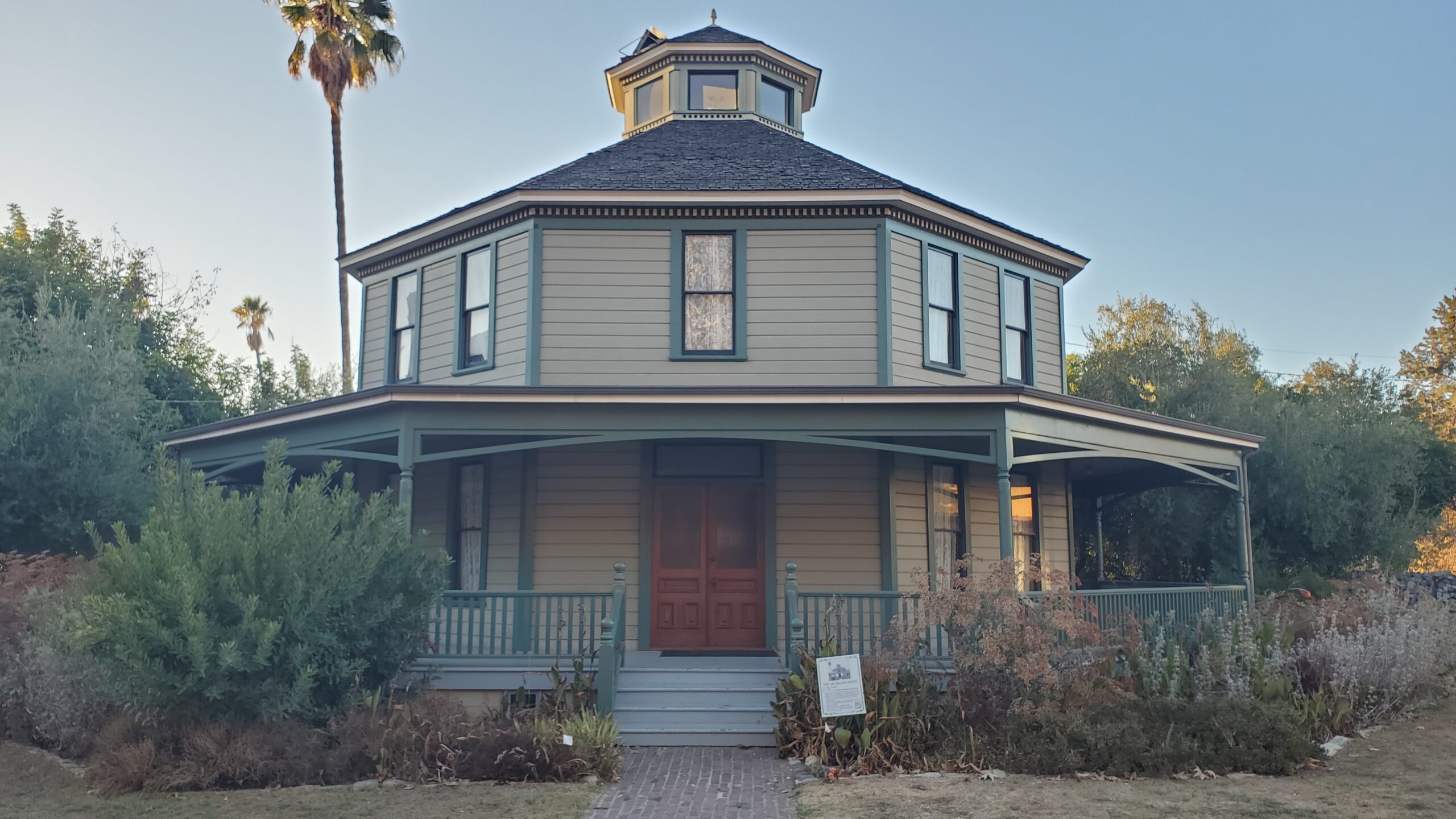
The Longfellow–Hastings (Octagon) House.
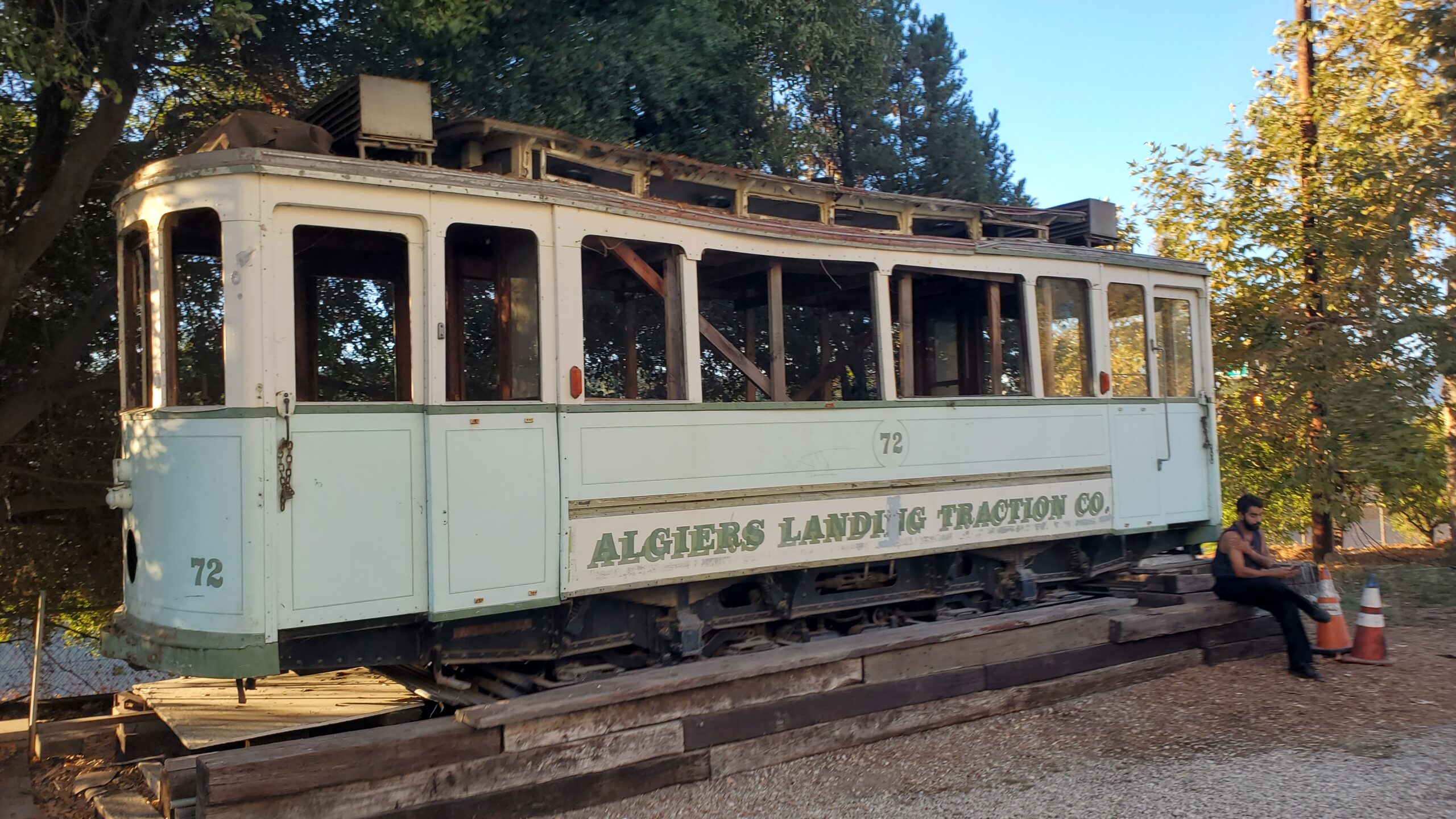
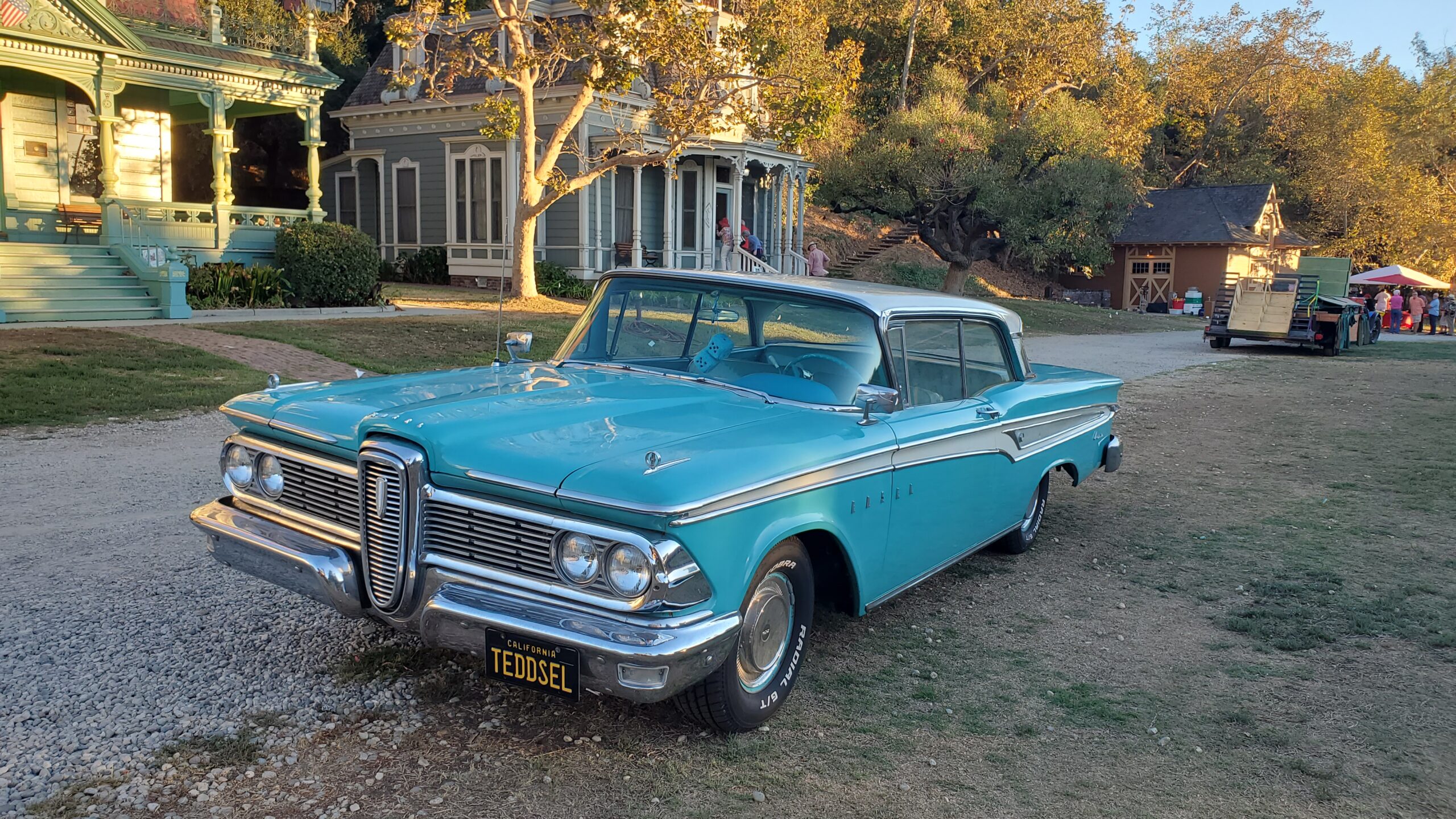
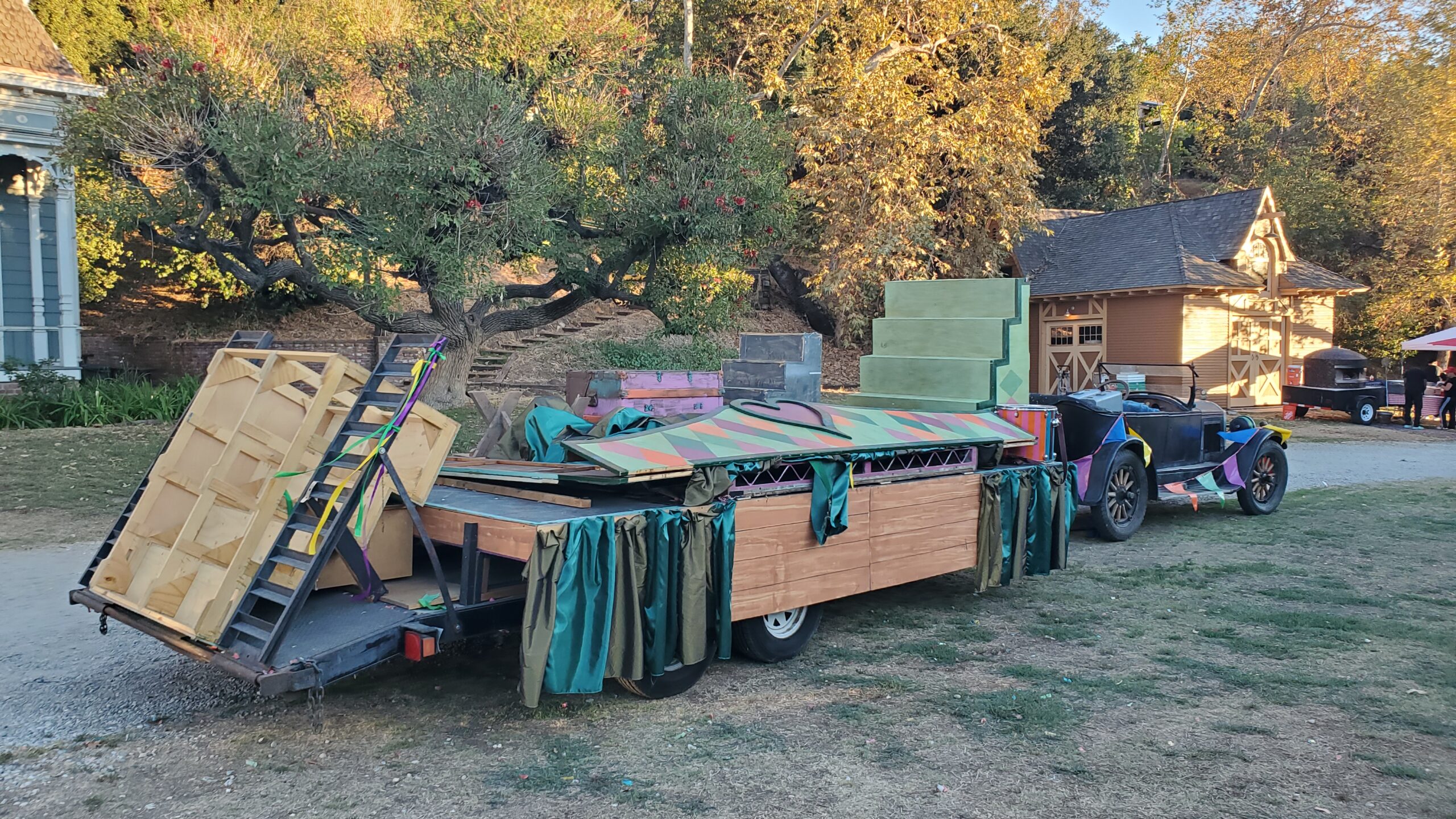
As you will soon see, this strange-looking trailer hooked up to this antique roadster will be driven onto the stage area and quickly transformed into the actual set of the opera very soon. Here it lies in wait.
What a way to set the mood! There were lots of people milling about, and I talked to some interesting attendees. There were even craft vendors, all imitating a real traveling circus. There was even a clown on stilts walking around performing tricks.
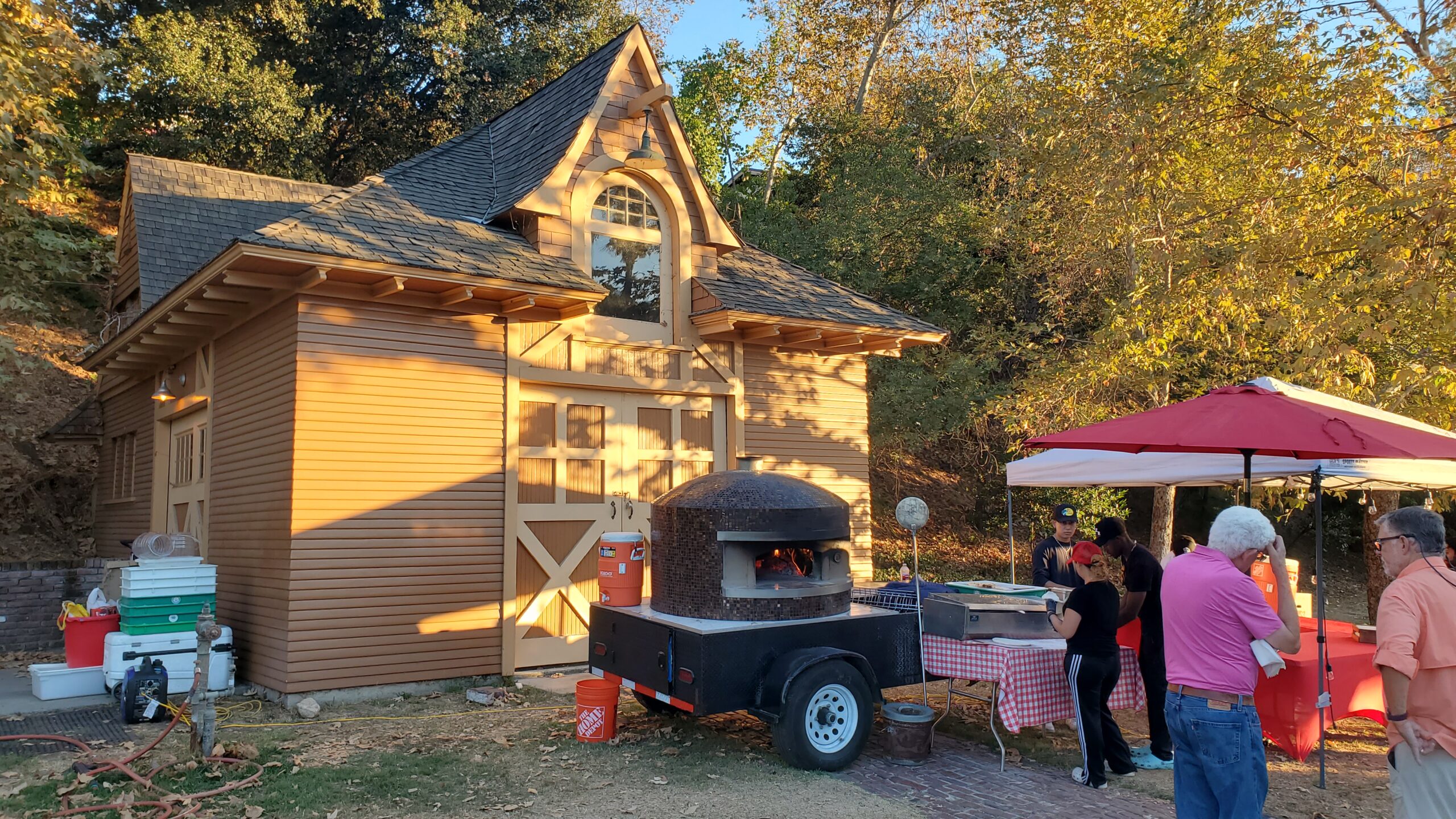
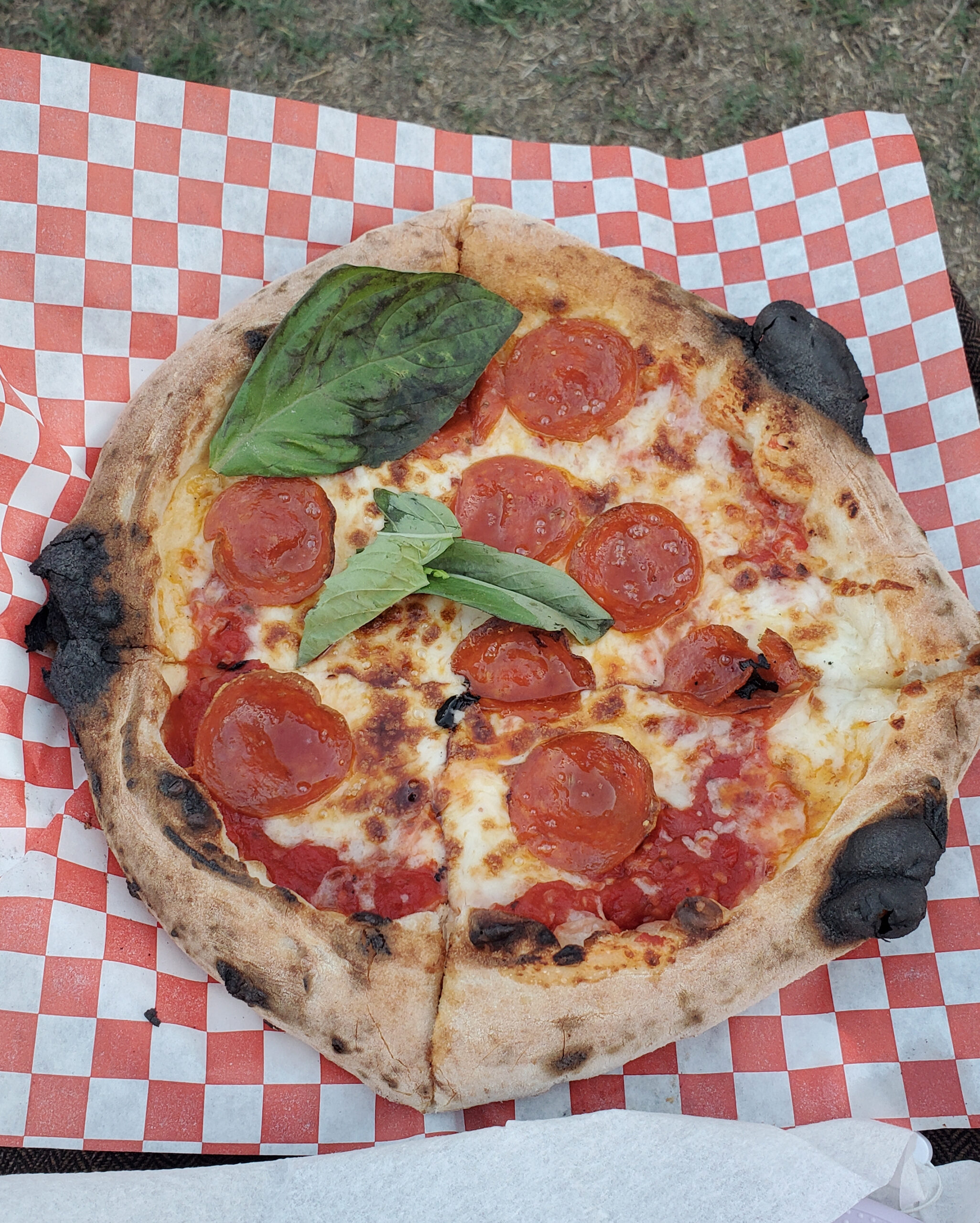
There was a tent with a mobile pizza oven, which I made use of:
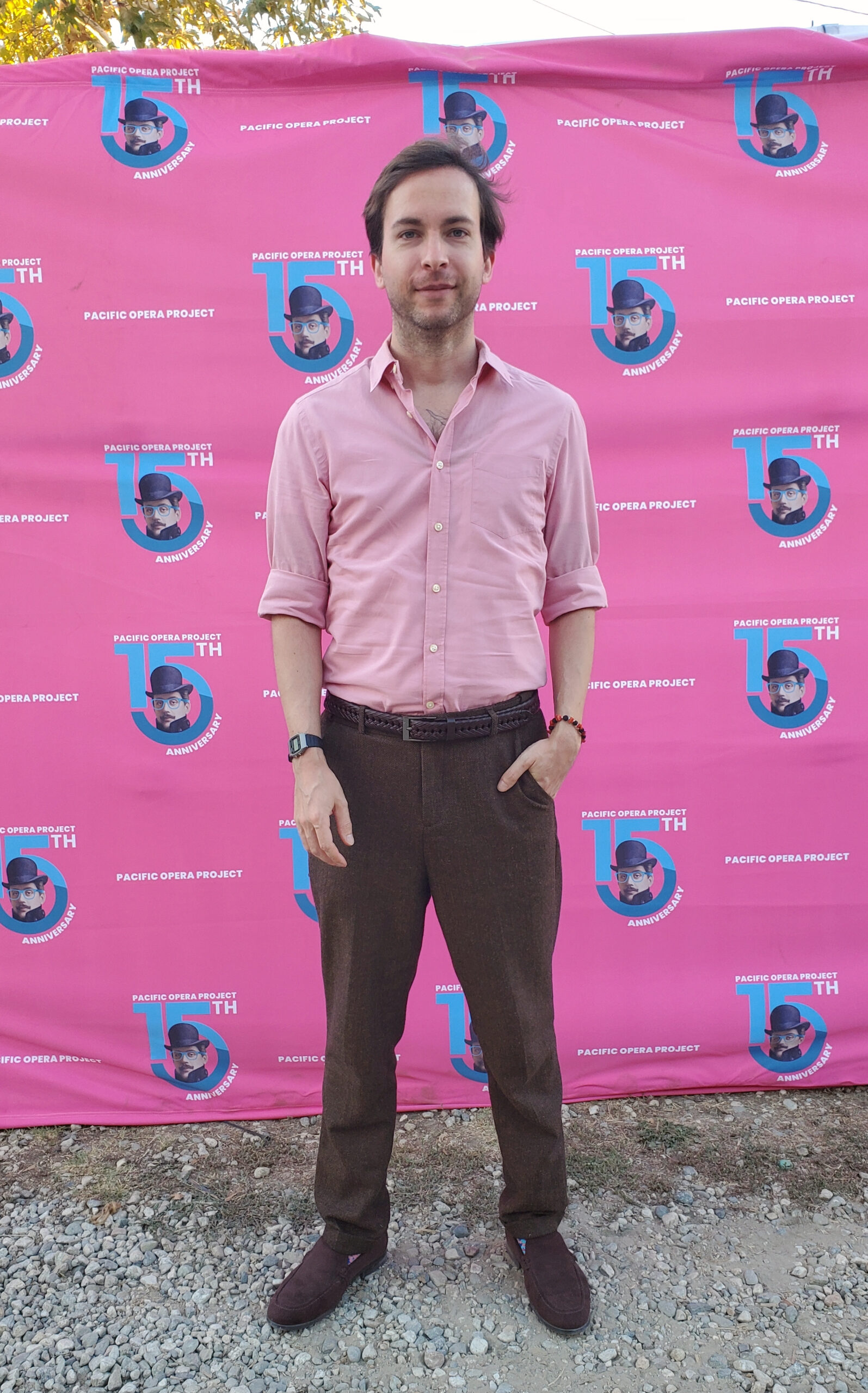
I had my photo taken in front of the pink POP 15th Anniversary backdrop.
The themes of the event were pink, blue, colorful, and whimsical.
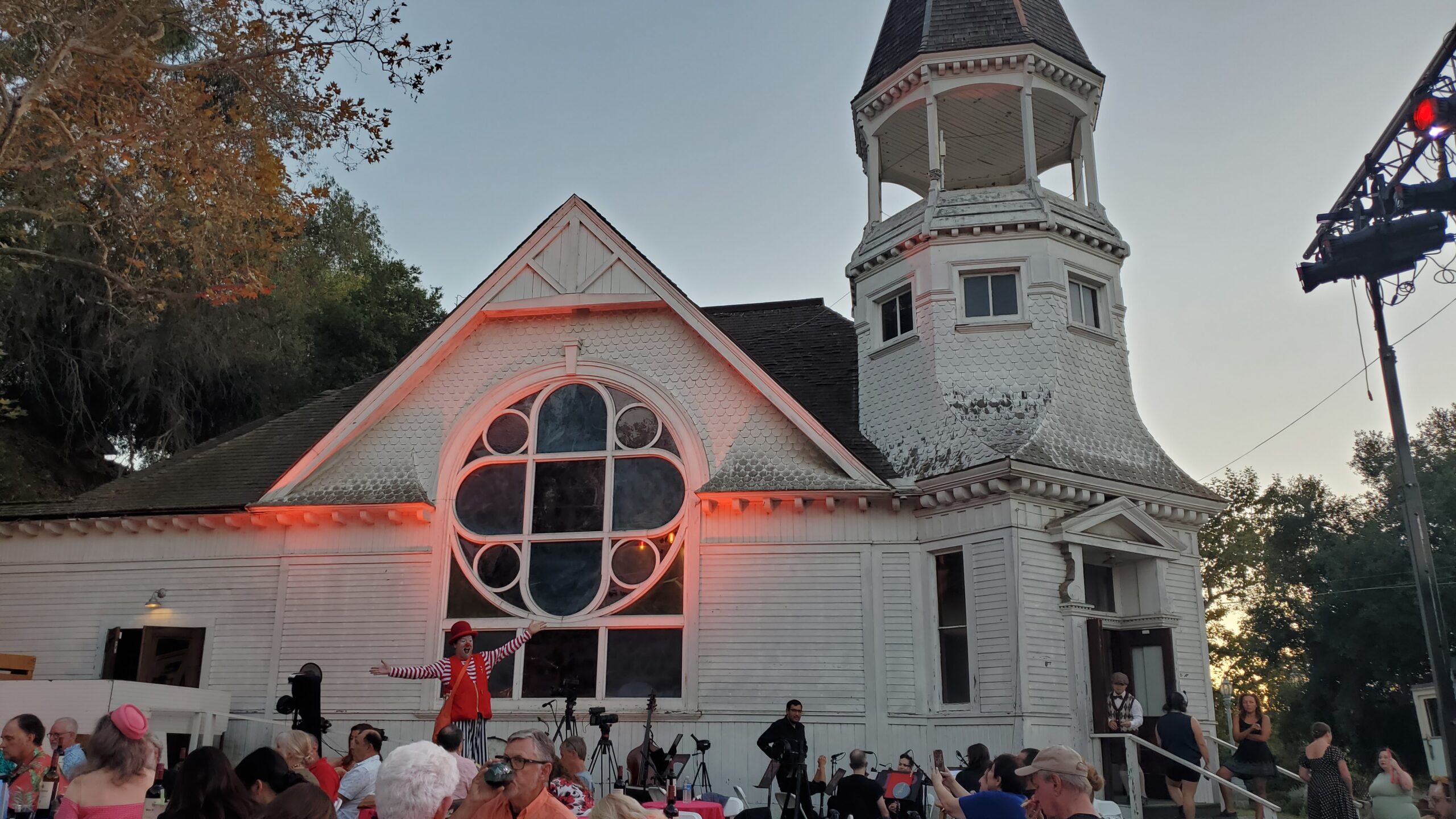
The church was the focus of the area. The orchestra “pit” was right in front of it, next to the audience, and the interior was being used as the “backstage” area, where people were currently warming up.
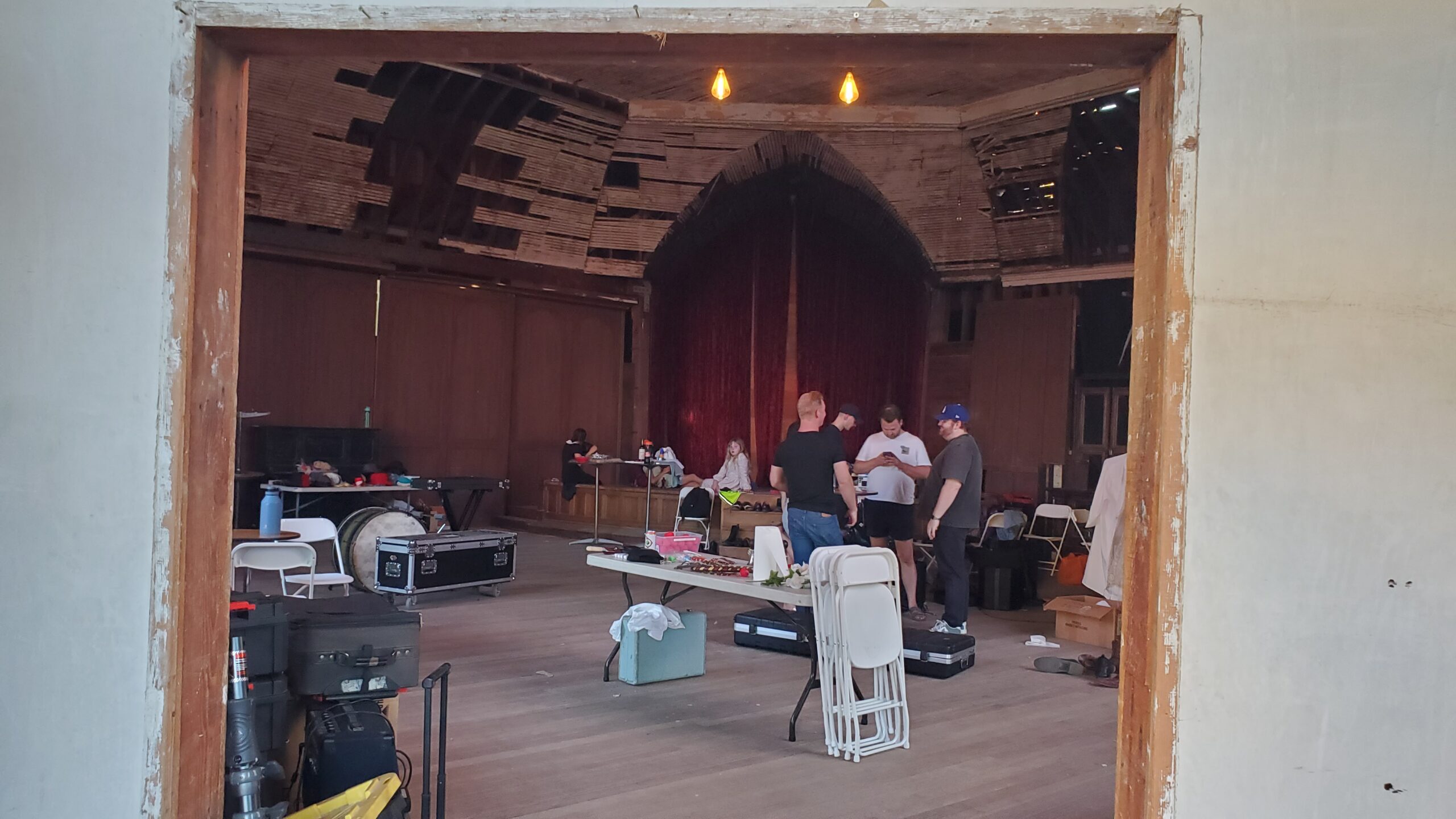
Inside the church.
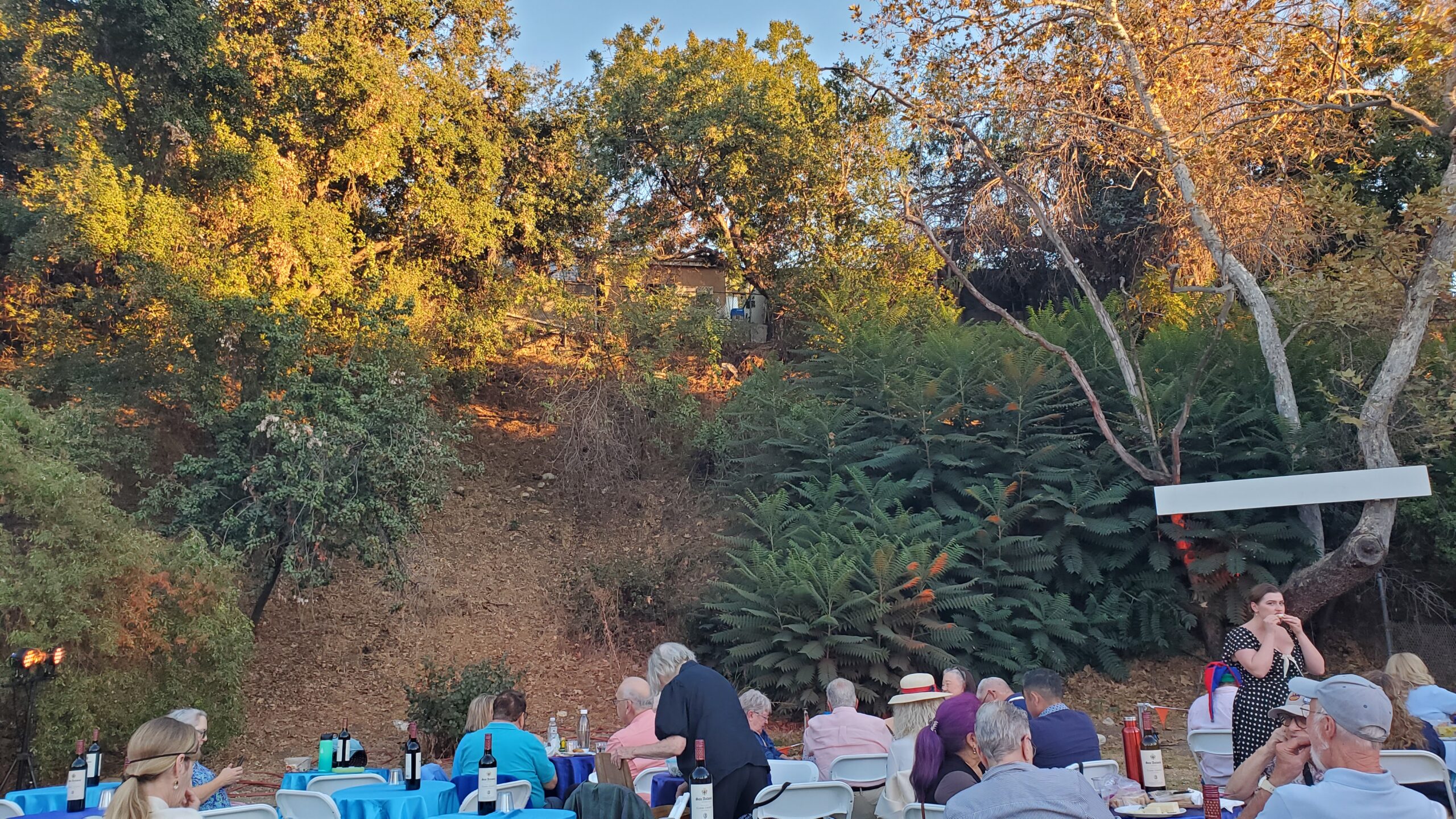
The stage was set against a hillside, with real residential homes above. I have to wonder what they thought of all this commotion.
On a practical note, the bathroom situation was handled well, with five portable restroom units set up just a minute away. Short enough of a distance to be there when you need it, far away enough to not interfere with the show.
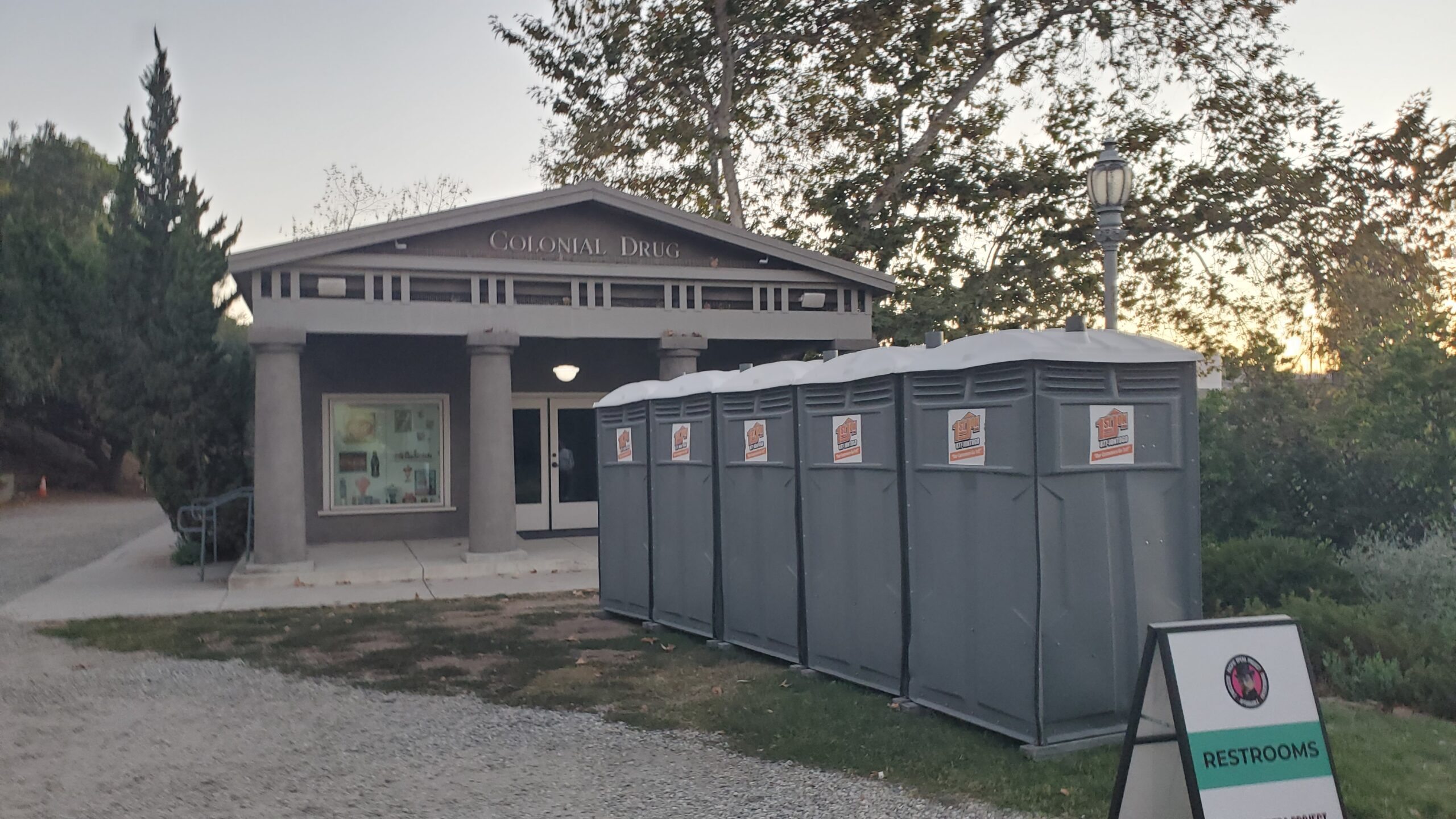
A portable handwashing & sanitation station was on the other side.
As the sun set, it was finally time for Pagliacci to begin.
The Performance
First, the founding artistic director & CEO of POP, Josh Shaw, emerged in a colorful suit and greeted the audience, introducing the 15th season and plugging the other shows coming up (Fra Diavolo, Abduction from the Seraglio, Turandot, and Zorro).
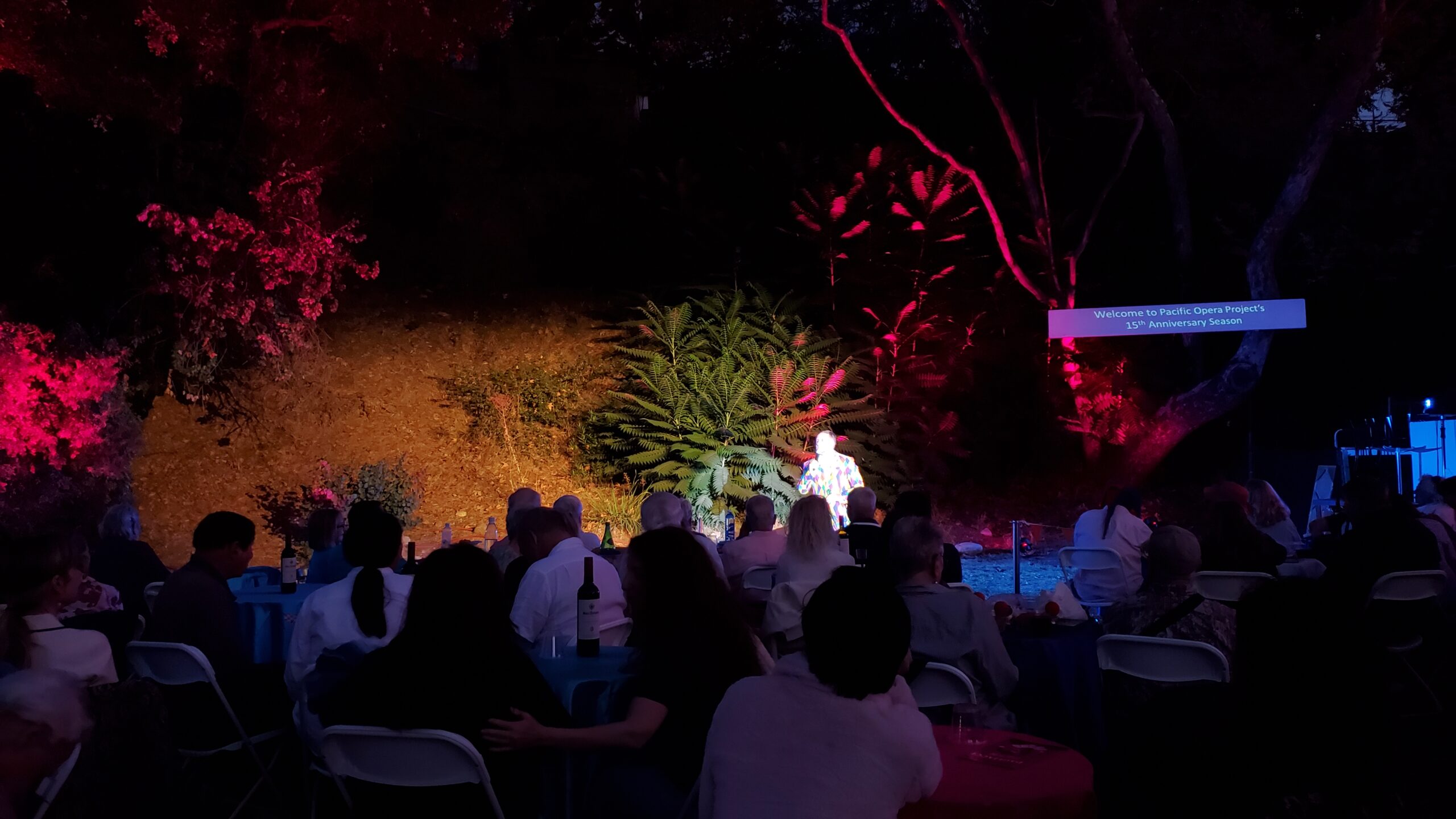
Josh Shaw, from my view in the front row of Tier One Regular Seating (not one of the fancy tables).
As the orchestra began, a clown emerged from the church and sang on the raised platform. This was Tonio, of course, played by Joel Balzun, introducing the prologue. “Real are the tears and suffering that you are to see! After all, an actor loves and hates just like everyone else, and a passionate heart beats beneath his clownish attire.”
This scene was originally written as an afterthought, to help give Tonio more material to persuade one of the earliest singers of the part to take this role. It’s now seen as a classic piece.
Next, to the delight of the audience, that antique roadster drove onto the stage, and the set was erected before our very eyes!
We are quickly brought into the world of the circus, with performers blurring the lines between audience and stage, bounding between the tables and juggling or performing magic tricks while the chorus sings for Canio, the leader of the play-in-the-play performance troupe. Nathan Bowles plays Canio as a grand, jovial, yet mercurial performer, with an enormous stage presence and masterful voice. His beautiful tenor voice filled the park.
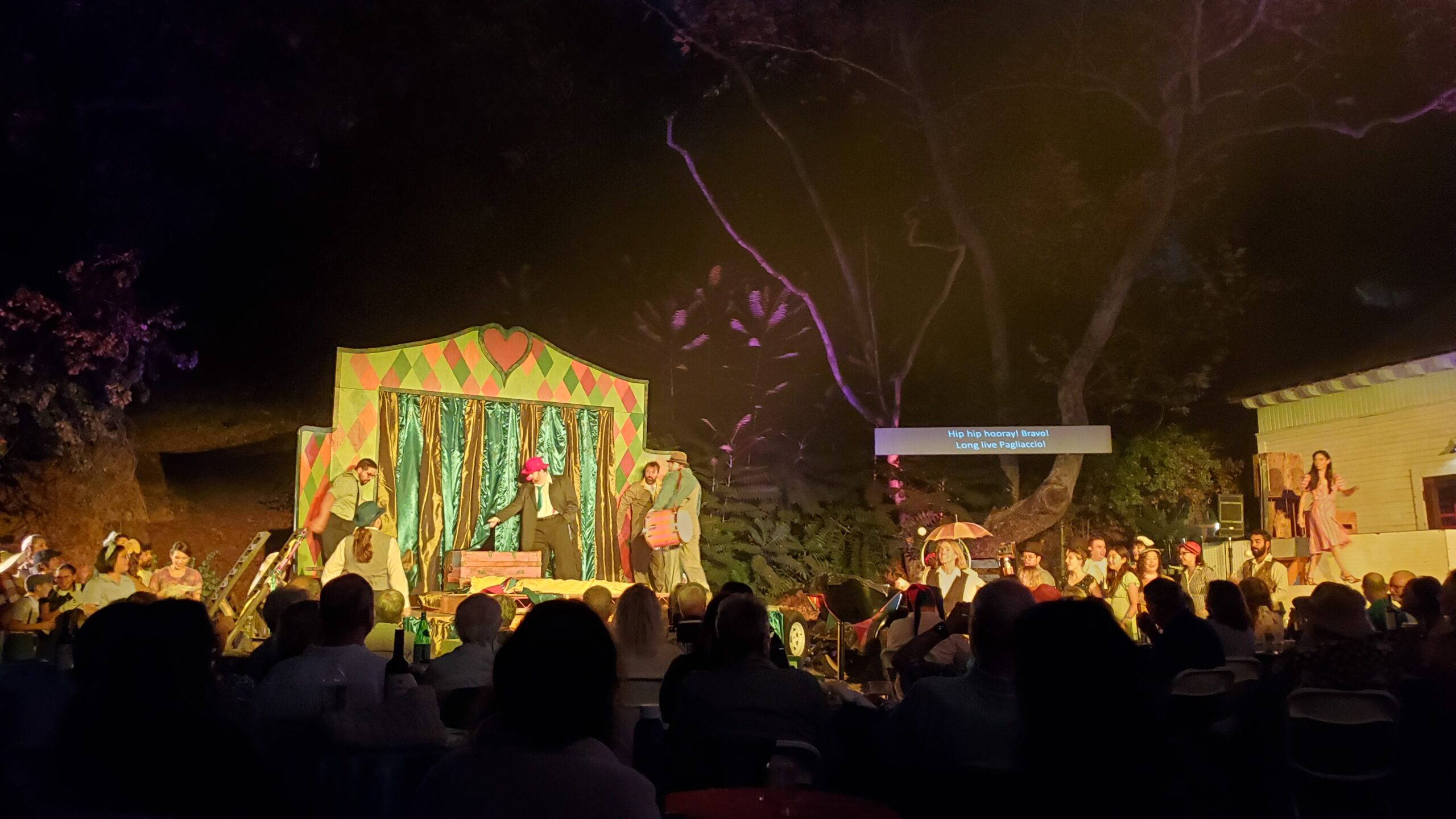
An actor with a passionate heart beating beneath clownish attire.
We also meet Canio’s wife and acting partner Nedda (Janet Szepei Todd), fellow actor Beppe (Arnold Livingston Geis), and fellow actor Tonio for real, no longer breaking the fourth wall.
Todd’s Nedda may have been the highlight of the show for me. Nedda has some complicated and challenging songs, but Todd made each melody sound easy. She played Nedda as innocent as a flower in one moment, then wickedly cruel in the next, when dealing with Tonio’s confession of love; she was expressive, emotional, and nimble.
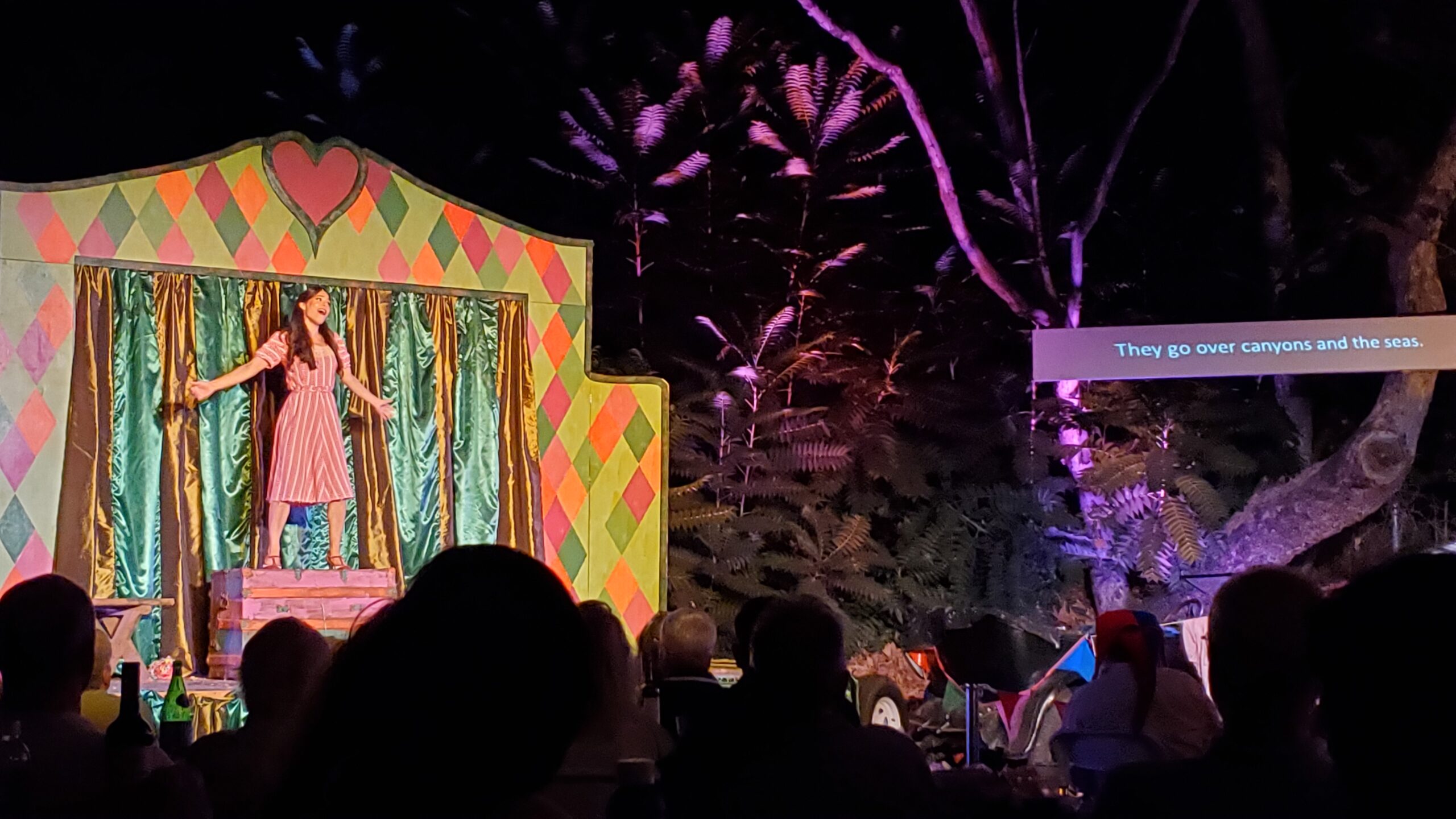
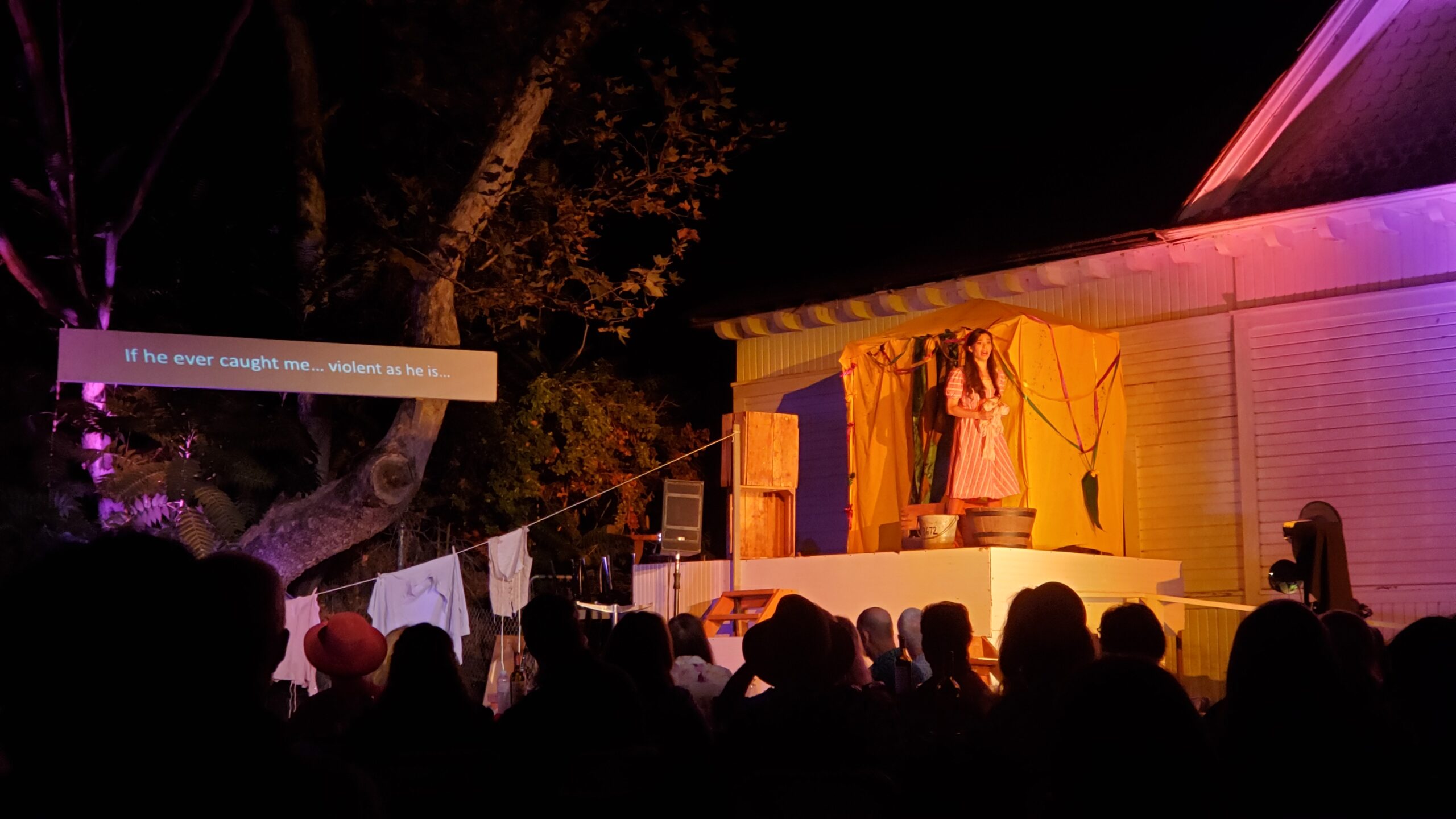
Canio may be violent when enraged, but perhaps, Nedda, you shouldn’t be cheating on him?
Nedda’s adulterous lover in the village, Silvio (Kenneth Stavert), is then revealed. Stavert’s costuming and acting instantly reminded me of authentic small-town folk I’ve known, although none of them could ever sing as well as he does. He was just the type of man you would believe Nedda would want to run off with, perfectly cast.
After drama ensues at the end of act 1, there’s a generous twenty-minute intermission.
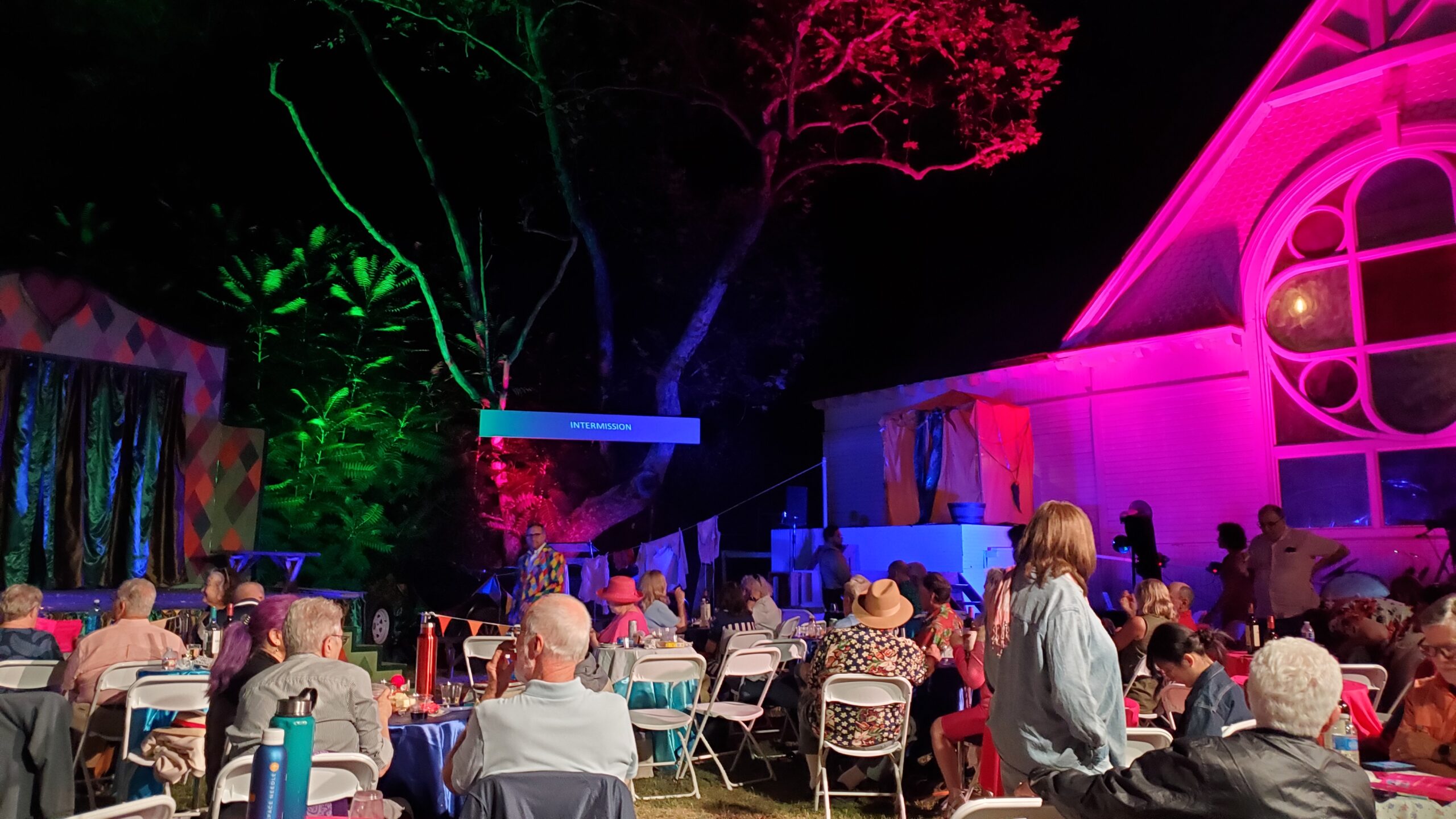
Director Josh Shaw in his colorful suit again.
When the show resumes, we pick up on the villagers gathering for the big show. They had been gathering slowly throughout intermission and again, the work feels immersive, as if we’re a part of that same audience viewing the play-within-a-play.
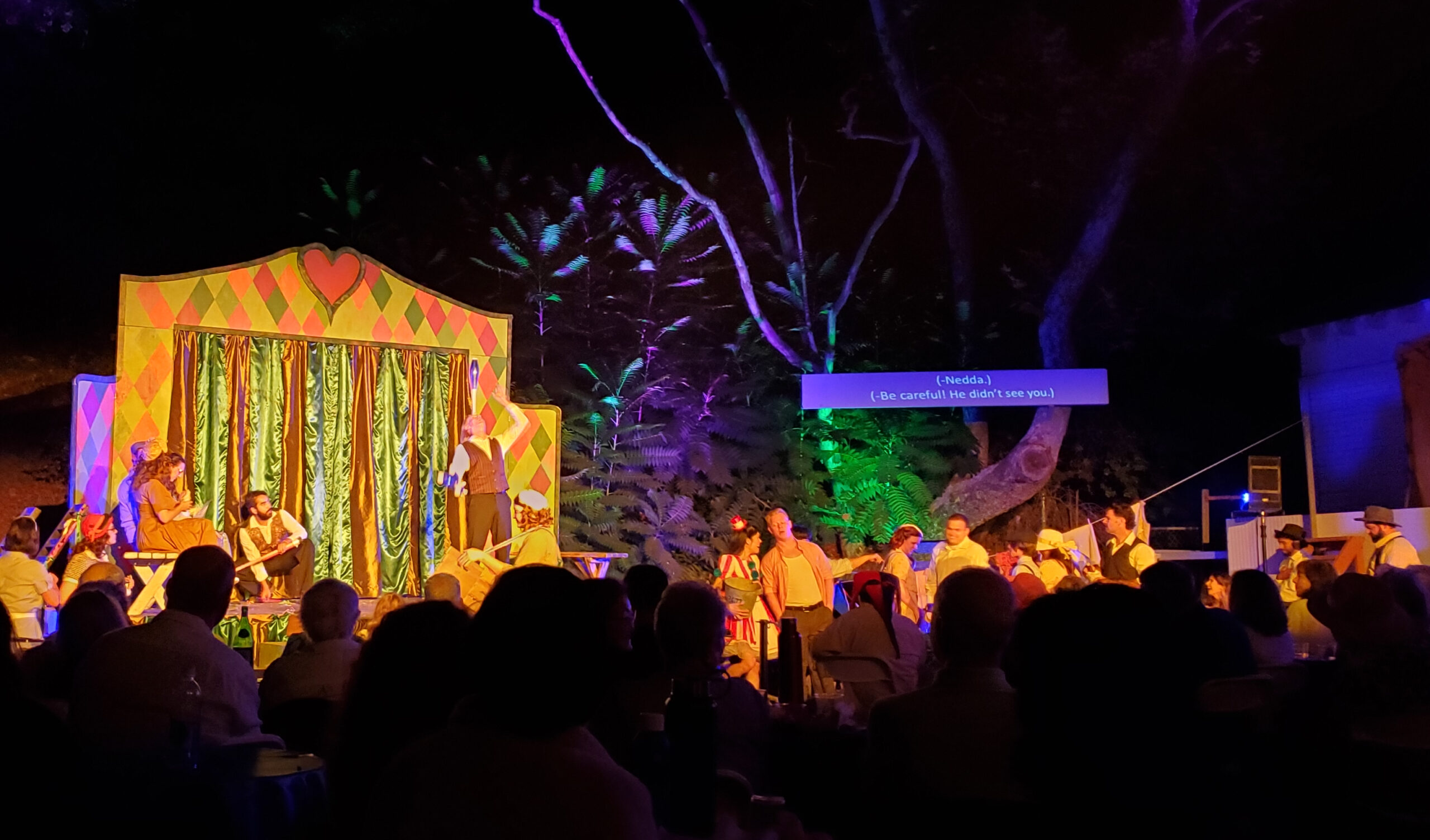
Nedda and Silvio, ground-level.
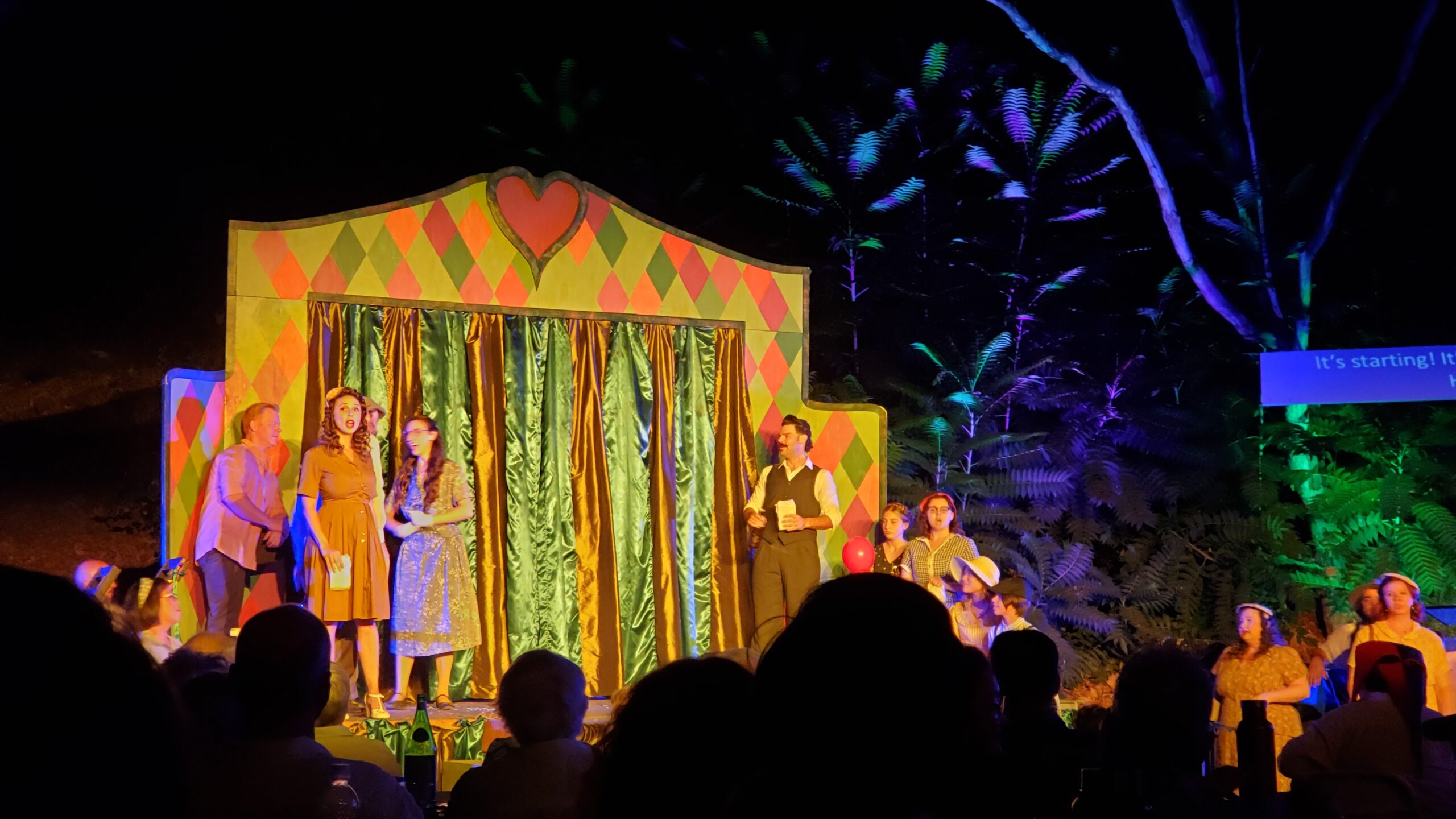
The chorus assembles.
The play-within-a-play begins as usual, with the plot mirroring the events of their actors; Taddeo (Tonio (Joel Balzun)) loves Colombina (Nedda (Janet Szepei Todd)), but she loves Arlecchino (Beppe (Arnold Livingston Geis)), despite being married to Pagliaccio (Canio (Nathan Bowles)).
Colombina and Pagliaccio have their terse staged dinner, while underneath, the actors’ tensions bubble through, and Bowles plays Canio’s slippage and descent into confusion, rage, and madness with terrifying suspense.
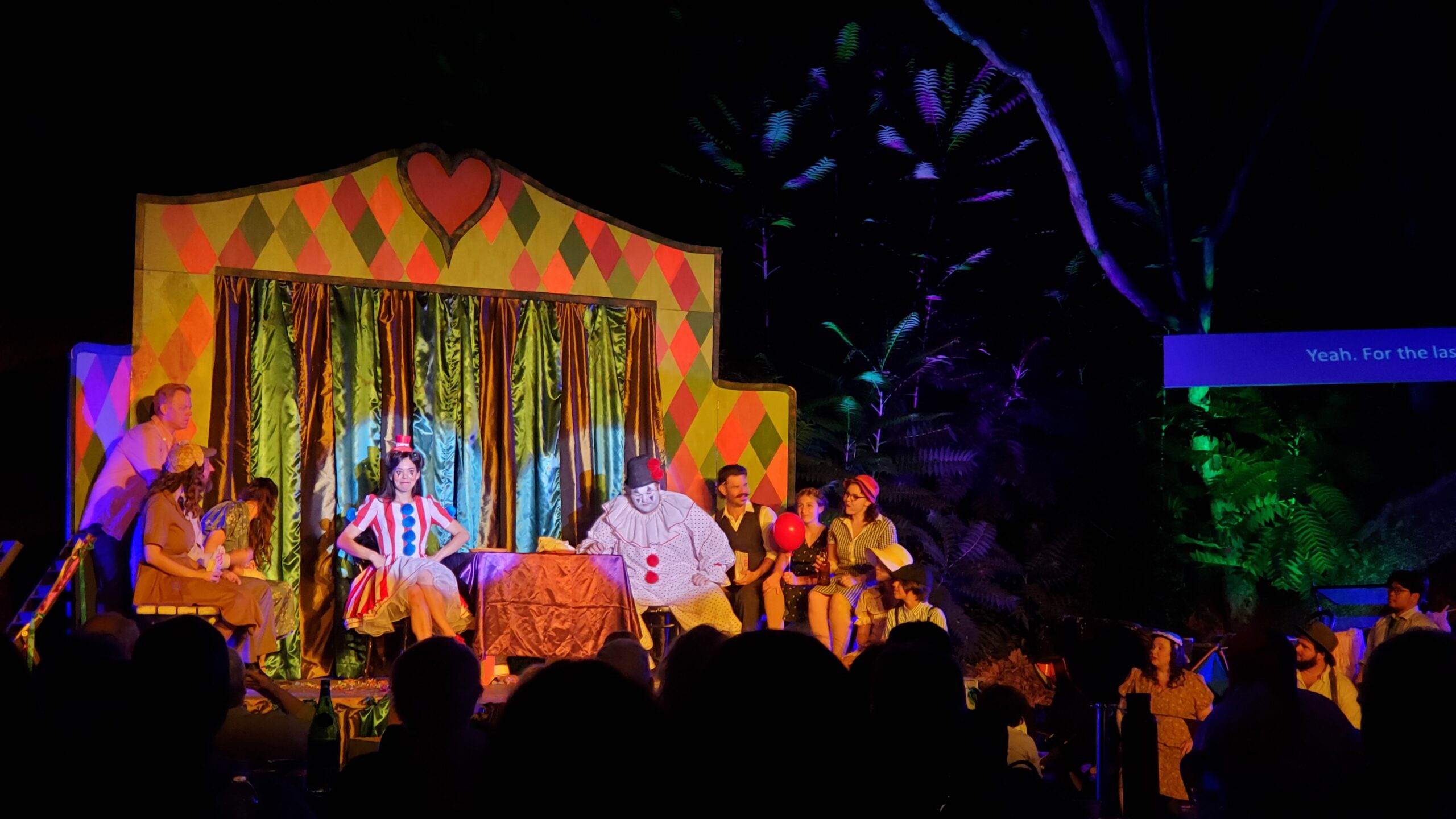
The chorus audience does a great job reacting as if these actors are simply playing their roles very intensely.
In the final dramatic sequence, of course, Canio snaps, flipping over the table, scattering the chorus, producing a knife, and, well…
Watching Nedda run into the audience, between the tables, as Canio chases and catches her, stabbing her up close and personal, everyone watching was frozen stiff. While some circus performers and chorus members had crossed the fourth wall into the audience already, none of the main cast had until this very moment. Nedda broke the last boundary between actors and audience right before Canio followed and broke her.
It was shocking and played to full effect. Bowles, Todd, and Stavert were intense. Canio uttered the final line, and the lights went out.
Pacific Opera Project’s Pagliacci was staged innovatively and featured all sorts of tricks and diversions, but none of it took away from the emotional core of the libretto. In fact, all these immersive effects made it feel all the more real by the end. It was a fantastic production, featuring fantastic vocal talent from start to finish.
Full Cast & Context
The main cast:
- Nathan Bowles: Canio
- Janet Szepei Todd: Nedda
- Joel Balzun: Tonio
- Kenneth Stavert: Silvio
- Arnold Livingston Geis: Beppe
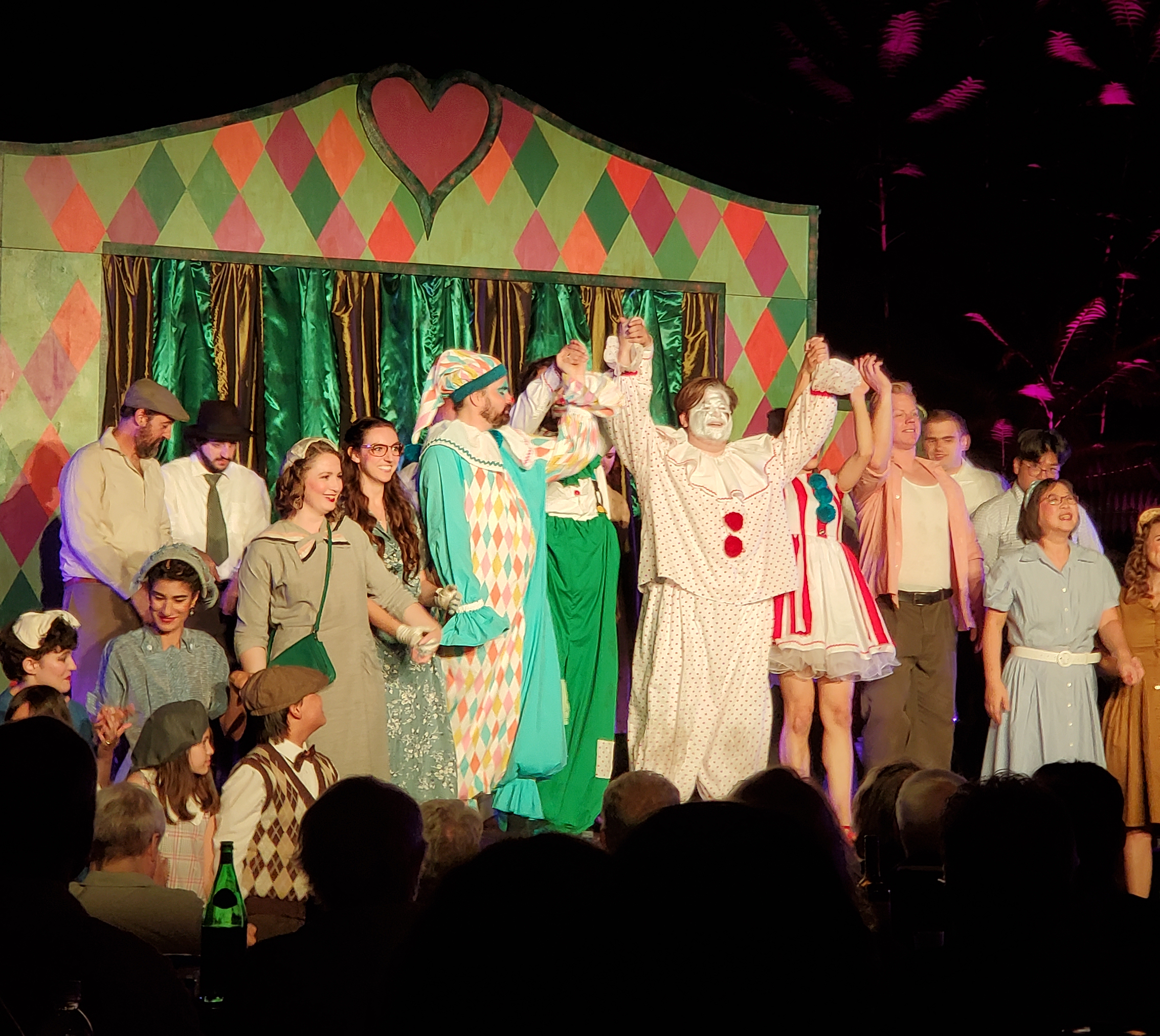
The final bow.
The chorus:
- Sergio Manzo (Silvio cover)
- Krishna Raman (Beppe cover)
- Isabel Springer (Nedda cover)
- Raul Valdez-Parea (Canio cover)
- Talar Arslanian
- Devi Bhatti
- Lydia Rae Brown
- Egan Carroll
- Ethan Eliafan
- David Herrington
- Zachary Mascarinas
- Amanda Mello
- Anthony Moresi
- Mary Palmer
- Mariah Schaumberg
- Megan Shoaf
- Melody Sparks
- Grace Stewart
- Frank Watnick
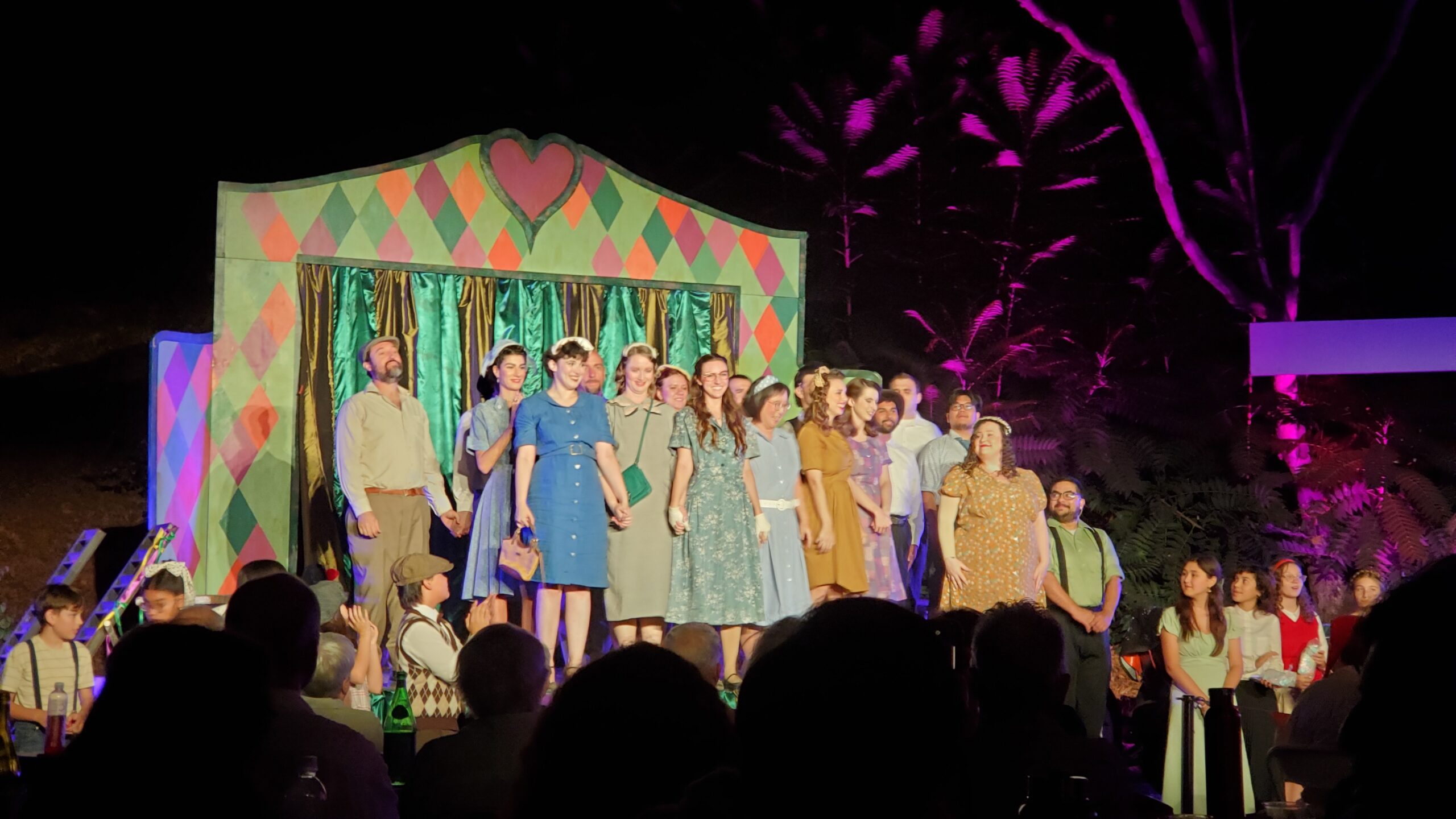
The chorus bow.
There was also the youth chorus, filling out the villagers even more:
- Lauren Ahn
- Liam Ahn
- Esther Borredon
- Oona Cassell
- Alexandria Dominguez
- Emmanuel Dominguez
- Dahlia Eldridge-Soderstrom
- Leoni Furch
- Tesla Howe
- Evelyn Hsing
- Maggie Jonsdottir-Pei
- Audrey Juarez
- Emiliano Lara-aguilar
- Chelle Mendivil
- Audra O’Dair
- Eleanor Ontiveros
- Vera Ontiveros
- Alina Penaloza
- Rosie Tadmor
- Blake Ziegelman
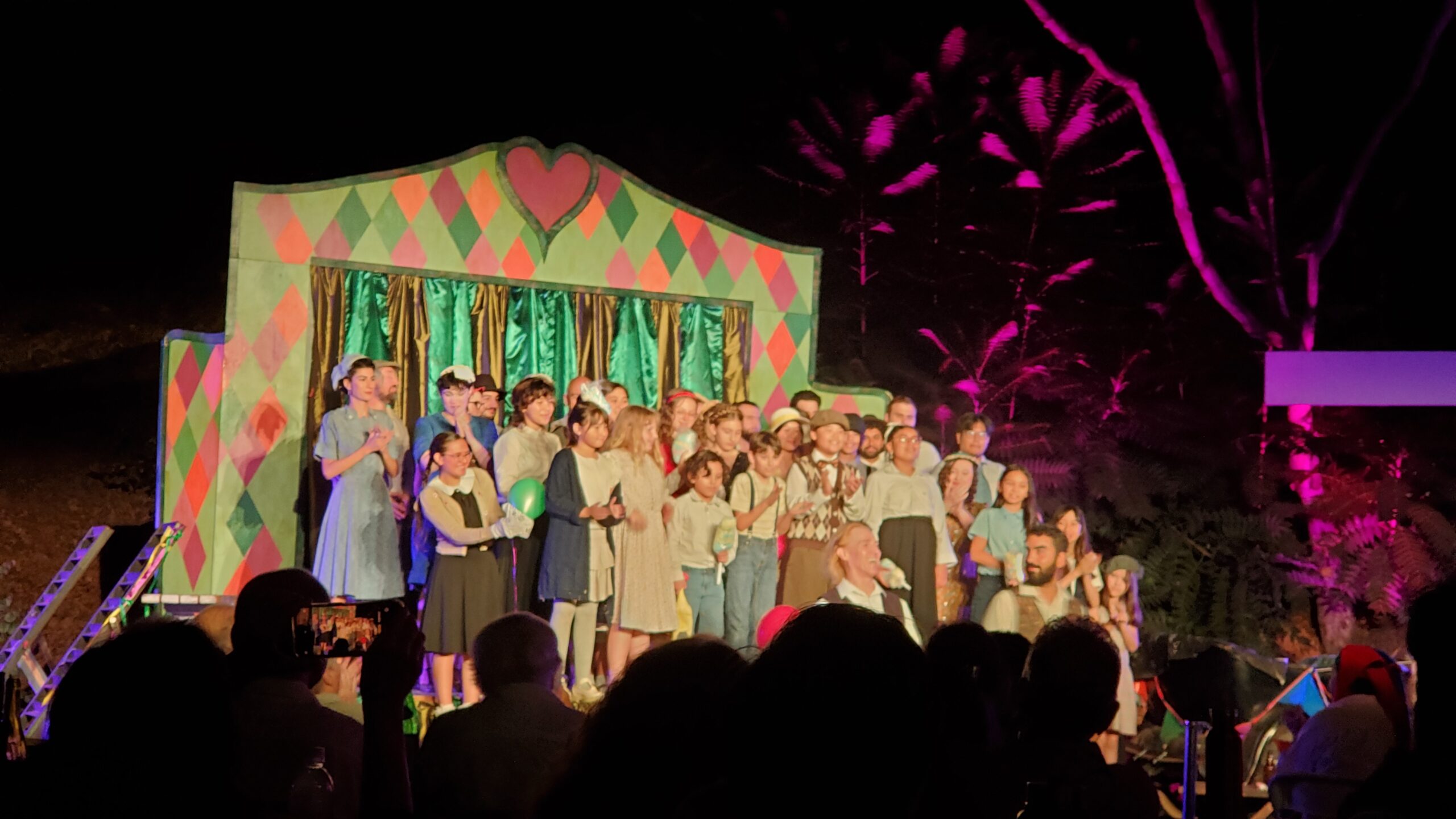
The youth chorus.
The orchestral arrangement was by Michael Withers; the wonderful eight-piece orchestra for the night was:
- Eve Bañuelos: Flute
- Phil Popham: Oboe
- Alana Miles: Clarinet
- Sumner Arano: Bassoon
- Preston Shepard: Horn
- Stewart Rosen: Bass
- Michael Basak: Percussion
- Yumi Hashimoto: Piano
Finally, the artistic team:
- Josh Shaw: Director/Designer
- Blair Salter: Conductor
- Désirée Lavertu: Chorus Master
- David Conley: Youth Chorus Director
- Hailey Springer: Costumer
- Martin Gimenez & Drew Sensue-Weinstein: Sound Design
- Maria Oliveira: Stage Manager
- David Handler: Master Carpenter
- Juliet Prieto: Scenic Painter
- Sarah Sturdevant: Supertitle Operator
- Charlotte Osborn & Janie Dusenberry: Front of House
The Pacific Opera Project company was founded in 2011. Their mission in and around Los Angeles is to reimagine opera as an affordable adventure, by making unforgettable performances available to all. They seem to be invested in returning good opera to the masses, and in my opinion, are doing quite a fine job.
Pagliacci was written by Italian composer Ruggero Leoncavallo and premiered in Milan in 1892. Leoncavallo was part of the verismo movement, which aimed to put ordinary people and raw emotion onstage instead of only kings and legends. The plot about a jealous actor who kills during a performance was reportedly inspired by a real criminal case from the composer’s childhood. It became a staple almost immediately, and its song “Vesti la giubba” (“Put on the costume”) turned into one of the most recognizable tenor arias in opera. The work has been referenced in Batman comics, Seinfeld, The Simpsons, and much, much more.
Heritage Square Museum is a small historic park near Montecito Heights made up of preserved Victorian-era houses that were moved here starting in the 1970s. Many of the buildings were rescued from demolition around downtown and South LA, and relocated to this hillside site to show what late 19th-century life looked like. Today it’s used for tours, film shoots, and events like this.